Gain continuous visibility across cloud workloads, services, identities and activity with Cloud Detection and Response (CDR) detect threats in real time, and investigate incidents with the context of your hybrid network.
Cloud security capabilities
Secure cloud environments within your hybrid infrastructure

The visibility challenge
5.25M
Average cost of a breach that involved cloud misconfigurations affecting AI workloads
(IBM Cost of a Data Breach 2026)
23%
of organizations report full visibility into their cloud environments
(Cloud Security Alliance)
See Darktrace in action
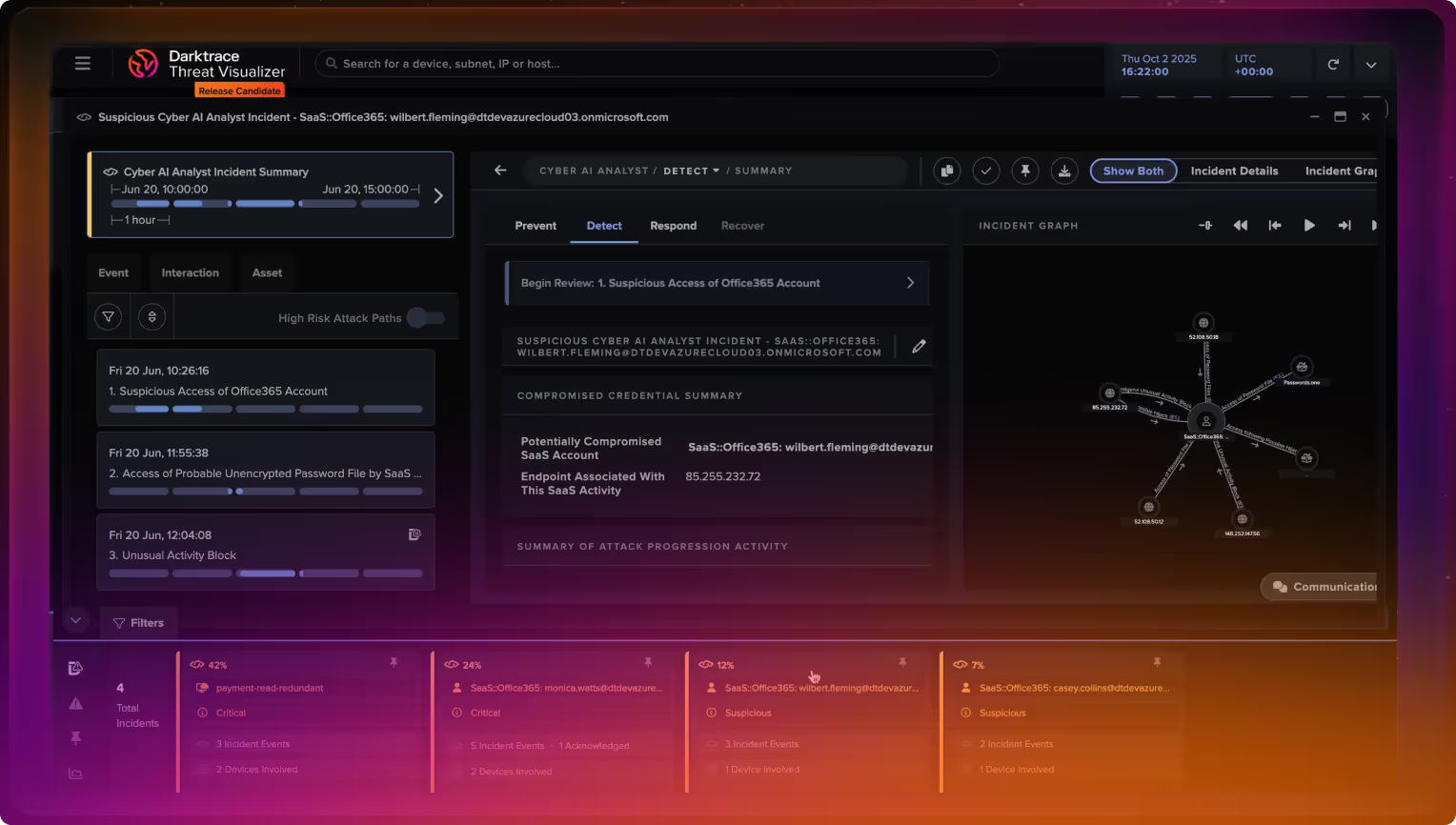
Take a guided tour of the cloud capabilities within Darktrace / HYBRID NETWORK, seeing how it detects a multi-step data exfiltration scenario.
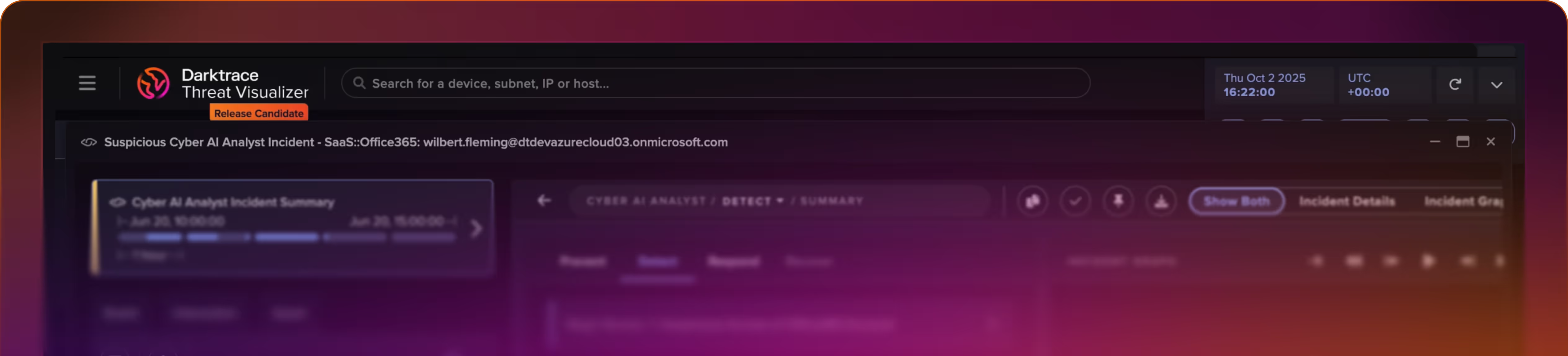
Disarm known and novel cloud-based threats quickly with platform-native response
Detect known and novel cloud threats in real time
Adaptive AI continuously monitors activity across cloud assets, workloads, APIs, containers, and identities, building a unique behavioral profile of your environment. By understanding what's normal for your organization, Darktrace can detect known, novel, insider, and AI-accelerated threats that traditional approaches may miss.
Simplify and accelerate the investigation process
Cyber AI Analyst automatically investigates alerts, connects related cloud and infrastructure activity, and provides security teams with meaningful incident context. By correlating behavior across cloud, identity, network, and endpoint domains, Darktrace accelerates investigations and reduces manual analysis.
Respond to cloud threats with precision at machine speed
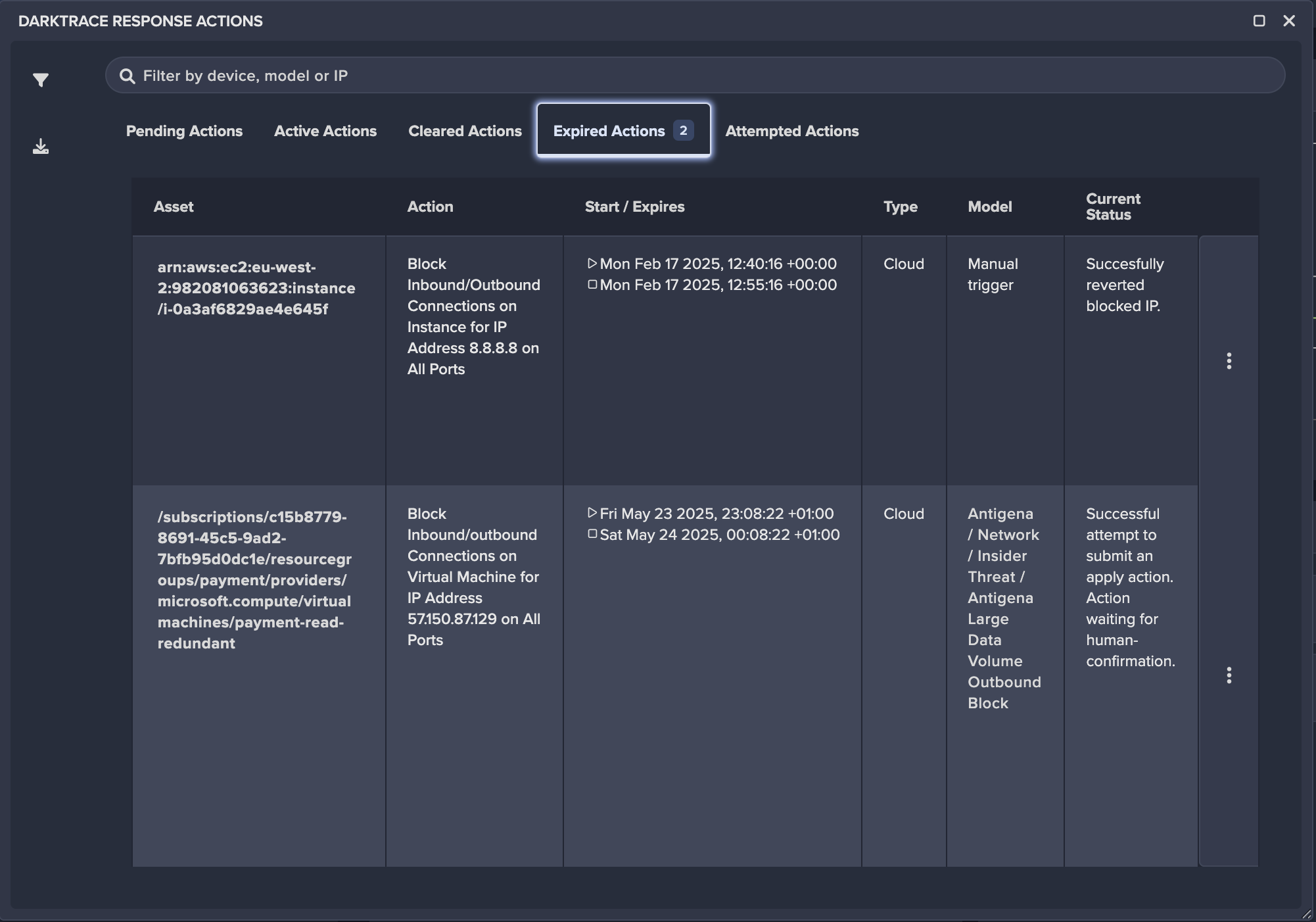
Darktrace autonomously contains malicious activity using behavioral context specific to your organization. Response actions are designed to stop threatening behavior while minimizing disruption to cloud services, workloads, and business operations.


Discover the Darktrace difference
Read the solution brief
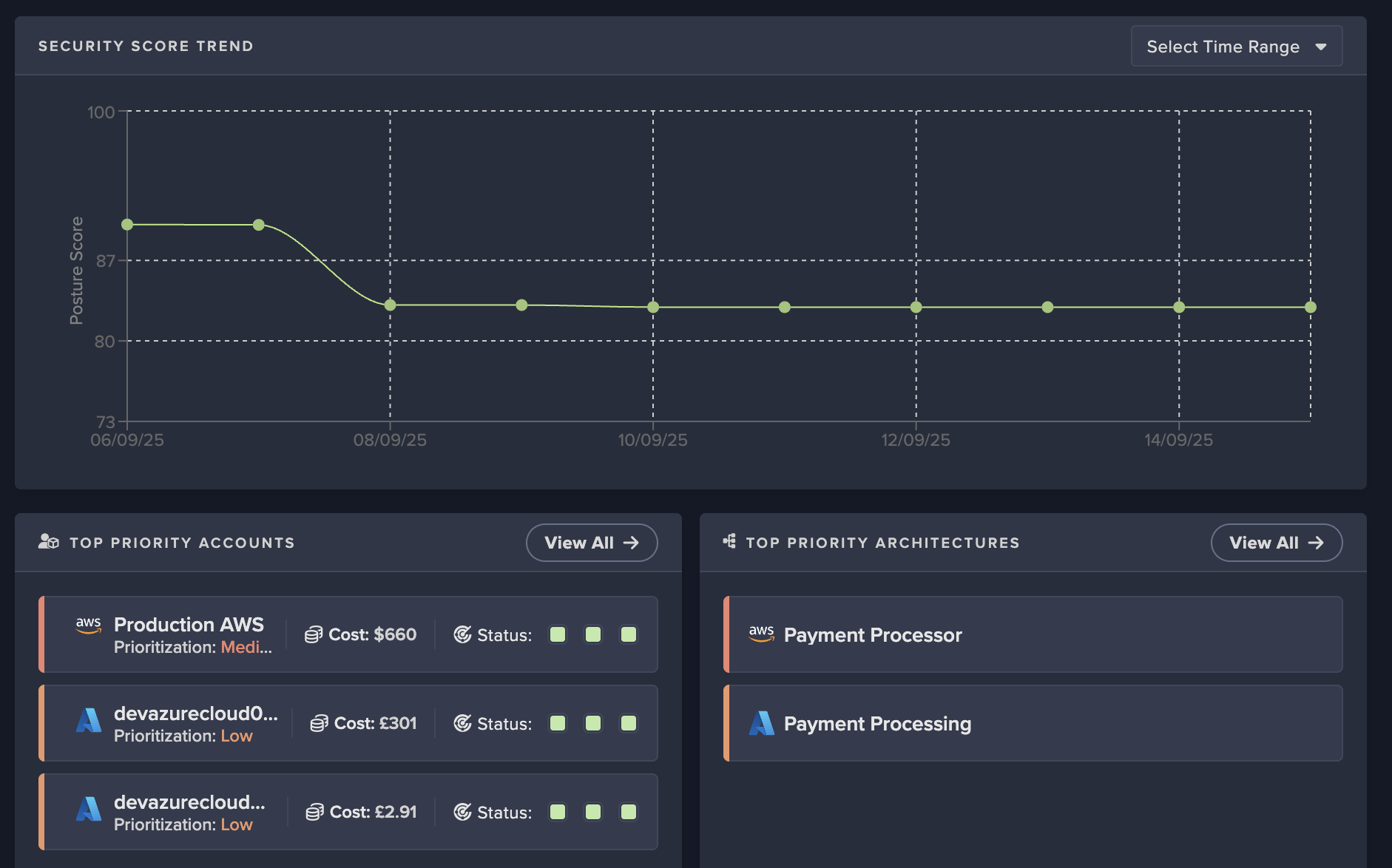
Prioritize your biggest risks based on a deep understanding of your environment
Secure user permissions and entitlements
Gain visibility into identities, permissions, access pathways, and privilege relationships across cloud environments. Darktrace helps identify excessive permissions, risky access patterns, and behaviors that could enable insider threats or lateral movement.
Maintain cloud compliance
Continuously monitor cloud environments against evolving risk conditions and operational changes. Darktrace helps teams prioritize remediation efforts based on real-world exposure and business context rather than static findings alone.
Proactively address cloud risks
Darktrace validates and prioritizes exposures using behavioral and risk context unique to your organization. By understanding how assets, users, identities, and workloads interact, security teams can focus remediation efforts where they will have the greatest impact on resilience.
Enrich investigations with automated cloud forensics
Automate evidence at cloud speed
Collect cloud-native forensic evidence directly through integrations and APIs, reducing time spent gathering data and enabling faster access to the information needed for investigations.
Get a complete attacker timeline in minutes
Automatically reconstruct attacker activity and investigation timelines by correlating evidence across cloud workloads, identities, services, and infrastructure. This helps teams rapidly understand root cause, scope, and impact.
Cloud-native forensics designed for scale
Deploy forensic capabilities across cloud environments with minimal operational overhead. Darktrace integrates with existing workflows and investigation processes to help security teams respond efficiently across distributed environments.
Understand your complex cloud footprint
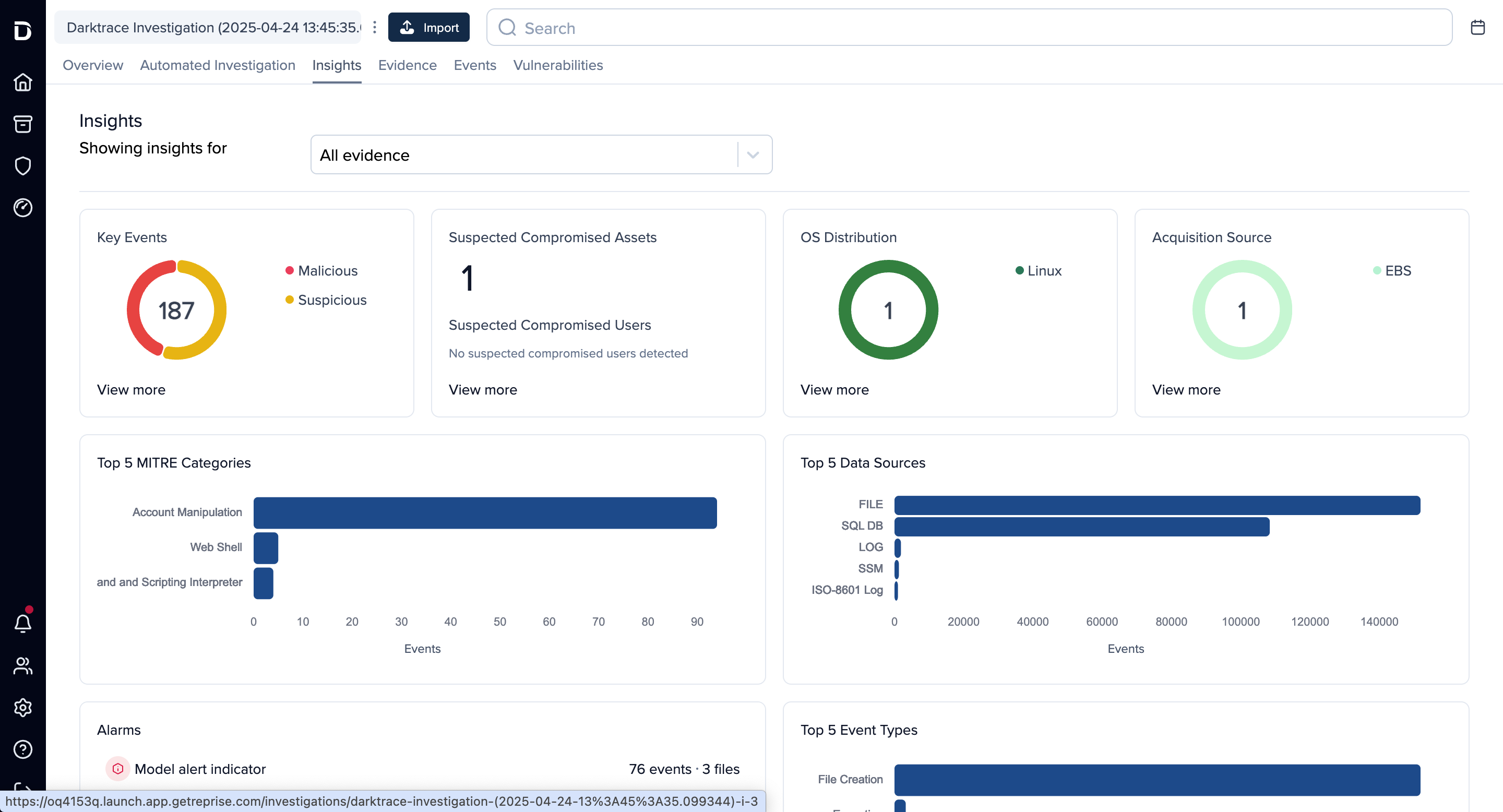
Demystify your cloud infrastructure
Build a continuously evolving understanding of your cloud environment with visibility into assets, workloads, services, identities, and relationships. Darktrace maps activity and behavior in real time as your cloud infrastructure grows and changes.
Dynamically monitor and secure workloads
Continuously monitor cloud workloads, containers, and cloud-native services using Adaptive AI that learns normal operational patterns. Detect suspicious behavior and emerging threats without relying solely on predefined rules or signatures.
Unite SecOps and DevOps teams with shared visibility
Create a common understanding of cloud activity, security posture, and operational risk across teams. Shared visibility helps organizations secure cloud transformation initiatives while improving collaboration between security and infrastructure stakeholders.
Demo video
See Darktrace / HYBRID NETWORK in action
Customer stories
Hear from our customers







Frequently asked
questions
What are the key differences between cloud security posture management (CSPM) and cloud workload protection platforms (CWPP)?
These two categories of security tools address distinct aspects of the cloud environment. They complement each other for effective cloud security but have some distinct differences. CSPM tools secure the cloud infrastructure (control plane), while CWPP tools protect individual workloads (runtime).
CSPM tools automate the assessment and remediation of security misconfigurations and compliance violations across cloud environments, such as AWS and Azure. These tools validate adherence to security benchmarks and compliance frameworks by identifying and addressing misconfigured identity access management (IAM) policies, exposed storage, and noncompliant network configurations. They reduce your attack surface by proactively strengthening your cloud foundation.
CWPPs focus on runtime protection for individual cloud workloads, including virtual machines, containers, and serverless functions. They monitor processes, network connections, and file system activity to detect and respond to malicious behavior, identifying and containing exploits and ransomware. CWPPs complement CSPM tools and provide a real-time defense system.
A comprehensive cloud security strategy combines the strengths of CSPM and CWPP. Integrating these capabilities provides streamlined management, improves visibility, and supports threat prevention and response across your entire cloud infrastructure. However, achieving this seamless integration requires planning. Look for solutions with API integrations, standardized data formats, and intuitive dashboards for managing both CSPM and CWPP functions.
It's also important to find platforms that use multi-layered AI to correlate data from different sources, providing a unified view of risk across your entire cloud environment. This way, security teams can prioritize alerts, streamline cloud investigations, and automate response actions more effectively. Ensure that your chosen platform offers flexible deployment options. It should support agent-based and agentless approaches to accommodate the diverse requirements of your cloud workloads.
How is AI used in cloud security?
AI for cloud security plays a pivotal role in enhancing detection, response, and prevention capabilities within cloud environments. AI-driven solutions can analyze vast amounts of data, detect patterns, and identify anomalies that might signal a security threat, making them essential for real-time threat detection in the cloud. AI cloud security solutions continuously monitor user behavior, access patterns, and network activity, flagging any irregularities that could indicate malicious intent.
Furthermore, AI cloud security solutions use machine learning to adapt to new and evolving threats by learning from past incidents and adjusting threat detection models accordingly. This is particularly beneficial in preventing zero-day attacks and insider threats, which are harder to detect using traditional, rule-based methods. Integrating AI in cloud security also reduces alert fatigue by filtering out false positives, allowing security teams to focus on high-risk threats. The combination of AI and cloud security automation provides a dynamic defense mechanism suited to the high complexity and rapid changes typical of cloud environments.
Is automation the future of cloud security?
Cybersecurity automation is increasingly regarded as essential for the future of cybersecurity, especially as threats grow in scale and complexity. Automation allows security systems to handle repetitive tasks, such as monitoring and threat detection, enabling faster response times and reducing the manual workload on cybersecurity teams. In cloud environments, automation is particularly valuable due to the scale and speed required to secure vast networks and manage real-time data flows.
Automation also improves consistency and minimizes human error, which is crucial for enforcing security policies across diverse environments, including on-premises, hybrid, and cloud infrastructures. AI-driven automation in cybersecurity can manage and analyze data more efficiently, detecting anomalies and flagging potential threats instantly.
What are the key features to look for when choosing a data security solution?
Choosing a data security solution for cloud environments requires careful consideration of tools designed specifically for cloud complexities. A robust solution should provide visibility into cloud architecture, enabling full insight into configurations, behaviors, and interactions of cloud resources. This level of visibility is essential for identifying and mitigating vulnerabilities across the cloud infrastructure, especially since many traditional security tools lack the depth needed for cloud-native operations.
Scalability and integration are also crucial, as cloud environments are dynamic and often span multiple platforms and services. A strong data security solution should manage both on-premises and cloud-based environments, enforcing consistent policies across the entire infrastructure. By integrating with a cloud security platform, such a solution can ensure seamless monitoring, reducing security gaps between cloud and on-premises systems.
Given the speed at which cloud resources can be deployed, real-time detection and response capabilities are essential. Cloud environments require agile threat detection and automated response to handle threats that can rapidly scale, as well as to combat complex, AI-driven attacks and misconfigurations. Solutions should include cybersecurity automation to streamline threat identification and response, ensuring that resources are automatically reconfigured or isolated when threats are detected.
Lastly, a cloud-native data security solution should offer comprehensive compliance management, supporting adherence to regulations like GDPR or HIPAA and providing detailed reporting and analytics. The solution should have an intuitive interface to manage these features efficiently, as well as support for centralized monitoring to ensure all cloud resources are consistently protected.
How can organizations ensure compliance with data privacy regulations in the cloud?
To ensure cloud data privacy, organizations must proactively manage data governance and security. This practice involves establishing a framework that adapts to evolving regulations and cyber-threats. First, gain an understanding of your data landscape by automatically classifying sensitive information across cloud environments and ensuring targeted security, particularly for data subject to regulations such as General Data Protection Regulation (GDPR). Utilize cloud provider features to store and process data within specific regions, ensuring compliance with local data sovereignty requirements.
Another essential element to consider is access control and encryption. Prioritize sensitive information and implement granular access management, along with robust encryption to safeguard confidentiality. Data loss prevention (DLP) prevents unauthorized exfiltration by monitoring data movement and blocking sensitive information from leaving secure environments, enforcing essential data handling policies.
Ensure you can consistently demonstrate compliance by implementing automated compliance monitoring for continuous tracking and generating comprehensive audit reports. Enhance security with multi-layered AI that analyzes data access patterns and identifies anomalous behavior for proactive alerts to address risks.
What are the different deployment options for cloud security solutions?
There are two primary deployment models for cloud security solutions. The most effective security approach combines these models to provide the visibility and granular insights that support informed decision-making.
An agent-based security model incorporates software into each cloud workload, offering granular visibility into workload activity and enabling direct response actions. However, managing agents across large and dynamic environments introduces complexity that may impact performance. Although this approach provides deep, contextual insights, it requires careful planning to ensure compatibility and minimize resource consumption.
The agentless security model gathers data using the cloud provider's native APIs rather than software installation on workloads. Deployment is simplified with no performance impact, providing broad visibility. Keep in mind that this method may provide less detailed information and depends on the cloud provider's API capabilities. It's popular due to its ease of deployment and minimal operational overhead, making it suitable for organizations with limited resources.
What is the significance of cybersecurity in cloud computing?
Cybersecurity in cloud computing is essential due to the high volume of sensitive data managed in these dynamic environments, making them attractive targets for cyber-attacks. As organizations increasingly migrate to the cloud, they encounter unique security challenges such as safeguarding data in multi-tenant environments and maintaining regulatory compliance. In cloud settings, traditional on-premises security models often fall short, emphasizing the need for specialized cloud security measures.
Beyond standard tools, solutions like Cloud Security Posture Management (CSPM) and Cloud-Native Application Protection Platform (CNAPP) help address cloud-specific challenges by providing visibility, managing misconfigurations, and ensuring compliance within cloud-native environments. However, CSPM and CNAPP solutions alone are not enough for comprehensive cloud security. A complete approach includes integrating these tools with other security measures, proactive monitoring, and human expertise to manage complex threat landscapes effectively.
To secure cloud environments comprehensively, organizations need a holistic security strategy that includes real-time threat detection, contextual awareness, and proactive measures. By unifying security efforts across multi-cloud setups, businesses can achieve the resilience and adaptability needed to protect their data and operations effectively.