
Blog
/
Email
/
September 30, 2025

Out of Character: Detecting Vendor Compromise and Trusted Relationship Abuse with Darktrace

Phishing emails from compromised vendors are increasingly difficult to distinguish from genuine correspondence. They challenge workers, security teams and traditional email SEGs alike. Anomaly detection can be a game-changer in spotting the subtle signs of these meticulous attacks.
Inside the SOC
Darktrace cyber analysts are world-class experts in threat intelligence, threat hunting and incident response, and provide 24/7 SOC support to thousands of Darktrace customers around the globe. Inside the SOC is exclusively authored by these experts, providing analysis of cyber incidents and threat trends, based on real-world experience in the field.
Written by
Jennifer Beckett
Cyber Analyst
vendor email compromiseDefault blog imageDefault blog imageDefault blog imageDefault blog imageDefault blog imageDefault blog image
30
Sep 2025

What is Vendor Email Compromise?

Vendor Email Compromise (VEC) refers to an attack where actors breach a third-party provider to exploit their access, relationships, or systems for malicious purposes. The initially compromised entities are often the target’s existing partners, though this can extend to any organization or individual the target is likely to trust.

It sits at the intersection of supply chain attacks and business email compromise (BEC), blending technical exploitation with trust-based deception. Attackers often infiltrate existing conversations, leveraging AI to mimic tone and avoid common spelling and grammar pitfalls. Malicious content is typically hosted on otherwise reputable file sharing platforms, meaning any shared links initially seem harmless.

While techniques to achieve initial access may have evolved, the goals remain familiar. Threat actors harvest credentials, launch subsequent phishing campaigns, attempt to redirect invoice payments for financial gain, and exfiltrate sensitive corporate data.

Why traditional defenses fall short

These subtle and sophisticated email attacks pose unique challenges for defenders. Few busy people would treat an ongoing conversation with a trusted contact with the same level of suspicion as an email from the CEO requesting ‘URGENT ASSISTANCE!’ Unfortunately, many traditional secure email gateways (SEGs) struggle with this too. Detecting an out-of-character email, when it does not obviously appear out of character, is a complex challenge. It’s hardly surprising, then, that 83% of organizations have experienced a security incident involving third-party vendors [1].  

This article explores how Darktrace detected four different vendor compromise campaigns for a single customer, within a two-week period in 2025.  Darktrace / EMAIL successfully identified the subtle indicators that these seemingly benign emails from trusted senders were, in fact, malicious. Due to the configuration of Darktrace / EMAIL in this customer’s environment, it was unable to take action against the malicious emails. However, if fully enabled to take Autonomous Response, it would have held all offending emails identified.

How does Darktrace detect vendor compromise?

The answer lies at the core of how Darktrace operates: anomaly detection. Rather than relying on known malicious rules or signatures, Darktrace learns what

‘normal’ looks like for an environment, then looks for anomalies across a wide range of metrics. Despite the resourcefulness of the threat actors involved in this case, Darktrace identified many anomalies across these campaigns.

Different campaigns, common traits

A wide variety of approaches was observed. Individuals, shared mailboxes and external contractors were all targeted. Two emails originated from compromised current vendors, while two came from unknown compromised organizations - one in an associated industry. The sender organizations were either familiar or, at the very least, professional in appearance, with no unusual alphanumeric strings or suspicious top-level domains (TLDs). Subject line, such as “New Approved Statement From [REDACTED]” and “[REDACTED] - Proposal Document” appeared unremarkable and were not designed to provoke heightened emotions like typical social engineering or BEC attempts.

All emails had been given a Microsoft Spam Confidence Level of 1, indicating Microsoft did not consider them to be spam or malicious [2]. They also passed authentication checks (including SPF, and in some cases DKIM and DMARC), meaning they appeared to originate from an authentic source for the sender domain and had not been tampered with in transit.  

All observed phishing emails contained a link hosted on a legitimate and commonly used file-sharing site. These sites were often convincingly themed, frequently featuring the name of a trusted vendor either on the page or within the URL, to appear authentic and avoid raising suspicion. However, these links served only as the initial step in a more complex, multi-stage phishing process.
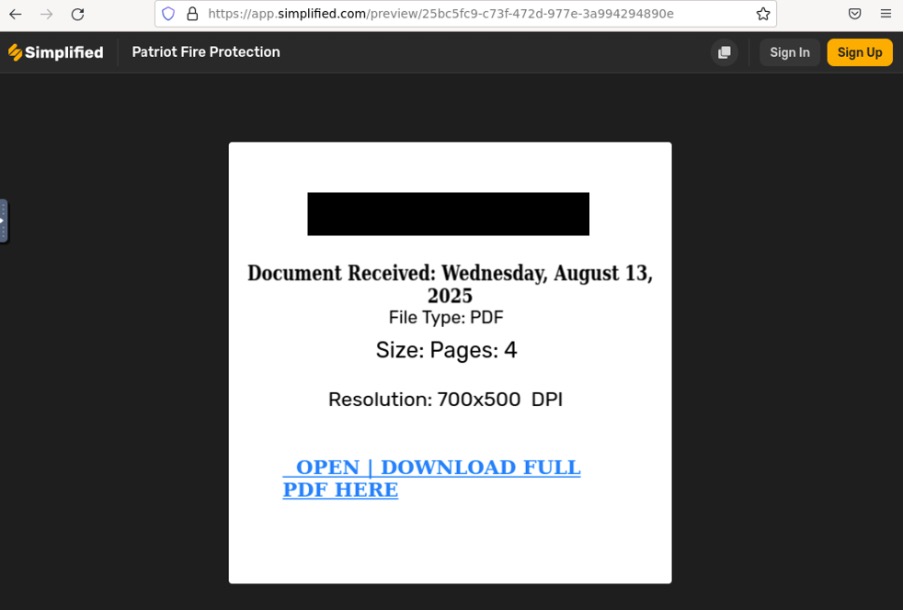
Figure 1: A legitimate file sharing site used in phishing emails to host a secondary malicious link.

Figure 2: Another example of a legitimate file sharing endpoint sent in a phishing email and used to host a malicious link.

If followed, the recipient would be redirected, sometimes via CAPTCHA, to fake Microsoft login pages designed to capturing credentials, namely http://pub-ac94c05b39aa4f75ad1df88d384932b8.r2[.]dev/offline[.]html and https://s3.us-east-1.amazonaws[.]com/s3cure0line-0365cql0.19db86c3-b2b9-44cc-b339-36da233a3be2ml0qin/s3cccql0.19db86c3-b2b9-44cc-b339-36da233a3be2%26l0qn[.]html#.

The latter made use of homoglyphs to deceive the user, with a link referencing ‘s3cure0line’, rather than ‘secureonline’. Post-incident investigation using open-source intelligence (OSINT) confirmed that the domains were linked to malicious phishing endpoints [3] [4].
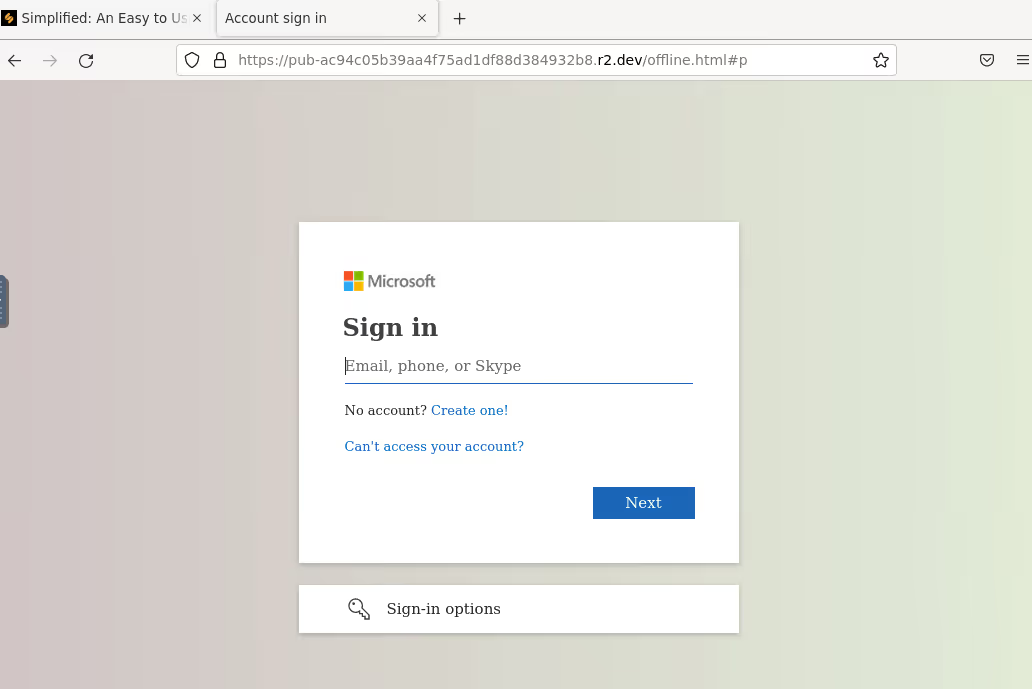
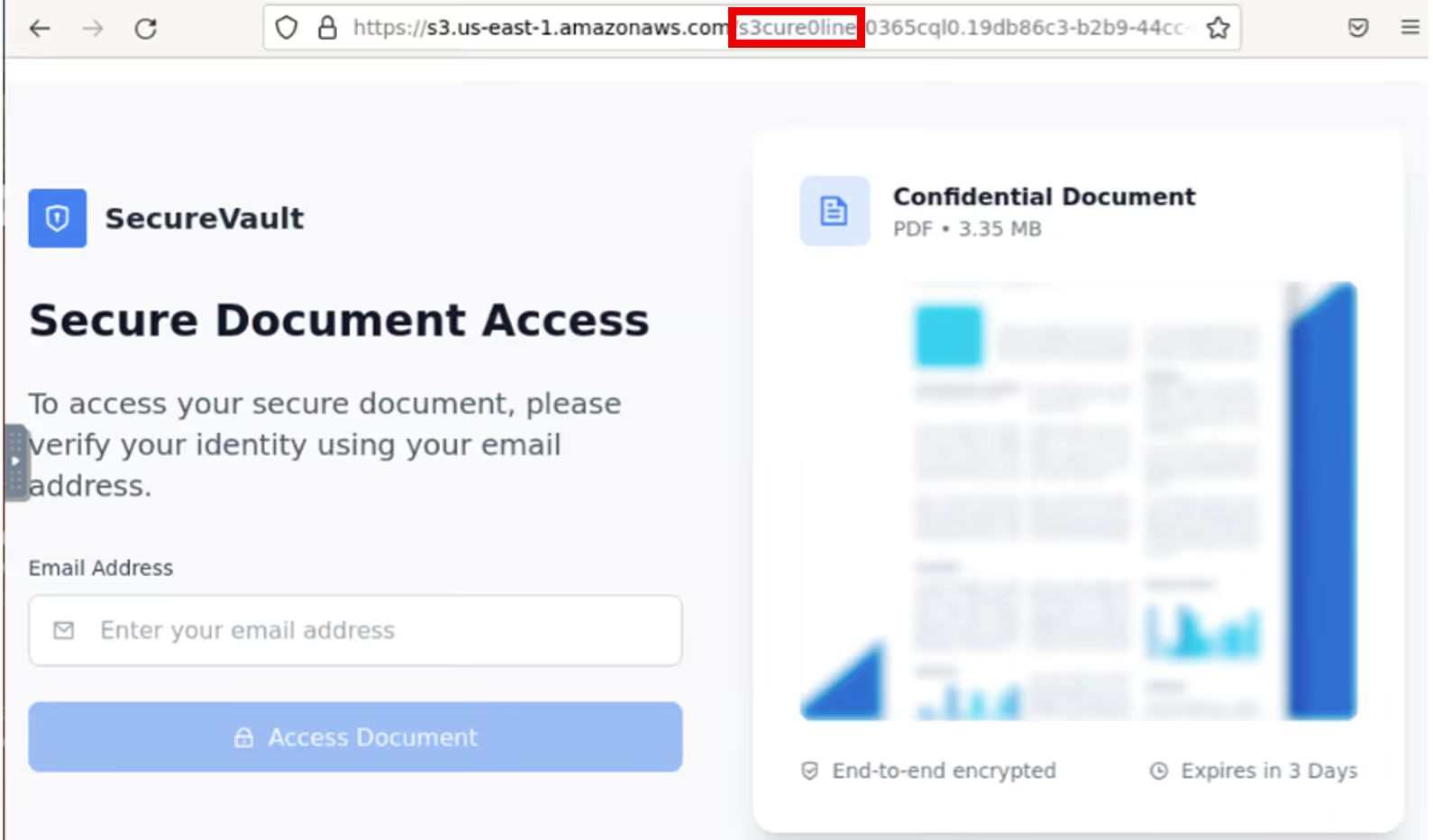
Figure 3: Fake Microsoft login page designed to harvest credentials.

Figure 4: Phishing kit with likely AI-generated image, designed to harvest user credentials. The URL uses ‘s3cure0line’ instead of ‘secureonline’, a subtle misspelling intended to deceive users.

Darktrace Anomaly Detection

Some senders were unknown to the network, with no previous outbound or inbound emails. Some had sent the email to multiple undisclosed recipients using BCC, an unusual behavior for a new sender.  

Where the sender organization was an existing vendor, Darktrace recognized out-of-character behavior, in this case it was the first time a link to a particular file-sharing site had been shared. Often the links themselves exhibited anomalies, either being unusually prominent or hidden altogether - masked by text or a clickable image.

Crucially, Darktrace / EMAIL is able to identify malicious links at the time of processing the emails, without needing to visit the URLs or analyze the destination endpoints, meaning even the most convincing phishing pages cannot evade detection – meaning even the most convincing phishing emails cannot evade detection. This sets it apart from many competitors who rely on crawling the endpoints present in emails. This, among other things, risks disruption to user experience, such as unsubscribing them from emails, for instance.

Darktrace was also able to determine that the malicious emails originated from a compromised mailbox, using a series of behavioral and contextual metrics to make the identification. Upon analysis of the emails, Darktrace autonomously assigned several contextual tags to highlight their concerning elements, indicating that the messages contained phishing links, were likely sent from a compromised account, and originated from a known correspondent exhibiting out-of-character behavior.
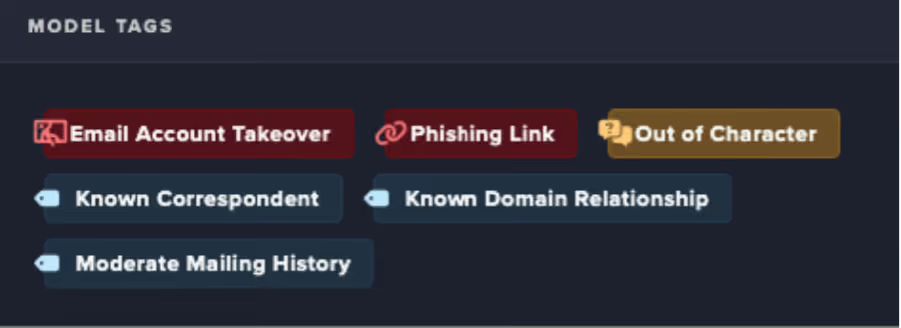
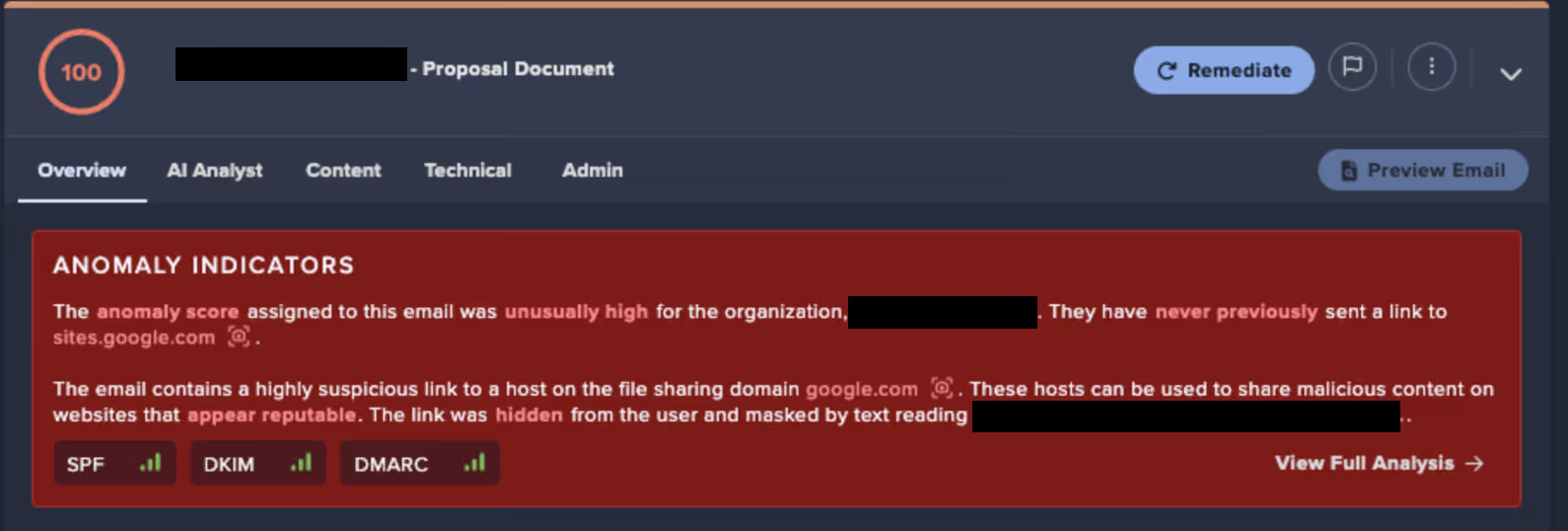
Figure 5: Tags assigned to offending emails by Darktrace / EMAIL.

Figure 6: A summary of the anomalous email, confirming that it contained a highly suspicious link.

Out-of-character behavior caught in real-time

In another customer environment around the same time Darktrace / EMAIL detected multiple emails with carefully crafted, contextually appropriate subject lines sent from an established correspondent being sent to 30 different recipients. In many cases, the attacker hijacked existing threads and inserted their malicious emails into an ongoing conversation in an effort to blend in and avoid detection. As in the previous, the attacker leveraged a well-known service, this time ClickFunnels, to host a document containing another malicious link. Once again, they were assigned a Microsoft Spam Confidence Level of 1, indicating that they were not considered malicious.
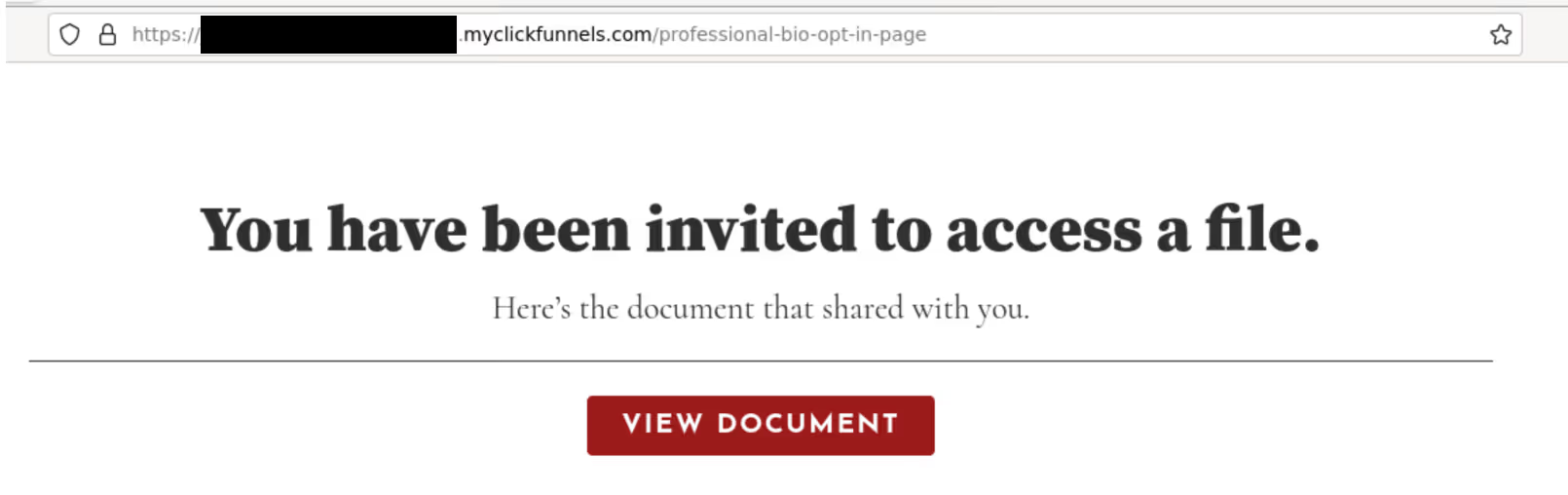
Figure 7: The legitimate ClickFunnels page used to host a malicious phishing link.

This time, however, the customer had Darktrace / EMAIL fully enabled to take Autonomous Response against suspicious emails. As a result, when Darktrace detected the out-of-character behavior, specifically, the sharing of a link to a previously unused file-sharing domain, and identified the likely malicious intent of the message, it held the email, preventing it from reaching recipients’ inboxes and effectively shutting down the attack.
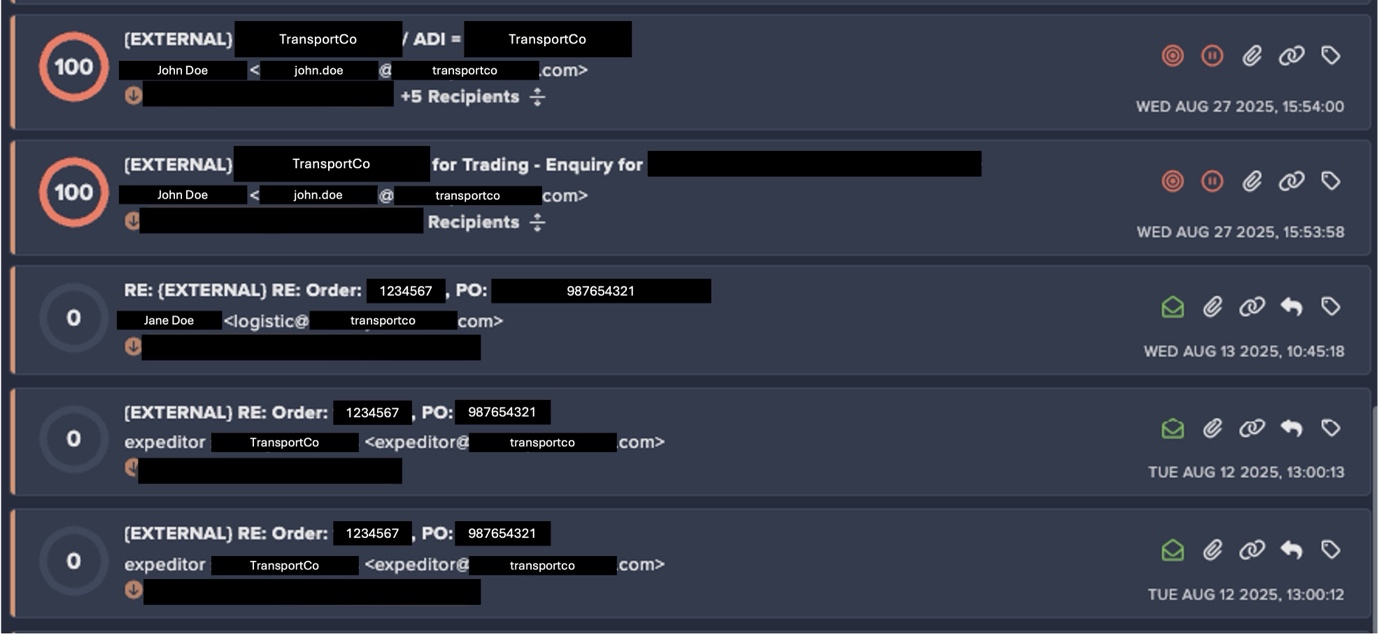
Figure 8: Darktrace / EMAIL’s detection of malicious emails inserted into an existing thread.*

*To preserve anonymity, all real customer names, email addresses, and other identifying details have been redacted and replaced with fictitious placeholders.

Legitimate messages in the conversation were assigned an Anomaly Score of 0, while the newly inserted malicious emails identified and were flagged with the maximum score of 100.

Key takeaways for defenders

Phishing remains big business, and as the landscape evolves, today’s campaigns often look very different from earlier versions. As with network-based attacks, threat actors are increasingly leveraging legitimate tools and exploiting trusted relationships to carry out their malicious goals, often staying under the radar of security teams and traditional email defenses.

As attackers continue to exploit trusted relationships between organizations and their third-party associates, security teams must remain vigilant to unexpected or suspicious email activity. Protecting the digital estate requires an email solution capable of identifying malicious characteristics, even when they originate from otherwise trusted senders.

Credit to Jennifer Beckett (Cyber Analyst), Patrick Anjos (Senior Cyber Analyst), Ryan Traill (Analyst Content Lead), Kiri Addison (Director of Product)

Appendices

IoC - Type - Description + Confidence  

- http://pub-ac94c05b39aa4f75ad1df88d384932b8.r2[.]dev/offline[.]html#p – fake Microsoft login page

- https://s3.us-east-1.amazonaws[.]com/s3cure0line-0365cql0.19db86c3-b2b9-44cc-b339-36da233a3be2ml0qin/s3cccql0.19db86c3-b2b9-44cc-b339-36da233a3be2%26l0qn[.]html# - link to domain used in homoglyph attack

MITRE ATT&CK Mapping  

Tactic – Technique – Sub-Technique  

Initial Access - Phishing – (T1566)  

References

1.     https://gitnux.org/third-party-risk-statistics/

2.     https://learn.microsoft.com/en-us/defender-office-365/anti-spam-spam-confidence-level-scl-about

3.     https://www.virustotal.com/gui/url/5df9aae8f78445a590f674d7b64c69630c1473c294ce5337d73732c03ab7fca2/detection

4.     https://www.virustotal.com/gui/url/695d0d173d1bd4755eb79952704e3f2f2b87d1a08e2ec660b98a4cc65f6b2577/details

The content provided in this blog is published by Darktrace for general informational purposes only and reflects our understanding of cybersecurity topics, trends, incidents, and developments at the time of publication. While we strive to ensure accuracy and relevance, the information is provided “as is” without any representations or warranties, express or implied. Darktrace makes no guarantees regarding the completeness, accuracy, reliability, or timeliness of any information presented and expressly disclaims all warranties.

Nothing in this blog constitutes legal, technical, or professional advice, and readers should consult qualified professionals before acting on any information contained herein. Any references to third-party organizations, technologies, threat actors, or incidents are for informational purposes only and do not imply affiliation, endorsement, or recommendation.

Darktrace, its affiliates, employees, or agents shall not be held liable for any loss, damage, or harm arising from the use of or reliance on the information in this blog.

The cybersecurity landscape evolves rapidly, and blog content may become outdated or superseded. We reserve the right to update, modify, or remove any content

The Darktrace / EMAIL Solution Brief

Learn more about how Darktrace / EMAIL stops block novel threats up to 13 days earlier than other tools
Inside the SOC
Darktrace cyber analysts are world-class experts in threat intelligence, threat hunting and incident response, and provide 24/7 SOC support to thousands of Darktrace customers around the globe. Inside the SOC is exclusively authored by these experts, providing analysis of cyber incidents and threat trends, based on real-world experience in the field.
Written by
Jennifer Beckett
Cyber Analyst

More in this series

No items found.

Blog

/

AI

/

May 12, 2026

Resilience at the Speed of AI: Defending the Modern Campus with Darktrace

Default blog imageDefault blog image

Why higher education is a different cybersecurity battlefield

After four decades in IT, now serving as both CIO and CISO, I’ve learned one simple truth: cybersecurity is never “done.” It’s a constant game of cat and mouse. Criminals evolve. Technologies advance. Regulations expand. But in higher education, the challenge is uniquely complex.

Unlike a bank or a military installation, we can’t lock down networks to a narrow set of approved applications. Higher education environments are open by design. Students collaborate globally, faculty conduct cutting-edge research, and administrators manage critical operations, all of which require seamless access to the internet, global networks, cloud platforms, and connected systems.

Combine that openness with expanding regulatory mandates and tight budgets, and the balancing act becomes clear.

Threat actors don’t operate under the same constraints. Often well-funded and sponsored by nation-states with significant resources, they’re increasingly organized, strategic, and innovative.

That sophistication shows up in the tactics we face every day, from social engineering and ransomware to AI-driven impersonation attacks. We’re dealing with massive volumes of data, countless signals, and a very small window between detection and damage.

No human team, no matter how talented or how numerous, can manually sift through that noise at the speed required.

Discovering a force multiplier

Nothing in cybersecurity is 100% foolproof. I never “set it and forget it.” But for institutions balancing rising threats and finite resources, the Darktrace ActiveAI Security Platform™ offers something incredibly valuable: peace of mind through speed and scale.

It closes the gap between detection and response in a way humans can’t possibly match. At the speed of light, it can quarantine, investigate, and contain anomalous activity.

I’ve purchased and deployed Darktrace three separate times at three different institutions because I’ve seen firsthand what it can do and what it enables teams like mine to achieve.

I first encountered Darktrace while serving as CIO for a large multi-campus college system. What caught my attention was Darktrace's Self-Learning AI, and its ability to learn what "normal" looked like across our network. Instead of relying solely on static signatures or rigid rules, Darktrace built a behavioral baseline unique to our environment and alerted us in real time when something simply didn’t look right.

In higher education, where strict lockdowns aren’t realistic, that behavioral model made all the difference. We deployed it across five campuses, and the impact was immediate. Operating 24/7, Darktrace surfaced threats in ways our team couldn’t replicate manually.

Over time, the Darktrace platform evolved alongside the changing threat landscape, expanding into intrusion prevention, cloud visibility, and email security. At subsequent institutions, including Washington College, Darktrace was one of my first strategic investments.

Revealing the hidden threat other tools missed

One of the most surprising investigations of my career involved a data leak. Leadership suspected sensitive information from high-level meetings was being exposed, but our traditional tools couldn’t provide any answers.

Using Darktrace’s deep network visibility, down to packet-level data, we traced unusual connections to our CCTV camera system, which had been configured with a manufacturer’s default password. A small group of employees had hacked into the CCTV cameras, accessed audio-enabled recordings from boardroom meetings, and stored copies locally.

No other tool in our environment could have surfaced those connections the way Darktrace did. It was a clear example of why using AI to deeply understand how your organization, systems, and tools normally behave, matters: threats and risks don’t always look the way we expect.

Elevating a D-rating into a A-level security program

When I arrived at my last CISO role, the institution had recently experienced a significant ransomware attack. Attackers located  data  which informed their setting  ransom demands to an amount they knew would likely result in payment. It was a sobering example of how calculated and strategic modern cybercriminals have become.

Third-party cyber ratings reflected that reality, with a  D rating.

To raise the bar, we implemented a comprehensive security program and integrated layered defenses; -deploying state of the art tools and methods-  across the environment, with Darktrace at its core.

After a 90-day learning period to establish our behavioral baseline, we transitioned the platform into fully autonomous mode. In a single 30-day span, Darktrace conducted more than 2,500 investigations and autonomously resolved 92% of all false positives.

For a small team, that’s transformative. Instead of drowning in alerts, my staff focused on less than  200 meaningful cases that warranted human review.

Today, we maintain a perfect A rating from third-party assessors and have remained cybersafe.

Peace of mind isn’t about complacency

The effect of Darktrace as a force multiplier has a real human impact.

With the time reclaimed through automation, we expanded community education programs and implemented simulated phishing exercises. Through sustained training and awareness efforts, we reduced social engineering susceptibility from nearly 45% to under 5%.

On a personal level, Darktrace allows me to sleep better at night and take time off knowing we have intelligent systems monitoring and responding around the clock. For any CIO or CISO carrying institutional risk on their shoulders, that matters.

The next era: AI vs. AI

A new chapter in cybersecurity is unfolding as adversaries leverage AI to enhance scale, speed, and believability. Phishing campaigns are more personalized, impersonation attempts are more precise, and deepfake video technology, including live video, is disturbingly authentic. At the same time, organizations are rapidly adopting AI across their own environments —from GenAI assistants to embedded tools to autonomous agents. These systems don’t operate within fixed rules. They act across email, cloud, SaaS, and identity systems, often with broad permissions, and their behavior can evolve over time in ways that are difficult to predict or control.

That creates a new kind of security challenge. It’s not just about defending against AI-powered threats but understanding and governing how AI behaves within your environment, including what it can access, how it acts, and where risk begins to emerge.

From my perspective, this is a natural next step for Darktrace.

Darktrace brings a level of maturity and behavioral understanding uniquely suited to the complexity of AI environments. Self-Learning AI learns the normal patterns of each business to interpret context, uncover subtle intent, and detect meaningful deviations without relying on predefined rules or signatures. Extending into securing AI by bringing real-time visibility and control to GenAI assistants, AI agents, development environments and Shadow AI, feels like the logical evolution of what Darktrace already does so well.

Just as importantly, Darktrace is already built for dynamic, cross-domain environments where risk doesn’t sit in a single tool or control plane. In higher education, activity already spans multiple systems and, with AI, that interconnection only accelerates.

Having deployed Darktrace multiple times, I have confidence it’s uniquely positioned to lead in this space and help organizations adopt AI with greater visibility and control.

---

Since authoring this blog, Irving Bruckstein has transitioned to the role of Chief Executive Officer of the Cyberaigroup.

Continue reading
About the author
Irving Bruckstein
CEO CyberAIgroup

Blog

/

AI

/

May 11, 2026

The Next Step After Mythos: Defending in a World Where Compromise is Expected

mythos cybersecurityDefault blog imageDefault blog image

Is Anthropic’s Mythos a turning point for cybersecurity?

Anthropic’s recent announcements around their Mythos model, alongside the launch of Project Glasswing, have generated significant interest across the cybersecurity industry.

The closed-source nature of the Mythos model has understandably attracted a degree of skepticism around some of the claims being made. Additionally, Project Glasswing was initially positioned as a way for software vendors to accelerate the proactive discovery of vulnerabilities in their own code; however, much of the attention has focused on the potential for AI to identify exploitable vulnerabilities for those with malicious intent.

Putting questions around the veracity of those claims to one side – which, for what it’s worth, do appear to be at least partially endorsed by independent bodies such as the UK’s AI Security Institute – this should not be viewed as a critical turning point for the industry. Rather, it reflects the natural direction of travel.

How Mythos affects cybersecurity teams  

At Darktrace, extolling the virtues of AI within cybersecurity is understandably close to our hearts. However, taking a step back from the hype, we’d like to consider what developments like this mean for security teams.

Whether it’s Mythos or another model yet to be released, it’s worth remembering that there is no fundamental difference between an AI discovered vulnerability and one discovered by a human. The change is in the pace of discovery and, some may argue, the lower the barrier to entry.

In the hands of a software developer, this is unquestionably positive. Faster discovery enables earlier remediation and more proactive security. But in the hands of an attacker, the same capability will likely lead to a greater number of exploitable vulnerabilities being used in the wild and, critically, vulnerabilities that are not yet known to either the vendor or the end user.

That said, attackers have always been able to find exploitable vulnerabilities and use them undetected for extended periods of time. The use of AI does not fundamentally change this reality, but it does make the process faster and, unfortunately, more likely to occur at scale.

While tools such as Darktrace / Attack Surface Management and / Proactive Exposure Management  can help security teams prioritize where to patch, the emergence of AI-driven vulnerability discovery reinforces an important point: patching alone is not a sufficient control against modern cyber-attacks.

Rethinking defense for a world where compromise is expected

Rather than assuming vulnerabilities can simply be patched away, defenders are better served by working from the assumption that their software is already vulnerable - and always will be -and build their security strategy accordingly.

Under that assumption, defenders should expect initial access, particularly across internet exposed assets, to become easier for attackers. What matters then is how quickly that foothold is detected, contained, and prevented from expanding.

For defenders, this places renewed emphasis on a few core capabilities:

  • Secure-by-design architectures and blast radius reduction, particularly around identity, MFA, segmentation, and Zero Trust principles
  • Early, scalable detection and containment, favoring behavioral and context-driven signals over signatures alone
  • Operational resilience, with the expectation of more frequent early-stage incidents that must be managed without burning out teams

How Darktrace helps organizations proactively defend against cyber threats

At Darktrace, we support security teams across all three of these critical capabilities through a multi-layered AI approach. Our Self-Learning AI learns what’s normal for your organization, enabling real-time threat detection, behavioral prediction, incident investigation and autonomous response. - all while empowering your security team with visibility and control.

To learn more about Darktrace’s application of AI to cybersecurity download our White Paper here.  

Reducing blast radius through visibility and control

Secure-by-design principles depend on understanding how users, devices, and systems behave. By learning the normal patterns of identity and network activity, Darktrace helps teams identify when access is being misused or when activity begins to move beyond expected boundaries. This makes it possible to detect and contain lateral movement early, limiting how far an attacker can progress even after initial access.

Detecting and containing threats at the earliest stage  

As AI accelerates vulnerability discovery, defenders need to identify exploitation before it is formally recognized. Darktrace’s behavioral understanding approach enables detection of subtle deviations from normal activity, including those linked to previously unknown vulnerabilities.

A key example of this is our research on identifying cyber threats before public CVE disclosures, demonstrating that assessing activity against what is normal for a specific environment, rather than relying on predefined indicators of compromise, enables detection of intrusions exploiting previously unknown vulnerabilities days or even weeks before details become publicly available.

Additionally, our Autonomous Response capability provides fast, targeted containment focused on the most concerning events, while allowing normal business operations to continue. This has consistently shown that even when attackers use techniques never seen before, Darktrace’s Autonomous Response can contain threats before they have a chance to escalate.

Scaling response without increasing operational burden

As early-stage incidents become more frequent, the ability to investigate and respond efficiently becomes critical. Darktrace’s Cyber AI Analyst’s AI-driven investigation capabilities automatically correlate activity across the environment, prioritizing the most significant threats and reducing the need for manual triage. This allows security teams to respond faster and more consistently, without increasing workload or burnout.

What effective defense looks like in an AI-accelerated landscape

Developments like Mythos highlight a reality that has been building for some time: the window between exposure and exploitation is shrinking, and in many cases, it may disappear entirely. In that environment, relying on patching alone becomes increasingly reactive, leaving little room to respond once access has been established.

The more durable approach is to assume that compromise will occur and focus on controlling what happens next. That means identifying early signs of misuse, containing threats before they spread, and maintaining visibility across the environment so that isolated signals can be understood in context.

AI plays a role on both sides of this equation. While it enables attackers to move faster, it also gives defenders the ability to detect subtle changes in behavior, prioritize what matters, and respond in real time. The advantage will not come from adopting AI in isolation, but from applying it in a way that reduces the gap between detection and action.

AI may be accelerating parts of the attack lifecycle, but the fundamentals of defense, detection, and containment still apply. If anything, they matter more than ever – and AI is just as powerful a tool for defenders as it is for attackers.

To learn more about Darktrace and Mythos read more on our blog: Mythos vs Ethos: Defending in an Era of AI‑Accelerated Vulnerability Discovery

[related-resource]

Continue reading
About the author
Toby Lewis
Head of Threat Analysis
Your data. Our AI.
Elevate your network security with Darktrace AI