

Blog
/
Email
/
September 30, 2025

Out of Character: Detecting Vendor Compromise and Trusted Relationship Abuse with Darktrace

Phishing emails from compromised vendors are increasingly difficult to distinguish from genuine correspondence. They challenge workers, security teams and traditional email SEGs alike. Anomaly detection can be a game-changer in spotting the subtle signs of these meticulous attacks.
No items found.
Inside the SOC
Darktrace cyber analysts are world-class experts in threat intelligence, threat hunting and incident response, and provide 24/7 SOC support to thousands of Darktrace customers around the globe. Inside the SOC is exclusively authored by these experts, providing analysis of cyber incidents and threat trends, based on real-world experience in the field.
No items found.
vendor email compromiseDefault blog imageDefault blog imageDefault blog imageDefault blog imageDefault blog imageDefault blog image
30
Sep 2025

What is Vendor Email Compromise?

Vendor Email Compromise (VEC) refers to an attack where actors breach a third-party provider to exploit their access, relationships, or systems for malicious purposes. The initially compromised entities are often the target’s existing partners, though this can extend to any organization or individual the target is likely to trust.

It sits at the intersection of supply chain attacks and business email compromise (BEC), blending technical exploitation with trust-based deception. Attackers often infiltrate existing conversations, leveraging AI to mimic tone and avoid common spelling and grammar pitfalls. Malicious content is typically hosted on otherwise reputable file sharing platforms, meaning any shared links initially seem harmless.

While techniques to achieve initial access may have evolved, the goals remain familiar. Threat actors harvest credentials, launch subsequent phishing campaigns, attempt to redirect invoice payments for financial gain, and exfiltrate sensitive corporate data.

Why traditional defenses fall short

These subtle and sophisticated email attacks pose unique challenges for defenders. Few busy people would treat an ongoing conversation with a trusted contact with the same level of suspicion as an email from the CEO requesting ‘URGENT ASSISTANCE!’ Unfortunately, many traditional secure email gateways (SEGs) struggle with this too. Detecting an out-of-character email, when it does not obviously appear out of character, is a complex challenge. It’s hardly surprising, then, that 83% of organizations have experienced a security incident involving third-party vendors [1].  

This article explores how Darktrace detected four different vendor compromise campaigns for a single customer, within a two-week period in 2025.  Darktrace / EMAIL successfully identified the subtle indicators that these seemingly benign emails from trusted senders were, in fact, malicious. Due to the configuration of Darktrace / EMAIL in this customer’s environment, it was unable to take action against the malicious emails. However, if fully enabled to take Autonomous Response, it would have held all offending emails identified.

How does Darktrace detect vendor compromise?

The answer lies at the core of how Darktrace operates: anomaly detection. Rather than relying on known malicious rules or signatures, Darktrace learns what ‘normal’ looks like for an environment, then looks for anomalies across a wide range of metrics. Despite the resourcefulness of the threat actors involved in this case, Darktrace identified many anomalies across these campaigns.

Different campaigns, common traits

A wide variety of approaches was observed. Individuals, shared mailboxes and external contractors were all targeted. Two emails originated from compromised current vendors, while two came from unknown compromised organizations - one in an associated industry. The sender organizations were either familiar or, at the very least, professional in appearance, with no unusual alphanumeric strings or suspicious top-level domains (TLDs). Subject line, such as “New Approved Statement From [REDACTED]” and “[REDACTED] - Proposal Document” appeared unremarkable and were not designed to provoke heightened emotions like typical social engineering or BEC attempts.

All emails had been given a Microsoft Spam Confidence Level of 1, indicating Microsoft did not consider them to be spam or malicious [2]. They also passed authentication checks (including SPF, and in some cases DKIM and DMARC), meaning they appeared to originate from an authentic source for the sender domain and had not been tampered with in transit.  

All observed phishing emails contained a link hosted on a legitimate and commonly used file-sharing site. These sites were often convincingly themed, frequently featuring the name of a trusted vendor either on the page or within the URL, to appear authentic and avoid raising suspicion. However, these links served only as the initial step in a more complex, multi-stage phishing process.
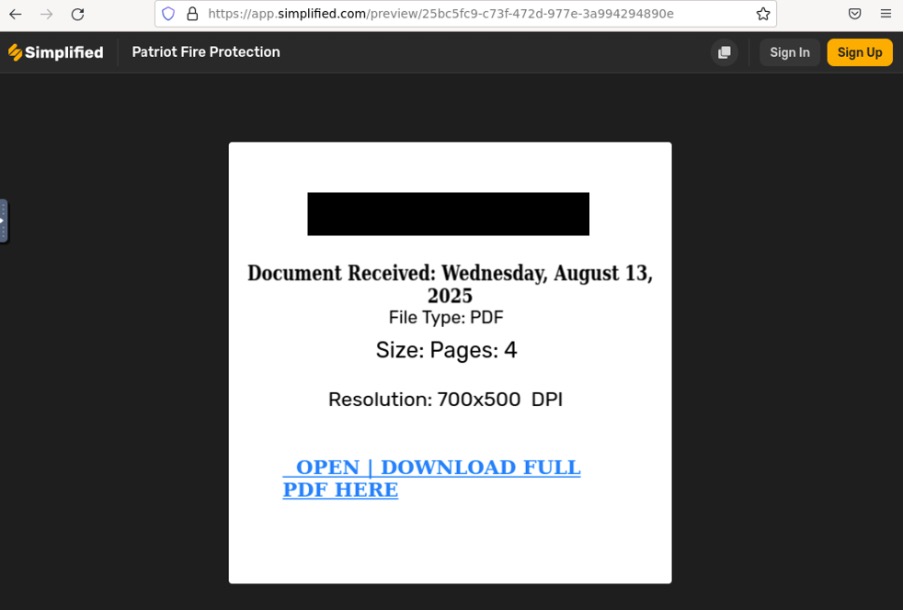
A legitimate file sharing site used in phishing emails to host a secondary malicious link.
Figure 1: A legitimate file sharing site used in phishing emails to host a secondary malicious link.
Another example of a legitimate file sharing endpoint sent in a phishing email and used to host a malicious link.
Figure 2: Another example of a legitimate file sharing endpoint sent in a phishing email and used to host a malicious link.

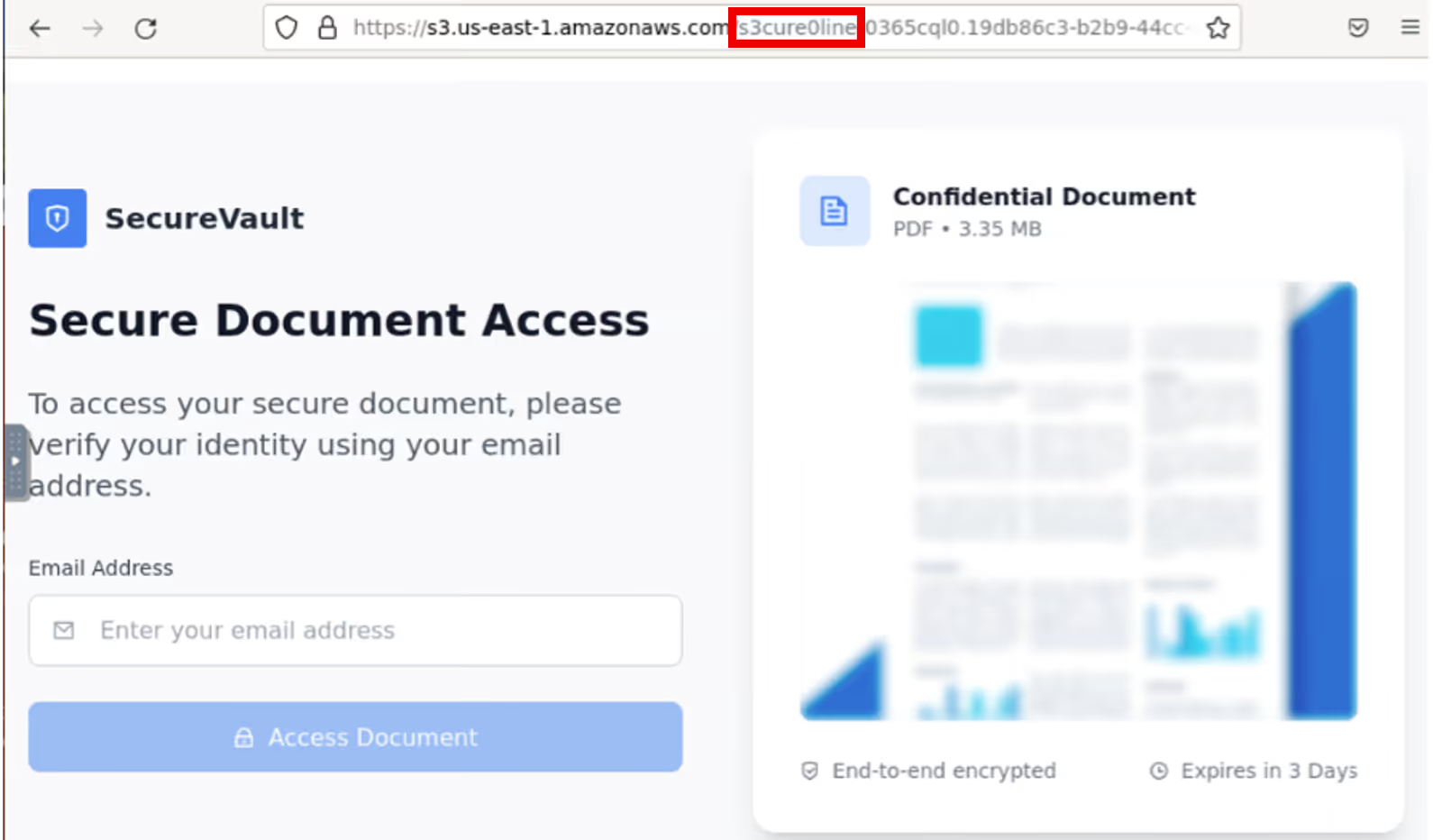
If followed, the recipient would be redirected, sometimes via CAPTCHA, to fake Microsoft login pages designed to capturing credentials, namely http://pub-ac94c05b39aa4f75ad1df88d384932b8.r2[.]dev/offline[.]html and https://s3.us-east-1.amazonaws[.]com/s3cure0line-0365cql0.19db86c3-b2b9-44cc-b339-36da233a3be2ml0qin/s3cccql0.19db86c3-b2b9-44cc-b339-36da233a3be2%26l0qn[.]html#.

The latter made use of homoglyphs to deceive the user, with a link referencing ‘s3cure0line’, rather than ‘secureonline’. Post-incident investigation using open-source intelligence (OSINT) confirmed that the domains were linked to malicious phishing endpoints [3] [4].
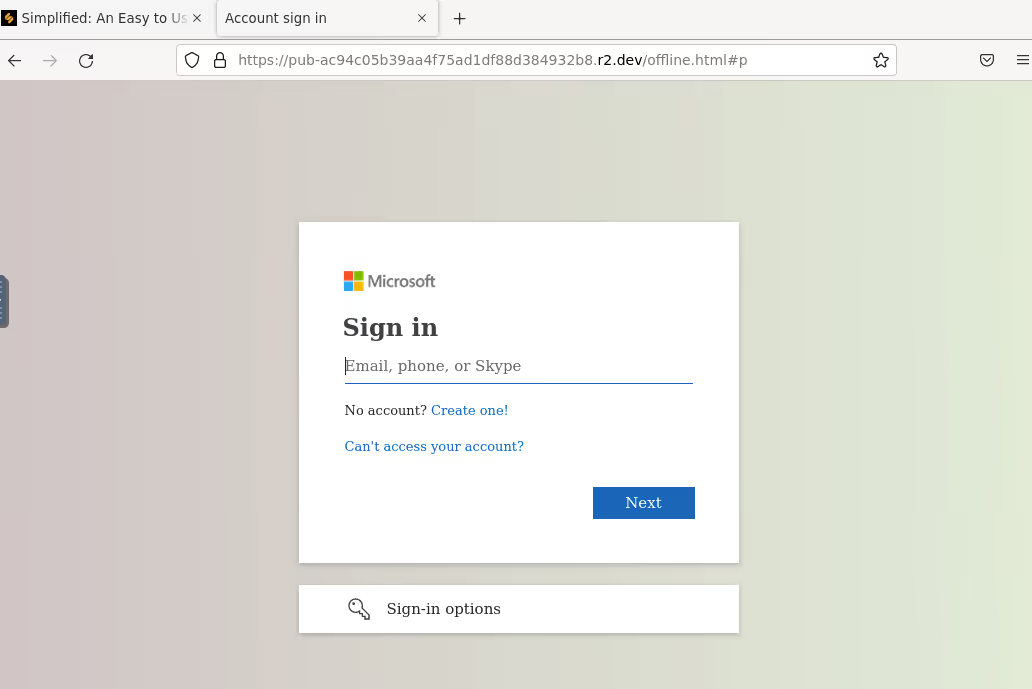
Fake Microsoft login page designed to harvest credentials.
Figure 3: Fake Microsoft login page designed to harvest credentials.
Phishing kit with likely AI-generated image, designed to harvest user credentials. The URL uses ‘s3cure0line’ instead of ‘secureonline’, a subtle misspelling intended to deceive users.
Figure 4: Phishing kit with likely AI-generated image, designed to harvest user credentials. The URL uses ‘s3cure0line’ instead of ‘secureonline’, a subtle misspelling intended to deceive users.

Darktrace Anomaly Detection

Some senders were unknown to the network, with no previous outbound or inbound emails. Some had sent the email to multiple undisclosed recipients using BCC, an unusual behavior for a new sender.  

Where the sender organization was an existing vendor, Darktrace recognized out-of-character behavior, in this case it was the first time a link to a particular file-sharing site had been shared. Often the links themselves exhibited anomalies, either being unusually prominent or hidden altogether - masked by text or a clickable image.

Crucially, Darktrace / EMAIL is able to identify malicious links at the time of processing the emails, without needing to visit the URLs or analyze the destination endpoints, meaning even the most convincing phishing pages cannot evade detection – meaning even the most convincing phishing emails cannot evade detection. This sets it apart from many competitors who rely on crawling the endpoints present in emails. This, among other things, risks disruption to user experience, such as unsubscribing them from emails, for instance.

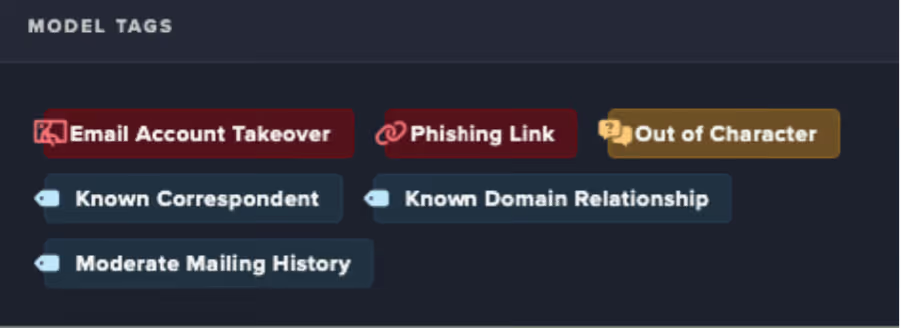
Darktrace was also able to determine that the malicious emails originated from a compromised mailbox, using a series of behavioral and contextual metrics to make the identification. Upon analysis of the emails, Darktrace autonomously assigned several contextual tags to highlight their concerning elements, indicating that the messages contained phishing links, were likely sent from a compromised account, and originated from a known correspondent exhibiting out-of-character behavior.
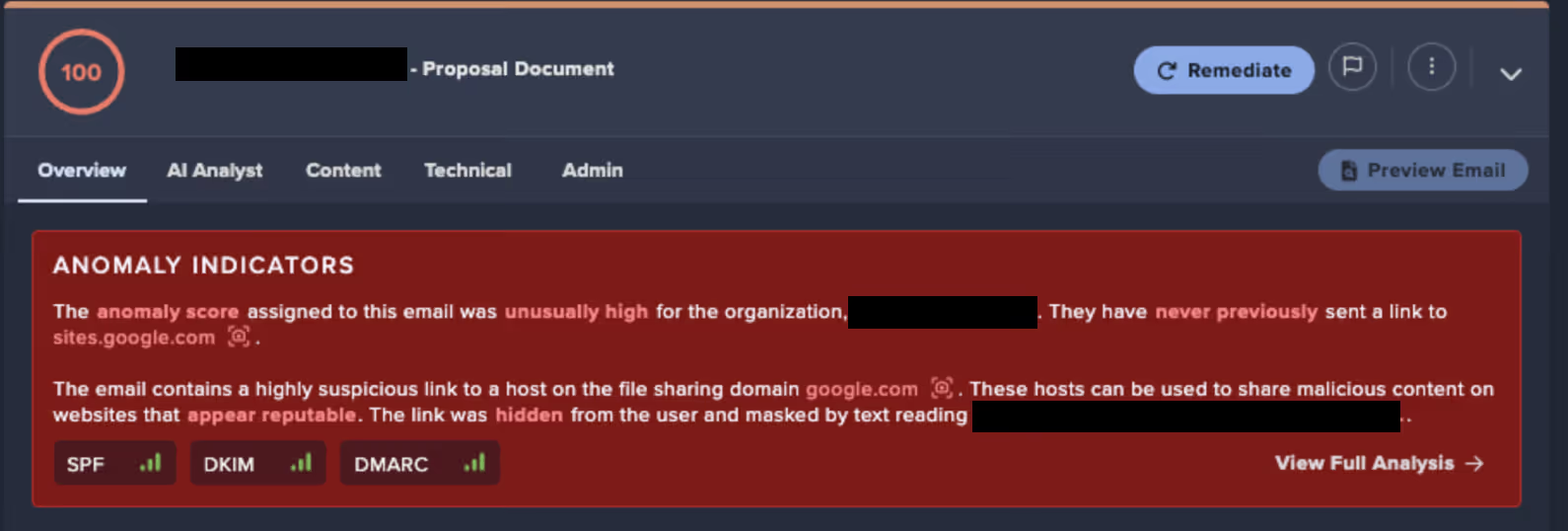
A summary of the anomalous email, confirming that it contained a highly suspicious link.
Figure 5: Tags assigned to offending emails by Darktrace / EMAIL.

Figure 6: A summary of the anomalous email, confirming that it contained a highly suspicious link.

Out-of-character behavior caught in real-time

In another customer environment around the same time Darktrace / EMAIL detected multiple emails with carefully crafted, contextually appropriate subject lines sent from an established correspondent being sent to 30 different recipients. In many cases, the attacker hijacked existing threads and inserted their malicious emails into an ongoing conversation in an effort to blend in and avoid detection. As in the previous, the attacker leveraged a well-known service, this time ClickFunnels, to host a document containing another malicious link. Once again, they were assigned a Microsoft Spam Confidence Level of 1, indicating that they were not considered malicious.
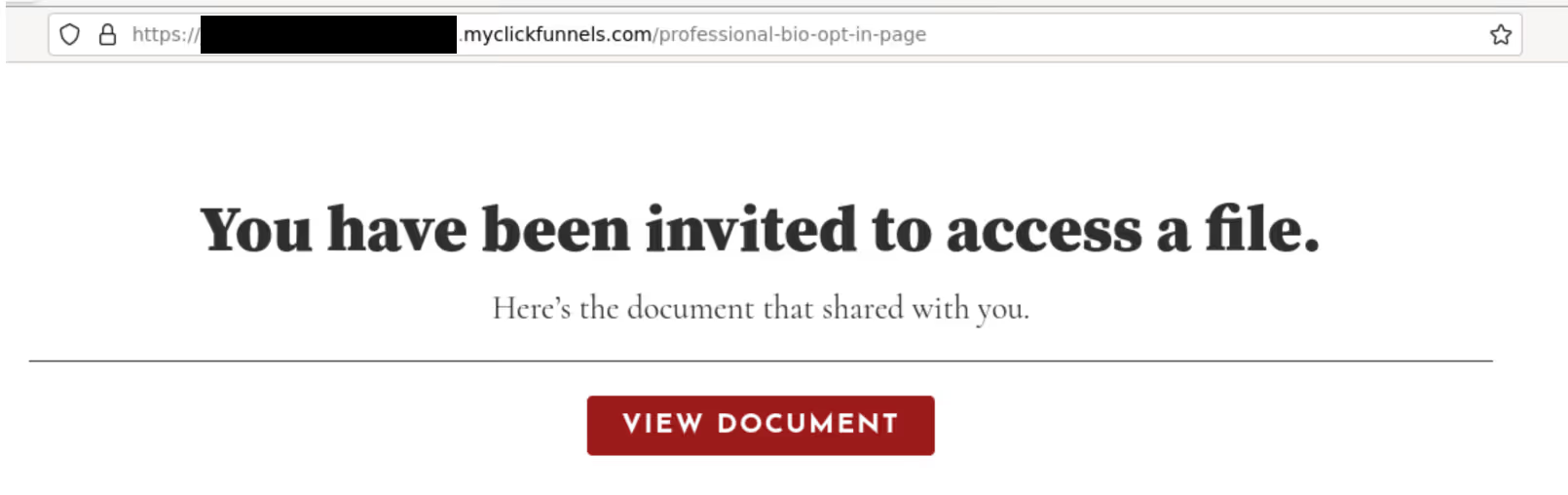
The legitimate ClickFunnels page used to host a malicious phishing link.
Figure 7: The legitimate ClickFunnels page used to host a malicious phishing link.

This time, however, the customer had Darktrace / EMAIL fully enabled to take Autonomous Response against suspicious emails. As a result, when Darktrace detected the out-of-character behavior, specifically, the sharing of a link to a previously unused file-sharing domain, and identified the likely malicious intent of the message, it held the email, preventing it from reaching recipients’ inboxes and effectively shutting down the attack.
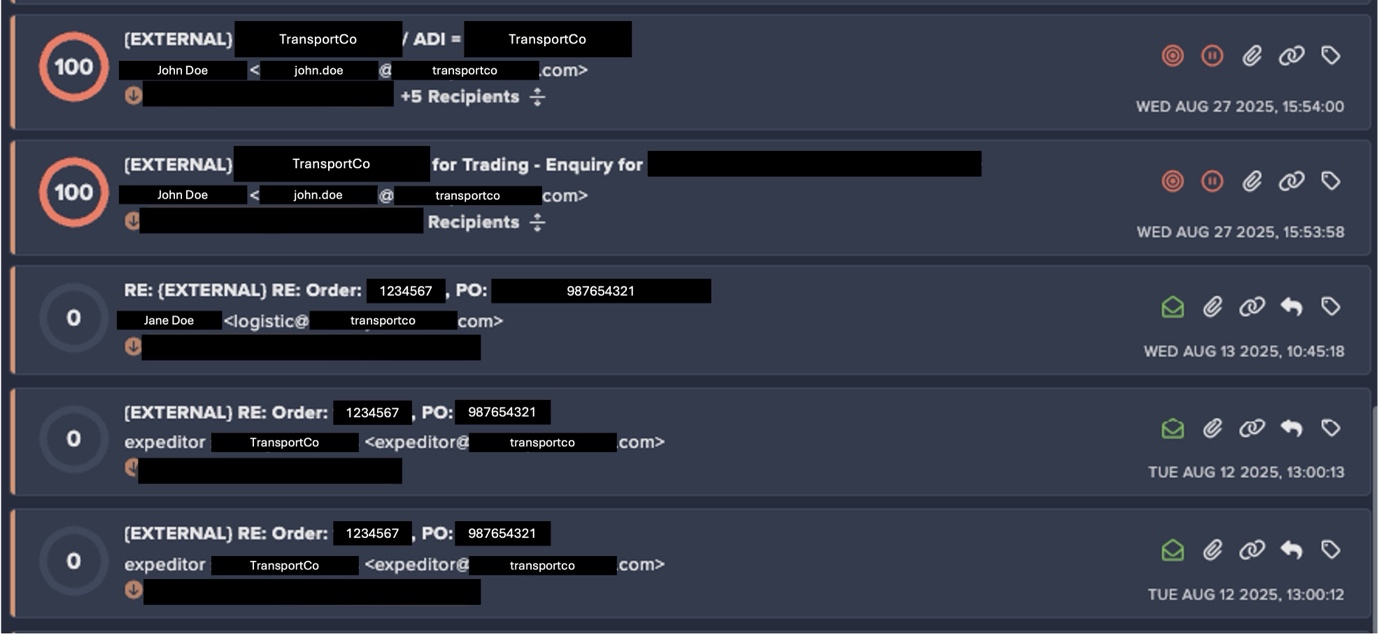
Figure 8: Darktrace / EMAIL’s detection of malicious emails inserted into an existing thread.*

*To preserve anonymity, all real customer names, email addresses, and other identifying details have been redacted and replaced with fictitious placeholders.

Legitimate messages in the conversation were assigned an Anomaly Score of 0, while the newly inserted malicious emails identified and were flagged with the maximum score of 100.

Key takeaways for defenders

Phishing remains big business, and as the landscape evolves, today’s campaigns often look very different from earlier versions. As with network-based attacks, threat actors are increasingly leveraging legitimate tools and exploiting trusted relationships to carry out their malicious goals, often staying under the radar of security teams and traditional email defenses.

As attackers continue to exploit trusted relationships between organizations and their third-party associates, security teams must remain vigilant to unexpected or suspicious email activity. Protecting the digital estate requires an email solution capable of identifying malicious characteristics, even when they originate from otherwise trusted senders.

Credit to Jennifer Beckett (Cyber Analyst), Patrick Anjos (Senior Cyber Analyst), Ryan Traill (Analyst Content Lead), Kiri Addison (Director of Product)

Appendices

IoC - Type - Description + Confidence  

- http://pub-ac94c05b39aa4f75ad1df88d384932b8.r2[.]dev/offline[.]html#p – fake Microsoft login page

- https://s3.us-east-1.amazonaws[.]com/s3cure0line-0365cql0.19db86c3-b2b9-44cc-b339-36da233a3be2ml0qin/s3cccql0.19db86c3-b2b9-44cc-b339-36da233a3be2%26l0qn[.]html# - link to domain used in homoglyph attack

MITRE ATT&CK Mapping  

Tactic – Technique – Sub-Technique  

Initial Access - Phishing – (T1566)  

References

1.     https://gitnux.org/third-party-risk-statistics/

2.     https://learn.microsoft.com/en-us/defender-office-365/anti-spam-spam-confidence-level-scl-about

3.     https://www.virustotal.com/gui/url/5df9aae8f78445a590f674d7b64c69630c1473c294ce5337d73732c03ab7fca2/detection

4.     https://www.virustotal.com/gui/url/695d0d173d1bd4755eb79952704e3f2f2b87d1a08e2ec660b98a4cc65f6b2577/details

The content provided in this blog is published by Darktrace for general informational purposes only and reflects our understanding of cybersecurity topics, trends, incidents, and developments at the time of publication. While we strive to ensure accuracy and relevance, the information is provided “as is” without any representations or warranties, express or implied. Darktrace makes no guarantees regarding the completeness, accuracy, reliability, or timeliness of any information presented and expressly disclaims all warranties.

Nothing in this blog constitutes legal, technical, or professional advice, and readers should consult qualified professionals before acting on any information contained herein. Any references to third-party organizations, technologies, threat actors, or incidents are for informational purposes only and do not imply affiliation, endorsement, or recommendation.

Darktrace, its affiliates, employees, or agents shall not be held liable for any loss, damage, or harm arising from the use of or reliance on the information in this blog.

The cybersecurity landscape evolves rapidly, and blog content may become outdated or superseded. We reserve the right to update, modify, or remove any content

The Darktrace / EMAIL Solution Brief

Learn more about how Darktrace / EMAIL stops block novel threats up to 13 days earlier than other tools
No items found.
Inside the SOC
Darktrace cyber analysts are world-class experts in threat intelligence, threat hunting and incident response, and provide 24/7 SOC support to thousands of Darktrace customers around the globe. Inside the SOC is exclusively authored by these experts, providing analysis of cyber incidents and threat trends, based on real-world experience in the field.
No items found.

More in this series

No items found.

Blog

/

Network

/

April 2, 2026

How Chinese-Nexus Cyber Operations Have Evolved – And What It Means For Cyber Risk and Resilience 

Chinese-Nexus Cyber OperationsDefault blog imageDefault blog image

Cybersecurity has traditionally organized risk around incidents, breaches, campaigns, and threat groups. Those elements still matter—but if we fixate on individual incidents, we risk missing the shaping of the entire ecosystem. Nation‑state–aligned operators are increasingly using cyber operations to establish long-term strategic leverage, not just to execute isolated attacks or short‑term objectives.  

Our latest research, Crimson Echo, shifts the lens accordingly. Instead of dissecting campaigns, malware families, or actor labels as discrete events, the threat research team analyzed Chinese‑nexus activity as a continuum of behaviors over time. That broader view reveals how these operators position themselves within environments: quietly, patiently, and persistently—often preparing the ground long before any recognizable “incident” occurs.  

How Chinese-nexus cyber threats have changed over time

Chinese-nexus cyber activity has evolved in four phases over the past two decades. This ranges from early, high-volume operations in the 1990s and early 2000s to more structured, strategically-aligned activity in the 2010s, and now toward highly adaptive, identity-centric intrusions.  

Today’s phase is defined by scale, operational restraint, and persistence. Attackers are establishing access, evaluating its strategic value, and maintaining it over time. This reflects a broader shift: cyber operations are increasingly integrated into long-term economic and geopolitical strategies. Access to digital environments, specifically those tied to critical national infrastructure, supply chains, and advanced technology, has become a form of strategic leverage for the long-term.  

How Darktrace analysts took a behavioral approach to a complex problem

One of the challenges in analyzing nation-state cyber activity is attribution. Traditional approaches often rely on tracking specific threat groups, malware families, or infrastructure. But these change constantly, and in the case of Chinese-nexus operations, they often overlap.

Crimson Echo is the result of a retrospective analysis of three years of anomalous activity observed across the Darktrace fleet between July 2022 and September 2025. Using behavioral detection, threat hunting, open-source intelligence, and a structured attribution framework (the Darktrace Cybersecurity Attribution Framework), the team identified dozens of medium- to high-confidence cases and analyzed them for recurring operational patterns.  

This long-horizon, behavior-centric approach allows Darktrace to identify consistent patterns in how intrusions unfold, reinforcing that behavioral patterns that matter.  

What the data shows

Several clear trends emerged from the analysis:

  • Targeting is concentrated in strategically important sectors. Across the dataset, 88% of intrusions occurred in organizations classified as critical infrastructure, including transportation, critical manufacturing, telecommunications, government, healthcare, and Information Technology (IT) services.  
  • Strategically important Western economies are a primary focus. The US alone accounted for 22.5% of observed cases, and when combined with major European economies including Germany, Italy, Spain and the UK, over half of all intrusions (55%) were concentrated in these regions.  
  • Nearly 63% of intrusions of intrusions began with the exploitation of internet-facing systems, reinforcing the continued risk posed by externally exposed infrastructure.  

Two models of cyber operations

Across the dataset, Chinese-nexus activity followed two operational models.  

The first is best described as “smash and grab.” These are short-horizon intrusions optimized for speed. Attackers move quickly – often exfiltrating data within 48 hours – and prioritize scale over stealth. The median duration of these compromises is around 10 days. It’s clear they are willing to risk detection for short-term gain.  

The second is “low and slow.” These operations were less prevalent in the dataset, but potentially more consequential. Here, attackers prioritize persistence, establishing durable access through identity systems and legitimate administrative tools, so they can maintain access undetected for months or even years. In one notable case, the actor had fully compromised the environment and established persistence, only to resurface in the environment more than 600 days after. The operational pause underscores both the depth of the intrusion and the actor’s long‑term strategic intent. This suggests that cyber access is a strategic asset to preserve and leverage over time, and we observed these attacks most often inin sectors of the high strategic importance.  

It’s important to note that the same operational ecosystem can employ both models concurrently, selecting the appropriate model based on target value, urgency, intended access. The observation of a “smash and grab” model should not be solely interpreted as a failure of tradecraft, but instead an operational choice likely aligned with objectives. Where “low and slow” operations are optimized for patience, smash and grab is optimized for speed; both seemingly are deliberate operational choices, not necessarily indicators of capability.  

Rethinking cyber risk

For many organizations, cyber risk is still framed as a series of discrete events. Something happens, it is detected and contained, and the organization moves on. But persistent access, particularly in deeply interconnected environments that span cloud, identity-based SaaS and agentic systems, and complex supply chain networks, creates a major ongoing exposure risk. Even in the absence of disruption or data theft, that access can provide insight into operations, dependencies, and strategic decision-making. Cyber risk increasingly resembles long-term competitive intelligence.  

This has impact beyond the Security Operations Center. Organizations need to shift how they think about governance, visibility, and resilience, and treat cyber exposure as a structural business risk instead of an incident response challenge.  

What comes next

The goal of this research is to provide a clearer understanding of how these operations work, so defenders can recognize them earlier and respond more effectively. That includes shifting from tracking indicators to understanding behaviors, treating identity providers as critical infrastructure risks, expanding supplier oversight, investing in rapid containment capabilities, and more.  

Learn more about the findings of Darktrace’s latest research, Crimson Echo: Understanding Chinese-nexus Cyber Operations Through Behavioral Analysis, by downloading the full report and summaries for business leaders, CISOs, and SOC analysts here.  

Continue reading
About the author
Nathaniel Jones
VP, Security & AI Strategy, Field CISO

Blog

/

Proactive Security

/

April 1, 2026

AI-powered security for a rapidly growing grocery enterprise

Default blog imageDefault blog image

Protecting a complex, fast-growing retail organization

For this multi-banner grocery holding organization, cybersecurity is considered an essential business enabler, protecting operations, growth, and customer trust. The organization’s lean IT team manages a highly distributed environment spanning corporate offices, 100+ stores, distribution centers and  thousands of endpoints, users, and third-party connections.

Mergers and acquisitions fueled rapid growth, but they also introduced escalating complexity that constrained visibility into users, endpoints, and security risks inherited across acquired environments.

Closing critical visibility gaps with limited resources

Enterprise-wide visibility is a top priority for the organization, says the  Vice President of Information Technology. “We needed insights beyond the perimeter into how users and devices were behaving across the organization.”

A security breach that occurred before the current IT leadership joined the company reinforced the urgency and elevated cybersecurity to an executive-level priority with a focus on protecting customer trust. The goal was to build a multi-layered security model that could deliver autonomous, enterprise-wide protection without adding headcount.

Managing cyber risk in M&A

Mergers and acquisitions are central to the grocery holding company’s growth strategy. But each transaction introduces new cyber risk, including inherited network architectures, inconsistent tooling, excessive privileges, and remnants of prior security incidents that were never fully remediated.

“Our M&A targets range from small chains with a single IT person and limited cyber tools to large chains with more developed IT teams, toolsets and instrumentation,” explains the VP of IT. “We needed a fast, repeatable, and reliable way to assess cyber risk before transactions closed.”

AI-driven security built for scale, speed, and resilience

Rather than layering additional point tools onto an already complex environment, the retailer adopted the Darktrace ActiveAI Security Platform™ in 2020 as part of a broader modernization effort to improve resilience, close visibility gaps, and establish a security foundation that could scale with growth.

“Darktrace’s AI-driven approach provided the ideal solution to these challenges,” shares the VP of IT. “It has empowered our organization to maintain a robust security strategy, ensuring the protection of our network and the smooth operation of our business.”

Enterprise-wide visibility into traffic  

By monitoring both north-south and east-west traffic and applying Self-Learning AI, Darktrace develops a dynamic understanding of how users and devices normally behave across locations, roles, and systems.

“Modeling normal behavior across the environment enables us to quickly spot behavior that doesn’t fit. Even subtle changes that could signal a threat but appear legitimate at first glance,” explains the VP of IT.

Real-time threat containment, 24/7

Adopting autonomous response has created operational breathing room for the security team, says the company’s Cybersecurity  Engineer.

“Early on, we enabled full Darktrace autonomous mode and we continue to do so today,” shares the IT Security Architect. “Allowing the technology to act first gives us the time we need to investigate incidents during business hours without putting the business at risk.”

Unified, actionable view of security ecosystem

The grocery retailer integrated Darktrace with its existing security ecosystem of firewalls, vulnerability management tools, and endpoint detection and response, and the VP of IT described the adoption process as “exceptionally smooth.”

The team can correlate enterprise-wide security data for a unified and actionable picture of all activity and risk. Using this “single pane of glass” approach, the retailer trains Level 1 and Level 2 operations staff to assist with investigations and user follow-ups, effectively extending the reach of the security function without expanding headcount.

From reactive defense to security at scale

With Darktrace delivering continuous visibility, autonomous containment, and integrated security workflows, the organization has strengthened its cybersecurity posture while improving operational efficiency. The result is a security model that not only reduces risk, but also supports growth, resilience, and informed decision-making at the business level.

Faster detection, faster resolution

With autonomous detection and response, the retailer can immediately contain risk while analysts investigate and validate activity. With this approach, the company can maintain continuous protection even outside business hours and reduce the chance of lateral spread across systems or locations.

Enterprise-grade protection with a lean team

From cloud environments to clients to SaaS collaboration tools, Darktrace provides holistic autonomous AI defense, processing petabytes of the organization’s network traffic and investigating millions of individual events that could be indicative of a wider incident.

Today, Darktrace autonomously conducts the majority of all investigations on behalf of the IT team, escalating only a tiny fraction for analyst review. The impact has been profound, freeing analysts from endless alerts and hours of triage so they can focus on more valuable, proactive, and gratifying work.

“From an operational perspective, Darktrace gives us time back,” says the Cybersecurity Engineer. More importantly, says the VP of IT, “it gives us peace of mind that we’re protected even if we’re not actively monitoring every alert.”

A strategic input for M&A decision-making

One of the most strategic outcomes has been the role of cybersecurity on M&A. 90 days prior to closing a transaction, the security team uses Darktrace alongside other tools to perform a cyber risk assessment of the potential acquisition. “Our approach with Darktrace has consistently identified gaps and exposed risks,” says the VP of IT, including:

  • Remnants of previous incidents that were never fully remediated
  • Network configurations with direct internet exposure
  • Excessive administrative privileges in Active Directory or on critical hosts

While security findings may not alter deal timelines, the VP of IT says they can have enormous business implications. “With early visibility into these risks, we can reduce exposure to inherited cyber threats, strengthen our position during negotiations, and establish clear remediation requirements.”

A security strategy built to evolve with the business

As the holding group expands its cloud footprint, it will extend Darktrace protections into Azure, applying the same AI-driven visibility and autonomous response to cloud workloads. The VP of IT says Darktrace's evolving capabilities will be instrumental in addressing the organization’s future cybersecurity needs and ability to adapt to the dynamic nature of cloud security.

“With Darktrace’s AI-driven approach, we have moved beyond reactive defense, establishing a resilient security foundation for confident expansion and modernization.”

Continue reading
About the author
Your data. Our AI.
Elevate your network security with Darktrace AI