Generative AI tools have increased the risk of BEC, and traditional cybersecurity defenses struggle to stay ahead of the growing speed, scale, and sophistication of attacks. Only multilayered, defense-in-depth strategies can counter the AI-powered BEC threat.
Darktrace cyber analysts are world-class experts in threat intelligence, threat hunting and incident response, and provide 24/7 SOC support to thousands of Darktrace customers around the globe. Inside the SOC is exclusively authored by these experts, providing analysis of cyber incidents and threat trends, based on real-world experience in the field.
Written by
Carlos Gray
Senior Product Marketing Manager, Email
Share
30
Sep 2024
As people continue to be the weak link in most organizations’ cybersecurity practices, the growing use of generative AI tools in cyber-attacks makes email, their primary communications channel, a more compelling target than ever. The risk associated with Business Email Compromise (BEC) in particular continues to rise as generative AI tools equip attackers to build and launch social engineering and phishing campaigns with greater speed, scale, and sophistication.
What is BEC?
BEC is defined in different ways, but generally refers to cyber-attacks in which attackers abuse email — and users’ trust — to trick employees into transferring funds or divulging sensitive company data.
Unlike generic phishing emails, most BEC attacks do not rely on “spray and pray” dissemination or on users’ clicking bogus links or downloading malicious attachments. Instead, modern BEC campaigns use a technique called “pretexting.”
What is pretexting?
Pretexting is a more specific form of phishing that describes an urgent but false situation — the pretext — that requires the transfer of funds or revelation of confidential data.
This type of attack, and therefore BEC, is dominating the email threat landscape. As reported in Verizon’s 2024 Data Breach Investigation Report, recently there has been a “clear overtaking of pretexting as a more likely social action than phishing.” The data shows pretexting, “continues to be the leading cause of cybersecurity incidents (accounting for 73% of breaches)” and one of “the most successful ways of monetizing a breach.”
Pretexting and BEC work so well because they exploit humans’ natural inclination to trust the people and companies they know. AI compounds the risk by making it easier for attackers to mimic known entities and harder for security tools and teams – let alone unsuspecting recipients of routine emails – to tell the difference.
BEC attacks now incorporate AI
With the growing use of AI by threat actors, trends point to BEC gaining momentum as a threat vector and becoming harder to detect. By adding ingenuity, machine speed, and scale, generative AI tools like OpenAI’s ChatGPT give threat actors the ability to create more personalized, targeted, and convincing emails at scale.
Large Language Models (LLMs) like ChatGPT can draft believable messages that feel like emails that target recipients expect to receive. For example, generative AI tools can be used to send fake invoices from vendors known to be involved with well-publicized construction projects. These messages also prove harder to detect as AI automatically:
Avoids misspellings and grammatical errors
Creates multiple variations of email text
Translates messages that read well in multiple languages
And accomplishes additional, more targeted tactics
AI creates a force multiplier that allows primitive mass-mail campaigns to evolve into sophisticated automated attacks. Instead of spending weeks studying the target to craft an effective email, cybercriminals might only spend an hour or two and achieve a better result.
Challenges of detecting AI-powered BEC attacks
Rules-based detections miss unknown attacks
One major challenge comes from the fact that rules based on known attacks have no basis to deny new threats. While native email security tools defend against known attacks, many modern BEC attacks use entirely novel language and can omit payloads altogether. Instead, they rely on pure social engineering or bide their time until security tools recognize the new sender as a legitimate contact.
Most defensive AI can’t keep pace with attacker innovation
Security tools might focus on the meaning of an email’s text in trying to recognize a BEC attack, but defenders still end up in a rules and signature rat race. Some newer Integrated Cloud Email Security (ICES) vendors attempt to use AI defensively to improve the flawed approach of only looking for exact matches. Employing data augmentation to identify similar-looking emails helps to a point but not enough to outpace novel attacks built with generative AI.
What tools can stop BEC?
A modern defense-in-depth strategy must use AI to counter the impact of AI in the hands of attackers. As found in our 2024 State of AI Cybersecurity Report, 96% of survey participants believe AI-driven security solutions are a must have for countering AI-powered threats.
However, not all AI tools are the same. Since BEC attacks continue to change, defensive AI-powered tools should focus less on learning what attacks look like, and more on learning normal behavior for the business. By understanding expected behavior on the company’s side, the security solution will be able to recognize anomalous and therefore suspicious activity, regardless of the word choice or payload type.
To combat the speed and scale of new attacks, an AI-led BEC defense should spot novel threats.
Self-Learning AI builds profiles for every email user, including their relationships, tone and sentiment, content, and link sharing patterns. Rich context helps in understanding how people communicate and identifying deviations from the normal routine to determine what does and does not belong in an individual’s inbox and outbox.
Other email security vendors may claim to use behavioral AI and unsupervised machine learning in their products, but their AI are still pre-trained with historical data or signatures to recognize malicious activity, rather than demonstrating a true learning process. Darktrace’s Self Learning-AI truly learns from the organization in which it is installed, allowing it to detect unknown and novel vectors that other security tools are not yet trained on.
Because Darktrace understands the human behind email communications rather than knowledge of past attacks, Darktrace / EMAIL can stop the most sophisticated and evolving email security risks. It enhances your native email security by leveraging business-centric behavioral anomaly detection across inbound, outbound, and lateral messages in both email and Teams.
This unique approach quickly identifies sophisticated threats like BEC, ransomware, phishing, and supply chain attacks without duplicating existing capabilities or relying on traditional rules, signatures, and payload analysis.
The power of Darktrace’s AI can be seen in its speed and adaptability: Darktrace / EMAIL blocks the most novel threats up to 13 days faster than traditional security tools.
Darktrace cyber analysts are world-class experts in threat intelligence, threat hunting and incident response, and provide 24/7 SOC support to thousands of Darktrace customers around the globe. Inside the SOC is exclusively authored by these experts, providing analysis of cyber incidents and threat trends, based on real-world experience in the field.
Journey of a Threat: How Multi-Layered AI Works in Darktrace / EMAIL
Follow a malicious email as it moves through Darktrace / EMAIL’s multi-layered AI system, from raw data to final decision. Each layer works together to detect threats, understand intent, and take autonomous action.
How email-delivered prompt injection attacks can target enterprise AI – and why it matters
Prompt injection is a newly emerging threat, with only a handful of confirmed victims so far – targeting how AI systems use data rather than exploiting traditional software vulnerabilities. As agentic AI becomes embedded across enterprise environments, attackers may attempt to manipulate these systems through hidden instructions in everyday email content.
Darktrace Unites Human Behavior and Threat Detection Across Email, Slack, Teams, and Zoom
Introducing the adaptive era of email security: a unified platform that connects personalized coaching, collaboration tools, and user behavior into a self-improving defense system.
Hola VPN Abuse: From Proxy Traffic to Malware and Cryptomining
Introduction
In enterprise environments, non-compliant software traffic can introduce unexpected exposure by creating unmanaged paths for outbound connectivity. Hola VPN is a notable example because of its peer-to-peer design, which can effectively turn user devices into routing or exit nodes for other parties’ traffic, shifting the risk profile from that of a traditional virtual private network (VPN) to something closer to a distributed proxy.
As a result, the appearance of Hola-related activity, whether from prior installation or unintended background connections, should be treated with caution. Such activity may provide a foothold for malicious behavior, including lateral movement or command-and-control communication.
This blog explores how Hola-associated activity appeared as part of broader patterns of suspicious behavior observed across the Darktrace customer base.
The campaign
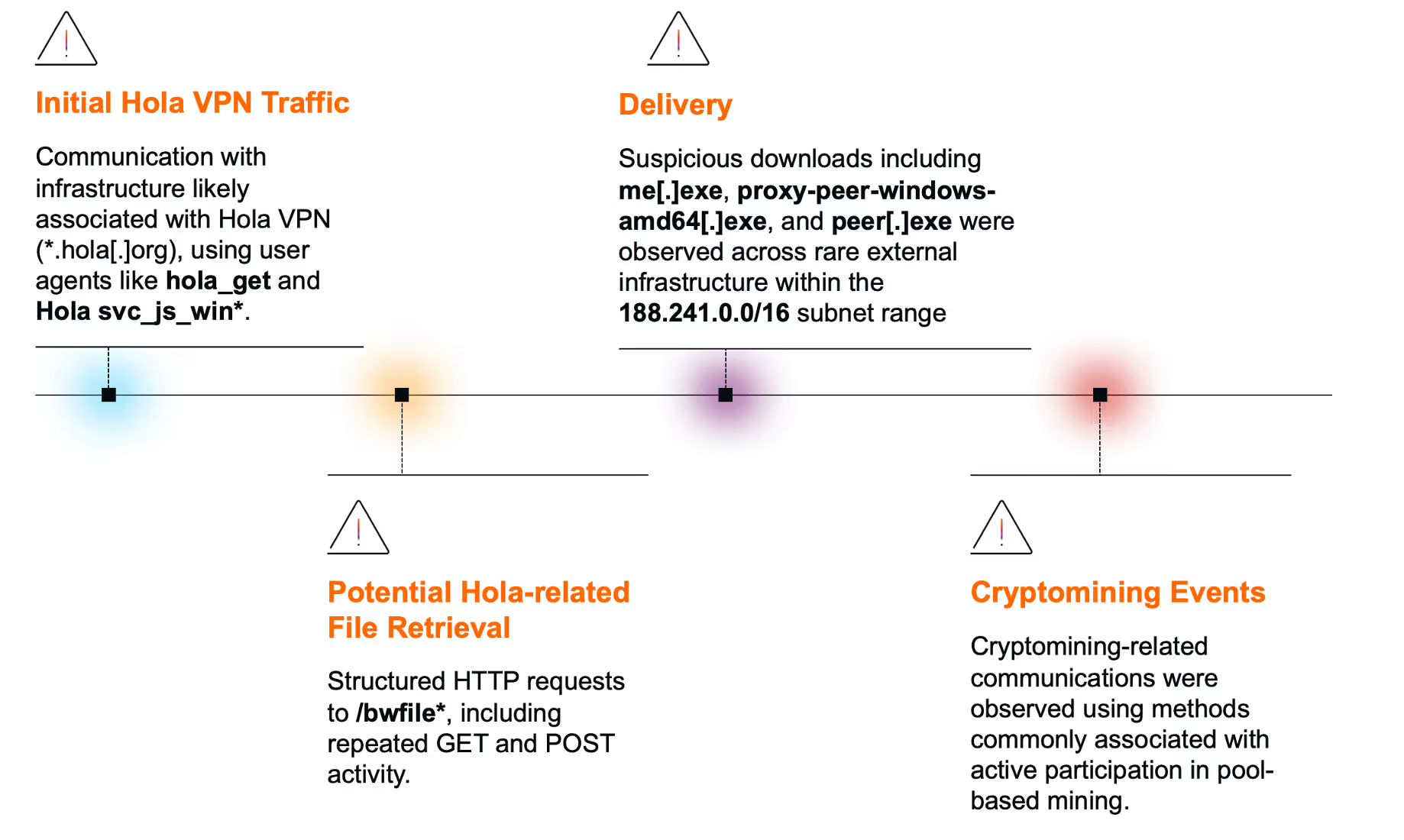
In February and March 2026, Darktrace observed similar anomalous activity across multiple customer environments, with affected devices showing consistent behavioral patterns. These included connections to multiple *.hola[.]org endpoints using Hola-related user agents, suggesting interaction with Hola infrastructure rather than isolated or incidental traffic.
Following these connections, affected customer environments showed downloads of suspicious executable files from rare external endpoints 188.241.219[.]55 and 184.241.218[.]111. Both endpoints have been flagged as potentially malicious by open-source intelligence (OSINT) [1][2].
These downloads were conducted using consistent user agents across impacted customers, specifically ‘Hola svc_js_win32/1.249.408’ and ‘Hola svc_js_win32/1.251.389’, suggesting a possible association with Hola-related activity.
Notably, this pattern aligns with recent reporting that, in some cases, Hola distributed an undeclared executable component, me[.]exe, which was later assessed to be a likely Monero-mining binary introduced via a compromised delivery pipeline [3].
Case Study 1
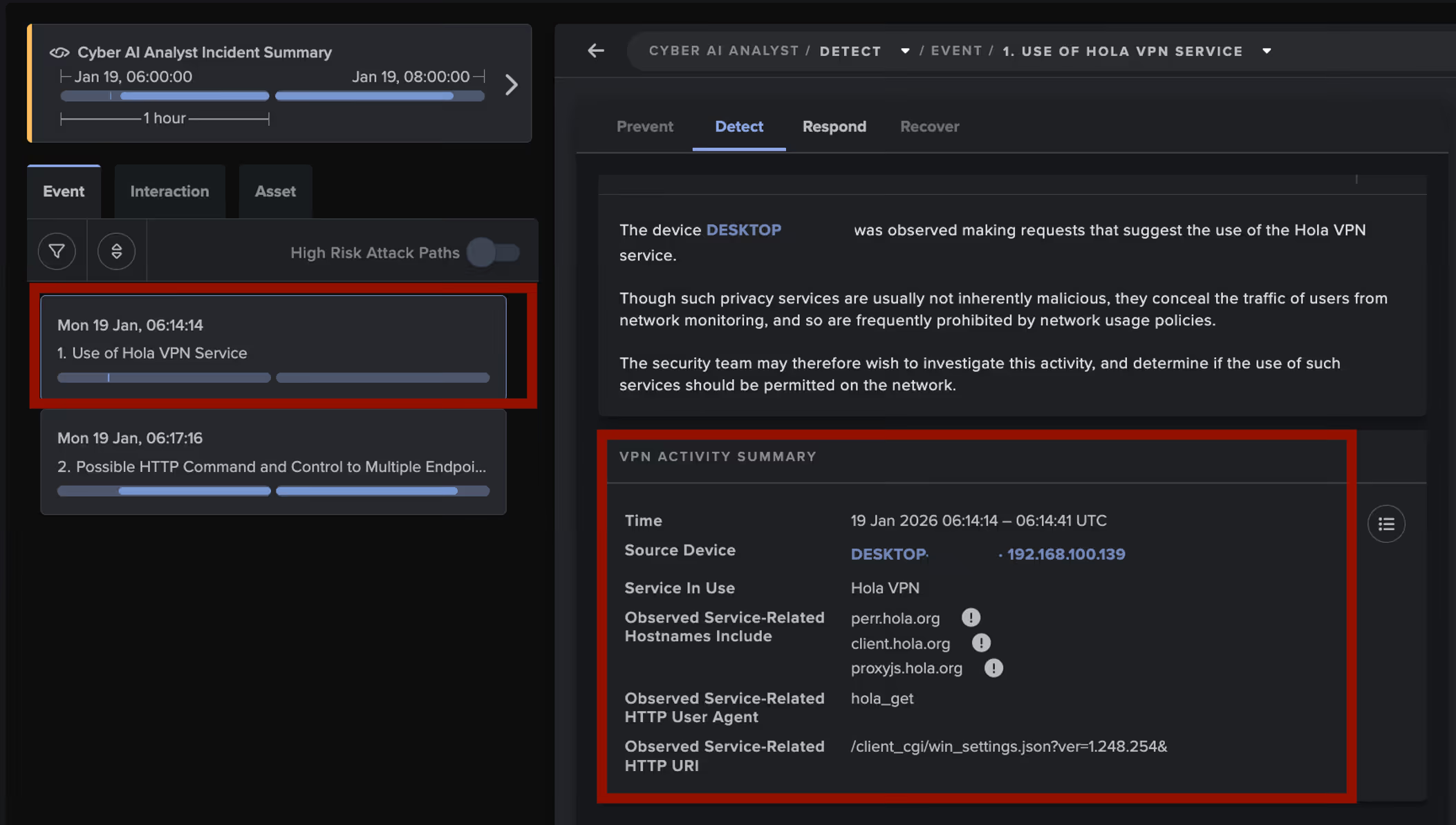
Darktrace first observed a new device on January 19, 2026, within a customer environment based in the Europe, Middle East, and Africa (EMEA) region. On the same day it appeared on the network, the device communicated with multiple pieces of Hola VPN-linked infrastructure before downloading a binary from a hola[.]org subdomain.
Figure 1: Cyber AI Analyst investigation highlighting Hola VPN service activity potentially associated with subsequent HTTP command-and-control (C2) connections.
Subsequent Darktrace telemetry revealed a recurring pattern of activity from the day the device was first observed through to March 4, 2026. During this period, the device repeatedly issued HTTP GET requests to the URI /bwfile?size=1048576, each returning a 200 OK response, indicating successful file retrieval.
This behavior was accompanied by a POST request to /bwfile, followed by an additional GET request for a significantly larger file at /bwfile?size=26214400, suggesting a deliberate and structured file transfer pattern.
Notably, the binary download activity was not tied to a single static host. Instead, it was observed across multiple URLs that changed over time while remaining within the same hola[.]org domain. This pattern suggests the use of rotating or distributed delivery infrastructure rather than a fixed endpoint.
Figure 2: Variation in URLs over time within the same hola[.]org domain, indicating the use of dynamically changing endpoints.
Across these events, the activity was consistently associated with the user agent Hola svc_js_win32/1.249.408, further linking the traffic to Hola-related service components. Amid these persistent and unusual connections, on February 22, Darktrace observed the device connecting to 188.241.219[.]55/proxy-peer-windows-amd64[.]exe, resulting in the download of an executable file.
Figure 3: File transfer event showing the download of an executable from the rare external endpoint 188.241.219[.]55.
Based on its file hash, the downloaded file was assessed as a likely Trojan downloader [4], with import hash (imphash) values showing similarities to samples linked to Vidar, Rhadamanthys, and Stealc according to OSINT [5]. Overall, this sequence of activity suggests that Hola-related connectivity may have been leveraged as part of a broader malware delivery chain.
Darktrace’s Autonomous Response
Due to the highly unusual activity observed, Darktrace Autonomous Response was triggered by the device’s behavior. However, as the customer deployment was configured in “Human Confirmation” mode, manual approval was required before any action could be taken.
Had the deployment been set to “Fully Autonomous” mode, Darktrace would have automatically:
Blocked connections to the associated ports and external endpoints
Prevented all outgoing network connections from the device
Enforced the device’s established ‘pattern of life’, allowing normal activity to continue while restricting any anomalous behavior
Figure 4: Example of a Darktrace Autonomous Response model highlighting the action that would have been taken, demonstrating how the system identifies anomalous behavior and applies targeted containment measures to restrict suspicious network activity.
Case Study 2
While the first case focused on anomalous activity from a newly observed device, Darktrace also identified cases in which devices had already been communicating with Hola-related endpoints prior to the suspected campaign. This may suggest pre-existing Hola usage within the environment, potentially increasing exposure and creating an avenue for subsequent suspicious activity.
One case involved three devices within a customer network based in the Americas (AMS). In this instance, a different payload was identified: me[.]exe, a potentially malicious cryptocurrency miner also referred to as HolaMonitorService[.]exe [6][7]. The downloads were observed from infrastructure similar to that seen in Case 1, including an IP address within the same 188.241.0.0/16 subnet.
Connections to *.hola[.]org, alongside the use of potential Hola-related user agents consistent with those in Case 1, were also identified, further suggesting a link between the observed activity and Hola-associated infrastructure.
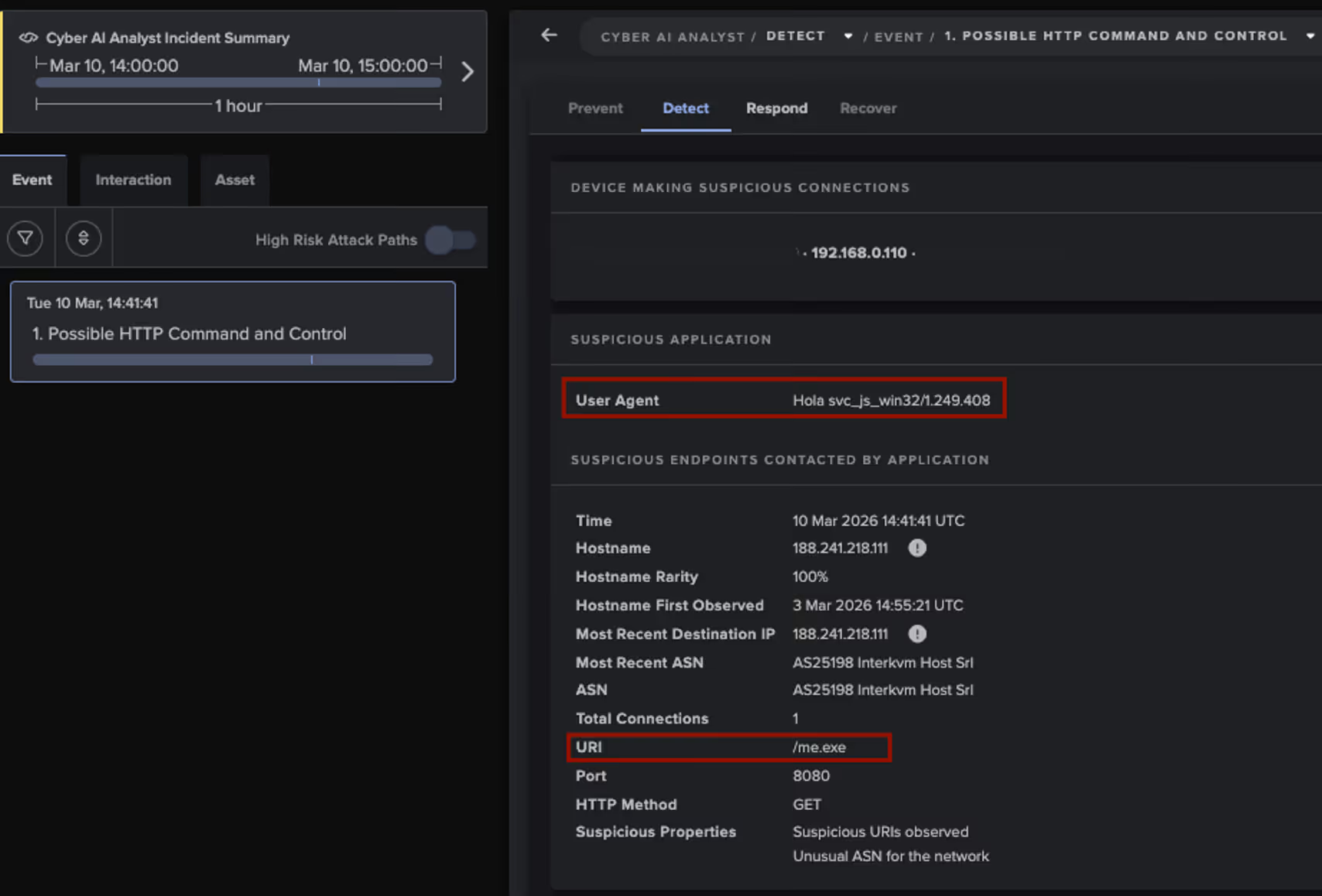
Darktrace observed activity indicative of unusual VPN usage on the first affected device on February 2, followed by telemetry suggesting potential Tor usage. This was later followed by the download of me[.]exe on March 10 from 188.241.218[.]111. Notably, this device was the earliest among the three within the deployment to exhibit the presence of the suspicious executable.
Figure 5: Cyber AI Analyst detection highlighting the download of a suspicious executable from a similar external endpoint in a separate deployment.
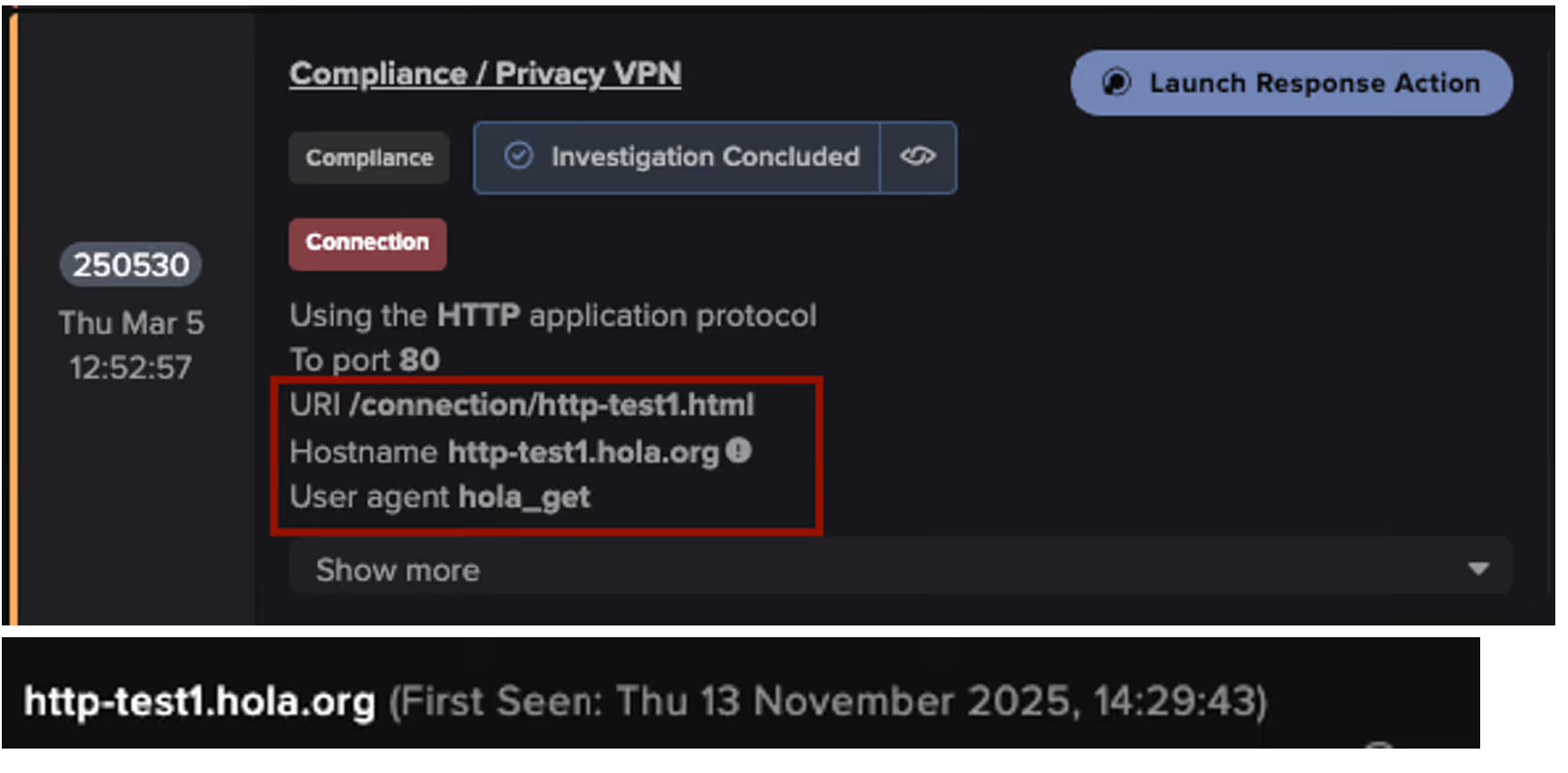
On March 5, 2026, the second affected device exhibited a slightly different progression, initiating connections to http-test1[.]hola[.]org using the user agent ‘hola_get’. This activity was followed by the download of me[.]exe from the same endpoint on March 13, consistent with the broader pattern of Hola-related downloads observed across the environment.
Figure 6: Example of Hola VPN-related connectivity observed on the network prior to the suspected campaign, indicating pre-existing usage that may have contributed to subsequent activity.
The final affected device within this customer’s network demonstrated a more limited but related pattern, also downloading me[.]exe on March 17 using the same ‘hola_get’ user agent.
While the earlier Hola VPN usage observed across the deployment may not have been directly related to the suspected malware campaign, it may nonetheless have contributed to reduced visibility. The presence of pre-existing Hola-related traffic could have obscured malicious activity, making it more difficult to distinguish legitimate usage from attacker-driven behavior and, in turn, hindering the timely identification of the emerging compromise.
Darktrace’s Autonomous Response
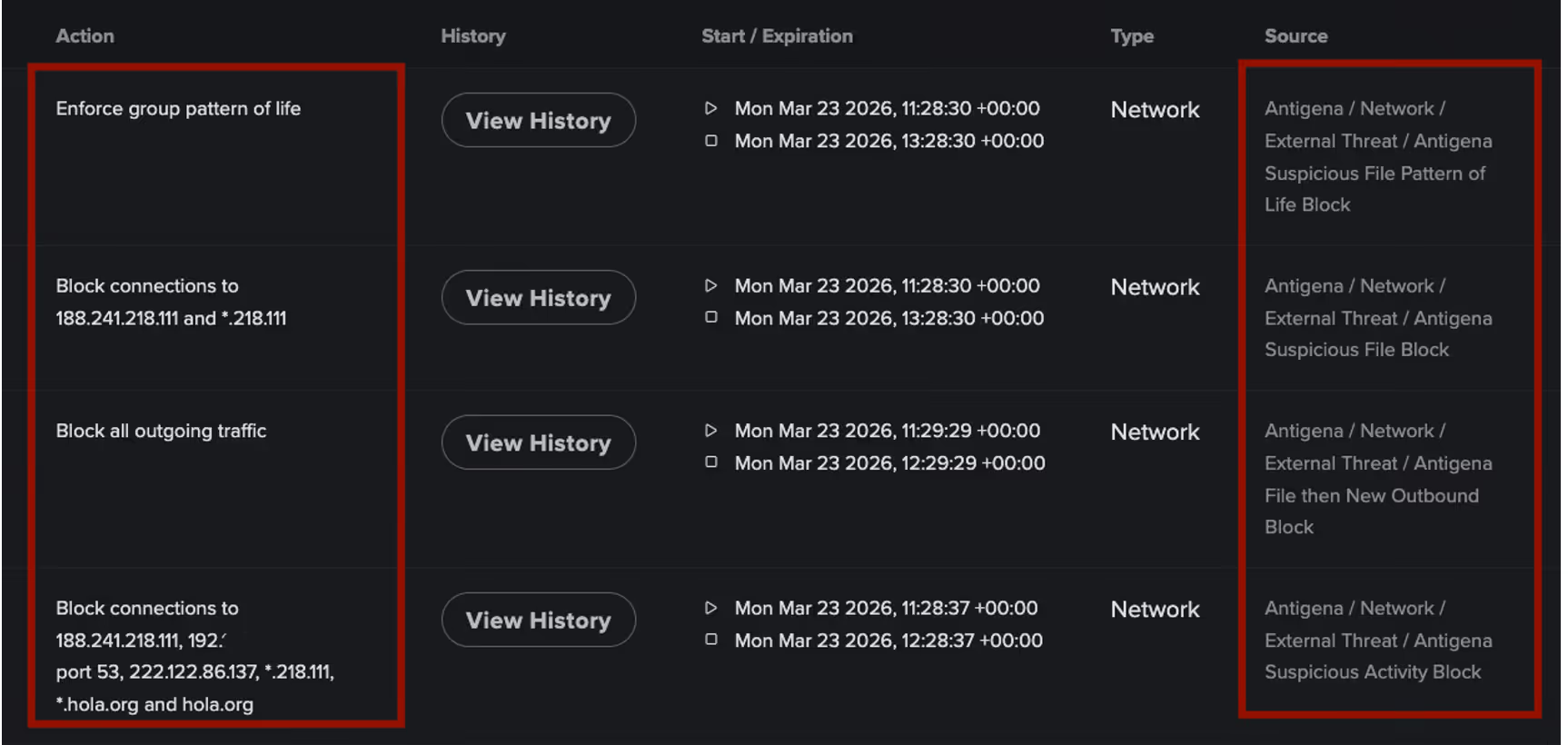
For this deployment, the customer had their Autonomous Response capability configured in “Fully Autonomous” mode, allowing Darktrace to take action without human intervention. As a result, the system was able to autonomously disrupt the activity as soon as relevant events were identified through model detections.
Figure 7: Darktrace Autonomous Response actions taken against suspicious activity linked to Hola VPN.
Suspected cryptomining activity
As previously noted, some of the observed executable payloads appear to be linked to cryptomining malware. Across a subset of affected customer environments, this assessment was further supported by subsequent device activity consistent with Monero mining. Affected devices established follow-on connections to multiple external endpoints aligned with known mining infrastructure, indicating post-download execution.
Considering the broader sequence of activity, this pattern may point to a wider form of abuse in which legitimate VPN-related traffic is used to mask or facilitate malicious behavior following compromise.
On several devices, the download of executable files, including a newly observed peer[.]exe, was followed by alerts indicative of cryptocurrency mining activity. Mining-related credentials such as ‘x’ were observed using the Minergate protocol to communicate with endpoints within the 89.125.255.0/24 subnet and 188.241.218[.]111, the same endpoint involved in earlier download activity. Additional credentials appeared to reflect device-specific CPU identifiers, for example ‘12th Gen Intel(R) Core (TM) i5-1235U’.
Observed mining methods included login, submit, and job, consistent with active participation in a pool-based mining workflow rather than passive or incidental contact. The login method indicates that the host authenticated to the mining service as a worker, job reflects the assignment of computational tasks, and submit shows completed work being returned to the pool [8]. This sequence suggests that affected devices were actively contributing processing resources as part of an unauthorized distributed mining operation.
The presence of unauthorized cryptominers can lead to degraded system performance and reduced device stability. Beyond the immediate resource impact, such activity often serves as an indicator of a broader compromise rather than an isolated issue. This may increase the risk of further malware deployment, persistence mechanisms, and lateral movement, particularly in environments where the initial intrusion has not been fully contained.
Conclusion
Across affected environments, detections such as unusual VPN usage, connections to Hola infrastructure, anomalous HTTP activity, suspicious file downloads, and subsequent cryptomining behavior were linked into a single, evolving incident narrative. This aggregation provided a clearer view of attack progression, enabling security teams to understand not just isolated alerts, but the full sequence of compromise from initial contact through to post-exploitation.
Ultimately, these activities show that the risk posed by non-compliant software such as Hola VPN can extend far beyond simple policy violations. What began as traffic to Hola-related infrastructure was, in multiple cases, followed by behavior suggesting deliberate misuse, including suspicious executable downloads using Hola-related user agents and, in some instances, evidence of active cryptomining. These were not isolated anomalies, but elements of a broader pattern in which seemingly benign proxy or VPN-related communications may have created a pathway for malicious delivery and unauthorized resource exploitation.
The significance of this activity lies not only in the downloads or mining, but in what it reveals about an attacker’s ability to blend malicious operations into traffic associated with software that may already have a foothold in the environment. When unapproved software operates within an enterprise, it can reduce visibility, blur the distinction between legitimate and malicious traffic, and create opportunities to extend compromise in ways that are persistent and difficult to detect. Darktrace’s anomaly-based approach enables these behavioral distinctions to be identified, regardless of whether the device is new or long established within the network.
Credit to Min Kim (Associate Principal Analyst), Priya Thapa (Senior Cyber Analyst) Edited by Ryan Traill (Content Manager)










.avif)





![Variation in URLs over time within the same hola[.]org domain, indicating the use of dynamically changing endpoints.](https://cdn.prod.website-files.com/626ff4d25aca2edf4325ff97/6a304bdeff111215c0436931_Screenshot%202026-06-15%20at%2012.00.43%E2%80%AFPM.avif)
![File transfer event showing the download of an executable from the rare external endpoint 188.241.219[.]55.](https://cdn.prod.website-files.com/626ff4d25aca2edf4325ff97/6a304c2468d20aeff16a2721_Screenshot%202026-06-15%20at%2012.01.53%E2%80%AFPM.avif)