Blog
/
/
August 22, 2022

Emotet Resurgence: Cross-Industry Analysis

Technical insights on the Emotet resurgence in 2022 across various client environments, industries, and regions.
Inside the SOC
Darktrace cyber analysts are world-class experts in threat intelligence, threat hunting and incident response, and provide 24/7 SOC support to thousands of Darktrace customers around the globe. Inside the SOC is exclusively authored by these experts, providing analysis of cyber incidents and threat trends, based on real-world experience in the field.
Written by
Eugene Chua
Cyber Security Analyst
Default blog imageDefault blog imageDefault blog imageDefault blog imageDefault blog imageDefault blog image
22
Aug 2022

Introduction

Last year provided further evidence that the cyber threat landscape remains both complex and challenging to predict. Between uncertain attribution, novel exploits and rapid malware developments, it is becoming harder to know where to focus security efforts. One of the largest surprises of 2021 was the re-emergence of the infamous Emotet botnet. This is an example of a campaign that ignored industry verticals or regions and seemingly targeted companies indiscriminately. Only 10 months after the Emotet takedown by law enforcement agencies in January, new Emotet activities in November were discovered by security researchers. These continued into the first quarter of 2022, a period which this blog will explore through findings from the Darktrace Threat Intel Unit. 

Dating back to 2019, Emotet was known to deliver Trickbot payloads which ultimately deployed Ryuk ransomware strains on compromised devices. This interconnectivity highlighted the hydra-like nature of threat groups wherein eliminating one (even with full-scale law enforcement intervention) would not rule them out as a threat nor indicate that the threat landscape would be any more secure. 

When Emotet resurged, as expected, one of the initial infection vectors involved leveraging existing Trickbot infrastructure. However, unlike the original attacks, it featured a brand new phishing campaign.

Figure 1: Distribution of observed Emotet activities across Darktrace deployments

Although similar to the original Emotet infections, the new wave of infections has been classified into two categories: Epochs 4 and 5. These had several key differences compared to Epochs 1 to 3. Within Darktrace’s global deployments, Emotet compromises associated to Epoch 4 appeared to be the most prevalent. Affected customer environments were seen within a large range of countries (Figure 1) and industry verticals such as manufacturing and supply chain, hospitality and travel, public administration, technology and telecoms and healthcare. Company demographics and size did not appear to be a targeting factor as affected customers had varying employee counts ranging from less than 250, to over 5000.

Key differences between Epochs 1-3 vs 4-5

Based on wider security research into the innerworkings of the Emotet exploits, several key differences were identified between Epochs 4/5 and its predecessors. The newer epochs used:

·       A different Microsoft document format (OLE vs XML-based).

·       A different encryption algorithm for communication. The new epochs used Elliptic Curve Cryptograph (ECC) [1] with public encryption keys contained in the C2 configuration file [2]. This was different from the previous Rivest-Shamir-Adleman (RSA) key encryption method.

·       Control Flow Flattening was used as an obfuscation technique to make detection and reverse engineering more difficult. This is done by hiding a program’s control flow [3].

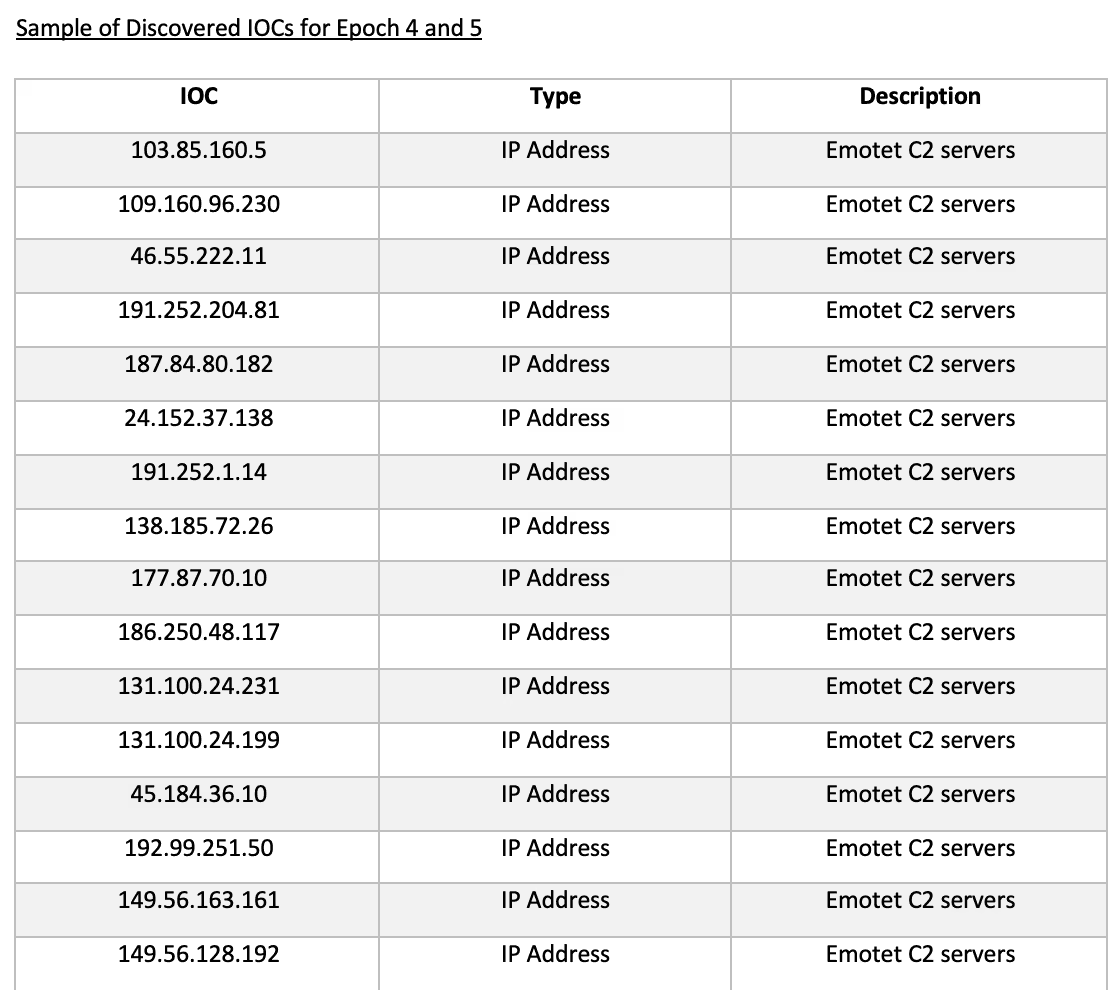
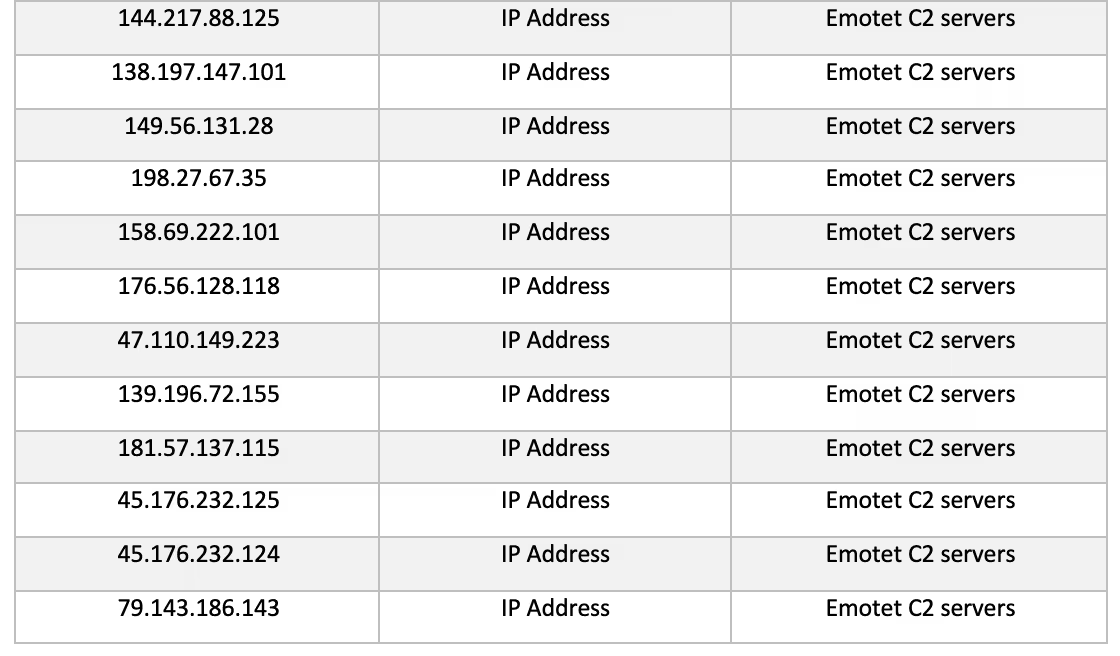
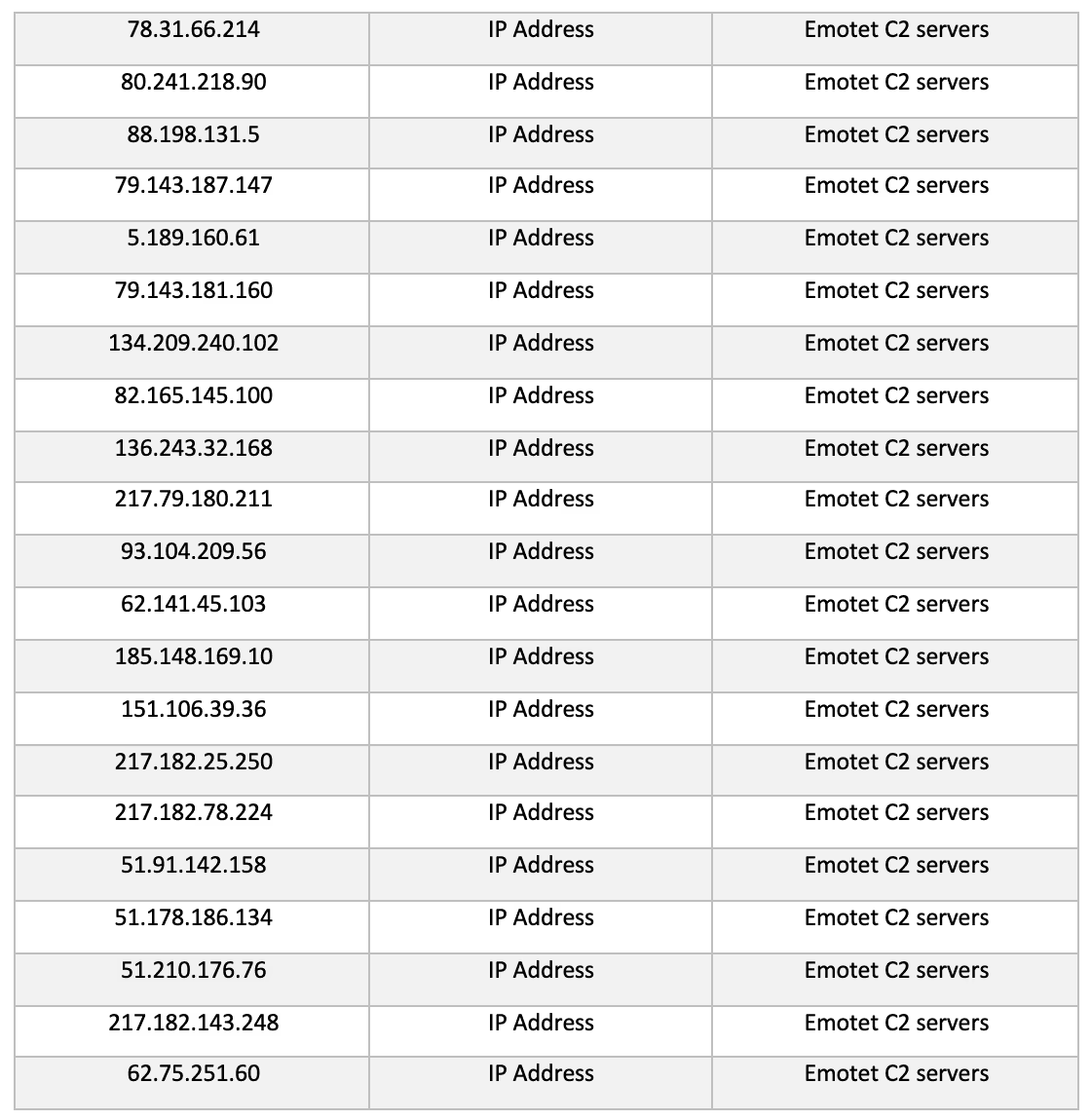
·       New C2 infrastructure was observed as C2 communications were directed to over 230 unique IPs all associated to the new Epochs 4 and 5.

In addition to the new Epoch 4 and 5 features, Darktrace detected unsurprising similarities in those deployments affected by the renewed campaign. This included self-signed SSL connections to Emotet’s new infrastructure as well as malware spam activities to multiple rare external endpoints. Preceding these outbound communications, devices across multiple deployments were detected downloading Emotet-associated payloads (algorithmically generated DLL files).

Emotet Resurgence Campaign
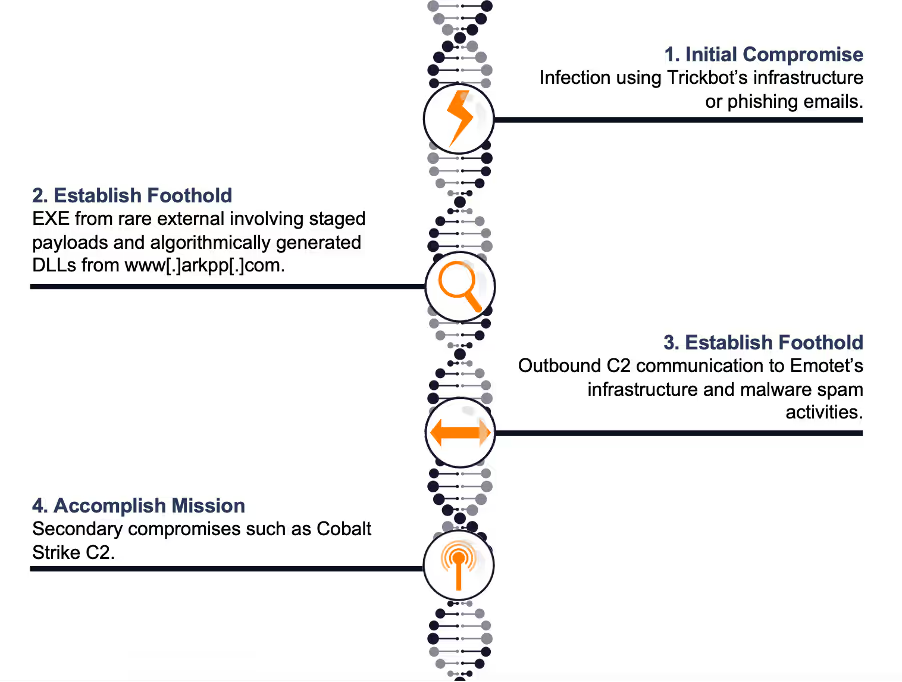
Figure 2: Darktrace’s Detection Timeline for Emotet Epoch 4 and 5 compromises

1. Initial Compromise

The initial point of entry for the resurgence activity was almost certainly via Trickbot infrastructure or a successful phishing attack (Figure 2). Following the initial intrusion, the malware strain begins to download payloads via macro-ladened files which are used to spawn PowerShell for subsequent malware downloads.

Following the downloads, malicious communication with Emotet’s C2 infrastructure was observed alongside activities from the spam module. Within Darktrace, key techniques were observed and documented below.

2. Establish Foothold: Binary Dynamic-link library (.dll) with algorithmically generated filenames 

Emotet payloads are polymorphic and contain algorithmically generated filenames . Within deployments, HTTP GET requests involving a suspicious hostname, www[.]arkpp[.]com, and Emotet related samples such as those seen below were observed:

·       hpixQfCoJb0fS1.dll (SHA256 hash: 859a41b911688b00e104e9c474fc7aaf7b1f2d6e885e8d7fbf11347bc2e21eaa)

·       M0uZ6kd8hnzVUt2BNbRzRFjRoz08WFYfPj2.dll (SHA256 hash: 9fbd590cf65cbfb2b842d46d82e886e3acb5bfecfdb82afc22a5f95bda7dd804)

·       TpipJHHy7P.dll (SHA256 hash: 40060259d583b8cf83336bc50cc7a7d9e0a4de22b9a04e62ddc6ca5dedd6754b)

These DLL files likely represent the distribution of Emotet loaders which depends on windows processes such as rundll32[.]exe and regsvr32[.]exe to execute. 

3. Establish Foothold: Outbound SSL connections to Emotet C2 servers 

A clear network indicator of compromise for Emotet’s C2 communication involved self-signed SSL using certificate issuers and subjects which matched ‘CN=example[.]com,OU=IT Department,O=Global Security,L=London,ST=London,C=GB’ , and a common JA3 client fingerprint (72a589da586844d7f0818ce684948eea). The primary C2 communications were seen involving infrastructures classified as Epoch 4 rather than 5. Despite encryption in the communication content, network contextual connection details were sufficient for the detection of the C2 activities (Figure 3).
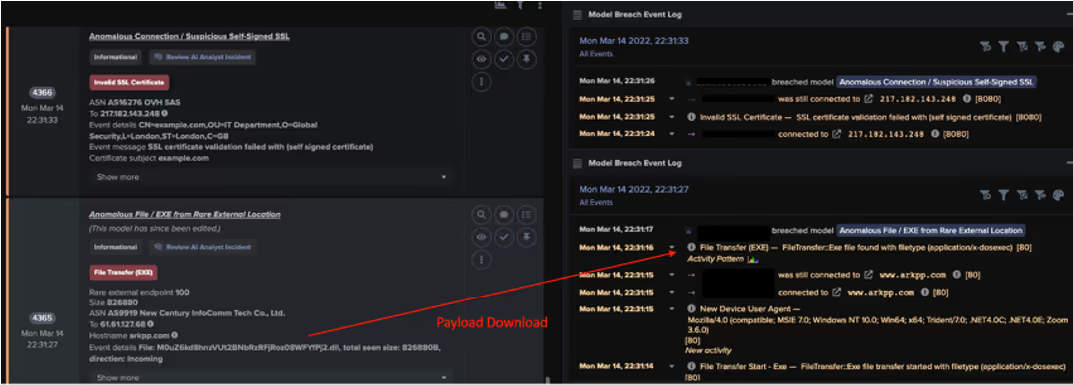
Figure 3: UI Model Breach logs on download and outbound SSL activities.

Outbound SSL and SMTP connections on TCP ports 25, 465, 587 

An anomalous user agent such as, ‘Microsoft Outlook 15.0’, was observed being used for SMTP connections with some subject lines of the outbound emails containing Base64-encoded strings. In addition, this JA3 client fingerprint (37cdab6ff1bd1c195bacb776c5213bf2) was commonly seen from the SSL connections. Based on the set of malware spam hostnames observed across at least 10 deployments, the majority of the TLDs were .jp, .com, .net, .mx, with the Japanese TLD being the most common (Figure 4).
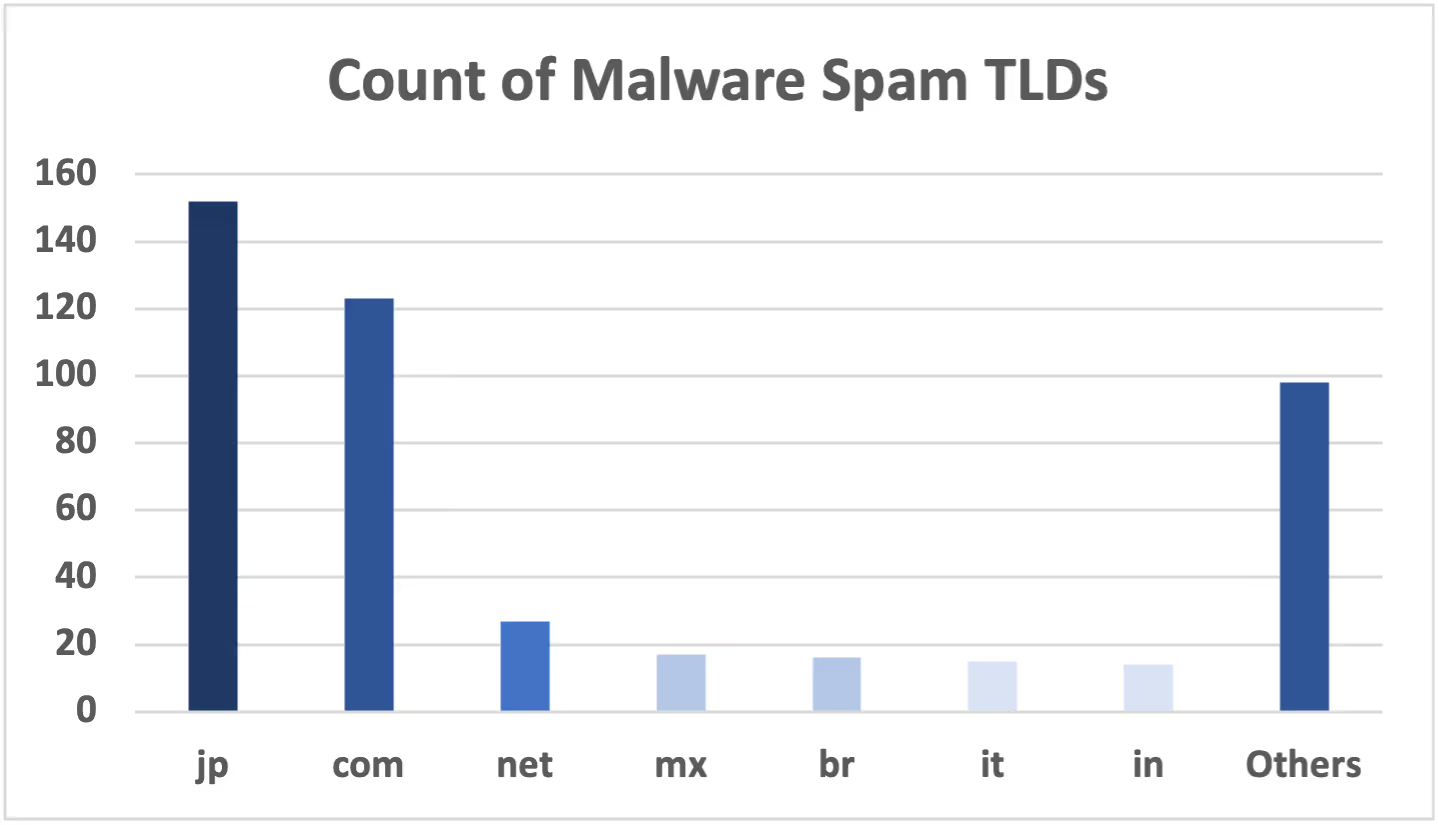
Figure 4: Malware Spam TLDs observed in outbound SSL and SMTP

 Plaintext spam content generated from the spam module were seen in PCAPs (Figure 5). Examples of clear phishing or spam indicators included 1) mismatched personal header and email headers, 2) unusual reply chain and recipient references in the subject line, and 3) suspicious compressed file attachments, e.g. Electronic form[.]zip.

Figure 5: Example of PCAP associated to SPAM Module

4. Accomplish Mission

 The Emotet resurgence also showed through secondary compromises involving anomalous SMB drive writes related to CobaltStrike. This consistently included the following JA3 hash (72a589da586844d7f0818ce684948eea) seen in SSL activities as well as SMB writes involving the svchost.exe file.

Darktrace Detection

 The key DETECT models used to identify Emotet Resurgence activities were focused on determining possible C2. These included:

·       Suspicious SSL Activity

·       Suspicious Self-Signed SSL

·       Rare External SSL Self-Signed

·       Possible Outbound Spam

File-focused models were also beneficial and included:

·       Zip or Gzip from Rare External Location

·       EXE from Rare External Location

Darktrace’s detection capabilities can also be shown through a sample of case studies identified during the Threat Research team’s investigations.

Case Studies 

Darktrace’s detection of Emotet activities was not limited by industry verticals or company sizing. Although there were many similar features seen across the new epoch, each incident displayed varying techniques from the campaign. This is shown in two client environments below:

When investigating a large customer environment within the public administration sector, 16 different devices were detected making 52,536 SSL connections with the example[.]com issuer. Devices associated with this issuer were mainly seen breaching the same Self-Signed and Spam DETECT models. Although anomalous incoming octet-streams were observed prior to this SSL, there was no clear relation between the downloads and the Emotet C2 connections. Despite the total affected devices occupying only a small portion of the total network, Darktrace analysts were able to filter against the much larger network ‘noise’ and locate detailed evidence of compromise to notify the customer.

Darktrace also identified new Emotet activities in much smaller customer environments. Looking at a company in the healthcare and pharmaceutical sector, from mid-March 2022 a single internal device was detected making an HTTP GET request to the host arkpp[.]com involving the algorithmically-generated DLL, TpipJHHy7P.dll with the SHA256 hash: 40060259d583b8cf83336bc50cc7a7d9e0a4de22b9a04e62ddc6ca5dedd6754b (Figure 6). 
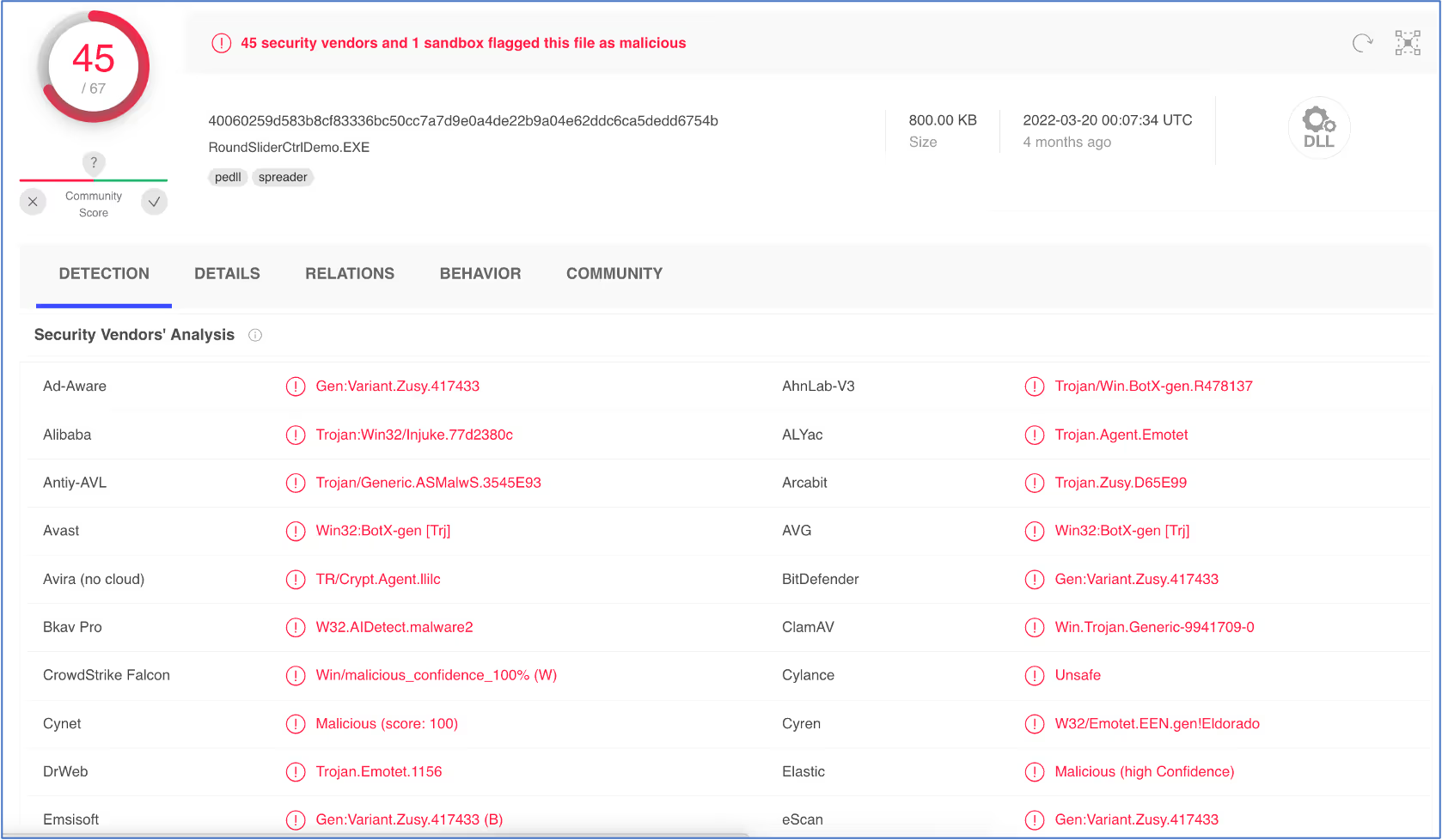
Figure 6: A screenshot from VirusTotal, showing that the SHA256 hash has been flagged as malicious by other security vendors.

After the sample was downloaded, the device contacted a large number of endpoints that had never been contacted by devices on the network. The endpoints were contacted over ports 443, 8080, and 7080 involving Emotet related IOCs and the same SSL certificate mentioned previously. Malware spam activities were also observed during a similar timeframe.

 The Emotet case studies above demonstrate how autonomous detection of an anomalous sequence of activities - without depending on conventional rules and signatures - can reveal significant threat activities. Though possible staged payloads were only seen in a proportion of the affected environments, the following outbound C2 and malware spam activities involving many endpoints and ports were sufficient for the detection of Emotet.

 If present, in both instances Darktrace’s Autonomous Response technology, RESPOND, would recommend or implement surgical actions to precisely target activities associated with the staged payload downloads, outgoing C2 communications, and malware spam activities. Additionally, restriction to the devices’ normal pattern of life will prevent simultaneously occurring malicious activities while enabling the continuity of normal business operations.

 Conclusion 

·       The technical differences between past and present Emotet strains emphasizes the versatility of malicious threat actors and the need for a security solution that is not reliant on signatures.

·       Darktrace’s visibility and unique behavioral detection continues to provide visibility to network activities related to the novel Emotet strain without reliance on rules and signatures. Key examples include the C2 connections to new Emotet infrastructure.

·       Looking ahead, detection of C2 establishment using suspicious DLLs will prevent further propagation of the Emotet strains across networks.

·       Darktrace’s AI detection and response will outpace conventional post compromise research involving the analysis of Emotet strains through static and dynamic code analysis, followed by the implementation of rules and signatures.

Thanks to Paul Jennings and Hanah Darley for their contributions to this blog.

Appendices

Model breaches

·       Anomalous Connection / Anomalous SSL without SNI to New External 

·       Anomalous Connection / Application Protocol on Uncommon Port 

·       Anomalous Connection / Multiple Connections to New External TCP Port 

·       Anomalous Connection / Multiple Failed Connections to Rare Endpoint 

·       Anomalous Connection / Multiple HTTP POSTs to Rare Hostname 

·       Anomalous Connection / Possible Outbound Spam 

·       Anomalous Connection / Rare External SSL Self-Signed 

·       Anomalous Connection / Repeated Rare External SSL Self-Signed      

·       Anomalous Connection / Suspicious Expired SSL 

·       Anomalous Connection / Suspicious Self-Signed SSL

·       Anomalous File / Anomalous Octet Stream (No User Agent) 

·       Anomalous File / Zip or Gzip from Rare External Location 

·       Anomalous File / EXE from Rare External Location

·       Compromise / Agent Beacon to New Endpoint 

·       Compromise / Beacon to Young Endpoint 

·       Compromise / Beaconing Activity To External Rare 

·       Compromise / New or Repeated to Unusual SSL Port 

·       Compromise / Repeating Connections Over 4 Days 

·       Compromise / Slow Beaconing Activity To External Rare 

·       Compromise / SSL Beaconing to Rare Destination 

·       Compromise / Suspicious Beaconing Behaviour 

·       Compromise / Suspicious Spam Activity 

·       Compromise / Suspicious SSL Activity 

·       Compromise / Sustained SSL or HTTP Increase 

·       Device / Initial Breach Chain Compromise 

·       Device / Large Number of Connections to New Endpoints 

·       Device / Long Agent Connection to New Endpoint 

·       Device / New User Agent 

·       Device / New User Agent and New IP 

·       Device / SMB Session Bruteforce 

·       Device / Suspicious Domain 

·       Device / Suspicious SMB Scanning Activity 
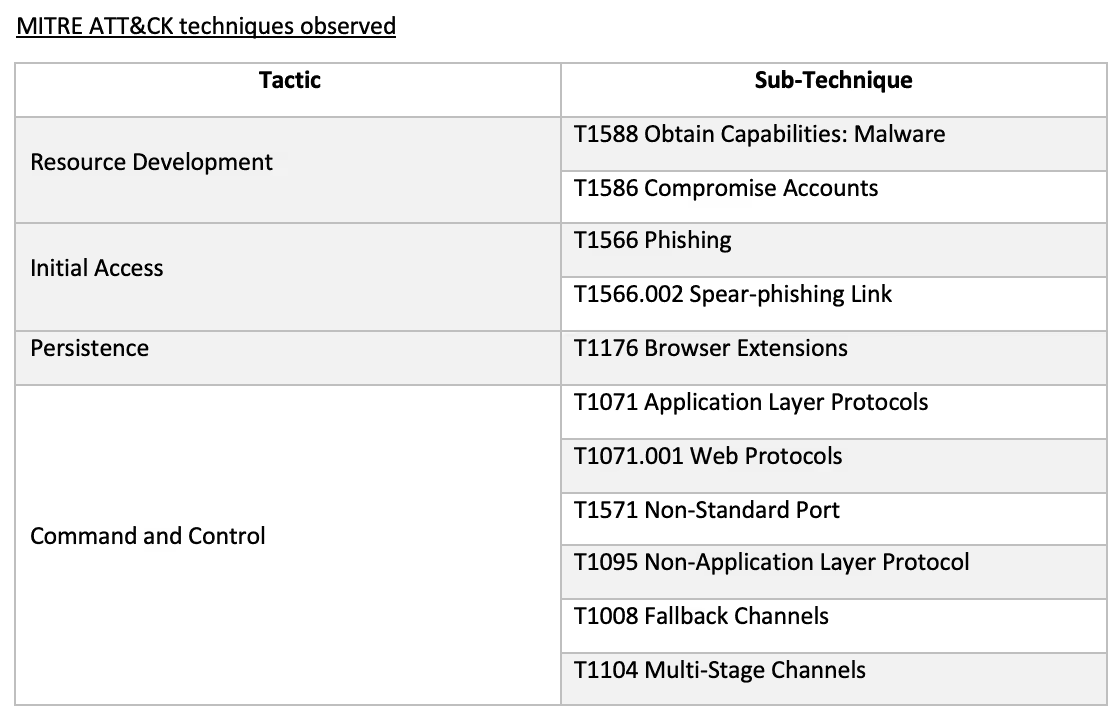
For Darktrace customers who want to know more about using Darktrace to triage Emotet, refer here for an exclusive supplement to this blog.

References

[1] https://blog.lumen.com/emotet-redux/

[2] https://blogs.vmware.com/security/2022/03/emotet-c2-configuration-extraction-and-analysis.html

[3] https://news.sophos.com/en-us/2022/05/04/attacking-emotets-control-flow-flattening/

Inside the SOC
Darktrace cyber analysts are world-class experts in threat intelligence, threat hunting and incident response, and provide 24/7 SOC support to thousands of Darktrace customers around the globe. Inside the SOC is exclusively authored by these experts, providing analysis of cyber incidents and threat trends, based on real-world experience in the field.
Written by
Eugene Chua
Cyber Security Analyst

More in this series

No items found.

Blog

/

Email

/

December 18, 2025

Why organizations are moving to label-free, behavioral DLP for outbound email

Man at laptopDefault blog imageDefault blog image

Why outbound email DLP needs reinventing

In 2025, the global average cost of a data breach fell slightly — but remains substantial at USD 4.44 million (IBM Cost of a Data Breach Report 2025). The headline figure hides a painful reality: many of these breaches stem not from sophisticated hacks, but from simple human error: mis-sent emails, accidental forwarding, or replying with the wrong attachment. Because outbound email is a common channel for sensitive data leaving an organization, the risk posed by everyday mistakes is enormous.

In 2025, 53% of data breaches involved customer PII, making it the most commonly compromised asset (IBM Cost of a Data Breach Report 2025). This makes “protection at the moment of send” essential. A single unintended disclosure can trigger compliance violations, regulatory scrutiny, and erosion of customer trust –consequences that are disproportionate to the marginal human errors that cause them.

Traditional DLP has long attempted to mitigate these impacts, but it relies heavily on perfect labelling and rigid pattern-matching. In reality, data loss rarely presents itself as a neat, well-structured pattern waiting to be caught – it looks like everyday communication, just slightly out of context.

How data loss actually happens

Most data loss comes from frustratingly familiar scenarios. A mistyped name in auto-complete sends sensitive data to the wrong “Alex.” A user forwards a document to a personal Gmail account “just this once.” Someone shares an attachment with a new or unknown correspondent without realizing how sensitive it is.

Traditional, content-centric DLP rarely catches these moments. Labels are missing or wrong. Regexes break the moment the data shifts formats. And static rules can’t interpret the context that actually matters – the sender-recipient relationship, the communication history, or whether this behavior is typical for the user.

It’s the everyday mistakes that hurt the most. The classic example: the Friday 5:58 p.m. mis-send, when auto-complete selects Martin, a former contractor, instead of Marta in Finance.

What traditional DLP approaches offer (and where gaps remain)

Most email DLP today follows two patterns, each useful but incomplete.

  • Policy- and label-centric DLP works when labels are correct — but content is often unlabeled or mislabeled, and maintaining classification adds friction. Gaps appear exactly where users move fastest
  • Rule and signature-based approaches catch known patterns but miss nuance: human error, new workflows, and “unknown unknowns” that don’t match a rule

The takeaway: Protection must combine content + behavior + explainability at send time, without depending on perfect labels.

Your technology primer: The three pillars that make outbound DLP effective

1) Label-free (vs. data classification)

Protects all content, not just what’s labeled. Label-free analysis removes classification overhead and closes gaps from missing or incorrect tags. By evaluating content and context at send time, it also catches misdelivery and other payload-free errors.

  • No labeling burden; no regex/rule maintenance
  • Works when tags are missing, wrong, or stale
  • Detects misdirected sends even when labels look right

2) Behavioral (vs. rules, signatures, threat intelligence)

Understands user behavior, not just static patterns. Behavioral analysis learns what’s normal for each person, surfacing human error and subtle exfiltration that rules can’t. It also incorporates account signals and inbound intel, extending across email and Teams.

  • Flags risk without predefined rules or IOCs
  • Catches misdelivery, unusual contacts, personal forwards, odd timing/volume
  • Blends identity and inbound context across channels

3) Proprietary DSLM (vs. generic LLM)

Optimized for precise, fast, explainable on-send decisions. A DSLM understands email/DLP semantics, avoids generative risks, and stays auditable and privacy-controlled, delivering intelligence reliably without slowing mail flow.

  • Low-latency, on-send enforcement
  • Non-generative for predictable, explainable outcomes
  • Governed model with strong privacy and auditability

The Darktrace approach to DLP

Darktrace / EMAIL – DLP stops misdelivery and sensitive data loss at send time using hold/notify/justify/release actions. It blends behavioral insight with content understanding across 35+ PII categories, protecting both labeled and unlabeled data. Every action is paired with clear explainability: AI narratives show exactly why an email was flagged, supporting analysts and helping end-users learn. Deployment aligns cleanly with existing SOC workflows through mail-flow connectors and optional Microsoft Purview label ingestion, without forcing duplicate policy-building.

Deployment is simple: Microsoft 365 routes outbound mail to Darktrace for real-time, inline decisions without regex or rule-heavy setup.

A buyer’s checklist for DLP solutions

When choosing your DLP solution, you want to be sure that it can deliver precise, explainable protection at the moment it matters – on send – without operational drag.  

To finish, we’ve compiled a handy list of questions you can ask before choosing an outbound DLP solution:

  • Can it operate label free when tags are missing or wrong? 
  • Does it truly learn per user behavior (no shortcuts)? 
  • Is there a domain specific model behind the content understanding (not a generic LLM)? 
  • Does it explain decisions to both analysts and end users? 
  • Will it integrate with your label program and SOC workflows rather than duplicate them? 

For a deep dive into Darktrace’s DLP solution, check out the full solution brief.

[related-resource]

Continue reading
About the author
Carlos Gray
Senior Product Marketing Manager, Email

Blog

/

Email

/

December 17, 2025

Beyond MFA: Detecting Adversary-in-the-Middle Attacks and Phishing with Darktrace

Beyond MFA: Detecting Adversary-in-the-Middle Attacks and Phishing with DarktraceDefault blog imageDefault blog image

What is an Adversary-in-the-middle (AiTM) attack?

Adversary-in-the-Middle (AiTM) attacks are a sophisticated technique often paired with phishing campaigns to steal user credentials. Unlike traditional phishing, which multi-factor authentication (MFA) increasingly mitigates, AiTM attacks leverage reverse proxy servers to intercept authentication tokens and session cookies. This allows attackers to bypass MFA entirely and hijack active sessions, stealthily maintaining access without repeated logins.

This blog examines a real-world incident detected during a Darktrace customer trial, highlighting how Darktrace / EMAILTM and Darktrace / IDENTITYTM identified the emerging compromise in a customer’s email and software-as-a-service (SaaS) environment, tracked its progression, and could have intervened at critical moments to contain the threat had Darktrace’s Autonomous Response capability been enabled.

What does an AiTM attack look like?

Inbound phishing email

Attacks typically begin with a phishing email, often originating from the compromised account of a known contact like a vendor or business partner. These emails will often contain malicious links or attachments leading to fake login pages designed to spoof legitimate login platforms, like Microsoft 365, designed to harvest user credentials.

Proxy-based credential theft and session hijacking

When a user clicks on a malicious link, they are redirected through an attacker-controlled proxy that impersonates legitimate services.  This proxy forwards login requests to Microsoft, making the login page appear legitimate. After the user successfully completes MFA, the attacker captures credentials and session tokens, enabling full account takeover without the need for reauthentication.

Follow-on attacks

Once inside, attackers will typically establish persistence through the creation of email rules or registering OAuth applications. From there, they often act on their objectives, exfiltrating sensitive data and launching additional business email compromise (BEC) campaigns. These campaigns can include fraudulent payment requests to external contacts or internal phishing designed to compromise more accounts and enable lateral movement across the organization.

Darktrace’s detection of an AiTM attack

At the end of September 2025, Darktrace detected one such example of an AiTM attack on the network of a customer trialling Darktrace / EMAIL and Darktrace / IDENTITY.

In this instance, the first indicator of compromise observed by Darktrace was the creation of a malicious email rule on one of the customer’s Office 365 accounts, suggesting the account had likely already been compromised before Darktrace was deployed for the trial.

Darktrace / IDENTITY observed the account creating a new email rule with a randomly generated name, likely to hide its presence from the legitimate account owner. The rule marked all inbound emails as read and deleted them, while ignoring any existing mail rules on the account. This rule was likely intended to conceal any replies to malicious emails the attacker had sent from the legitimate account owner and to facilitate further phishing attempts.

Darktrace’s detection of the anomalous email rule creation.
Figure 1: Darktrace’s detection of the anomalous email rule creation.

Internal and external phishing

Following the creation of the email rule, Darktrace / EMAIL observed a surge of suspicious activity on the user’s account. The account sent emails with subject lines referencing payment information to over 9,000 different external recipients within just one hour. Darktrace also identified that these emails contained a link to an unusual Google Drive endpoint, embedded in the text “download order and invoice”.

Darkrace’s detection of an unusual surge in outbound emails containing suspicious content, shortly following the creation of a new email rule.
Figure 2: Darkrace’s detection of an unusual surge in outbound emails containing suspicious content, shortly following the creation of a new email rule.
Darktrace / EMAIL’s detection of the compromised account sending over 9,000 external phishing emails, containing an unusual Google Drive link.
Figure 3: Darktrace / EMAIL’s detection of the compromised account sending over 9,000 external phishing emails, containing an unusual Google Drive link.

As Darktrace / EMAIL flagged the message with the ‘Compromise Indicators’ tag (Figure 2), it would have been held automatically if the customer had enabled default Data Loss Prevention (DLP) Action Flows in their email environment, preventing any external phishing attempts.

Figure 4: Darktrace / EMAIL’s preview of the email sent by the offending account.

Darktrace analysis revealed that, after clicking the malicious link in the email, recipients would be redirected to a convincing landing page that closely mimicked the customer’s legitimate branding, including authentic imagery and logos, where prompted to download with a PDF named “invoice”.

Figure 5: Download and login prompts presented to recipients after following the malicious email link, shown here in safe view.

After clicking the “Download” button, users would be prompted to enter their company credentials on a page that was likely a credential-harvesting tool, designed to steal corporate login details and enable further compromise of SaaS and email accounts.

Darktrace’s Response

In this case, Darktrace’s Autonomous Response was not fully enabled across the customer’s email or SaaS environments, allowing the compromise to progress,  as observed by Darktrace here.

Despite this, Darktrace / EMAIL’s successful detection of the malicious Google Drive link in the internal phishing emails prompted it to suggest ‘Lock Link’, as a recommended action for the customer’s security team to manually apply. This action would have automatically placed the malicious link behind a warning or screening page blocking users from visiting it.

Autonomous Response suggesting locking the malicious Google Drive link sent in internal phishing emails.
Figure 6: Autonomous Response suggesting locking the malicious Google Drive link sent in internal phishing emails.

Furthermore, if active in the customer’s SaaS environment, Darktrace would likely have been able to mitigate the threat even earlier, at the point of the first unusual activity: the creation of a new email rule. Mitigative actions would have included forcing the user to log out, terminating any active sessions, and disabling the account.

Conclusion

AiTM attacks represent a significant evolution in credential theft techniques, enabling attackers to bypass MFA and hijack active sessions through reverse proxy infrastructure. In the real-world case we explored, Darktrace’s AI-driven detection identified multiple stages of the attack, from anomalous email rule creation to suspicious internal email activity, demonstrating how Autonomous Response could have contained the threat before escalation.

MFA is a critical security measure, but it is no longer a silver bullet. Attackers are increasingly targeting session tokens rather than passwords, exploiting trusted SaaS environments and internal communications to remain undetected. Behavioral AI provides a vital layer of defense by spotting subtle anomalies that traditional tools often miss

Security teams must move beyond static defenses and embrace adaptive, AI-driven solutions that can detect and respond in real time. Regularly review SaaS configurations, enforce conditional access policies, and deploy technologies that understand “normal” behavior to stop attackers before they succeed.

Credit to David Ison (Cyber Analyst), Bertille Pierron (Solutions Engineer), Ryan Traill (Analyst Content Lead)

Appendices

Models

SaaS / Anomalous New Email Rule

Tactic – Technique – Sub-Technique  

Phishing - T1566

Adversary-in-the-Middle - T1557

Continue reading
About the author
Your data. Our AI.
Elevate your network security with Darktrace AI