Learn the differences between supervised machine learning, generative AI, LLMs, and self-learning AI, including where each approach succeeds and where it falls short.
Understand how AI is reshaping modern cyber defense
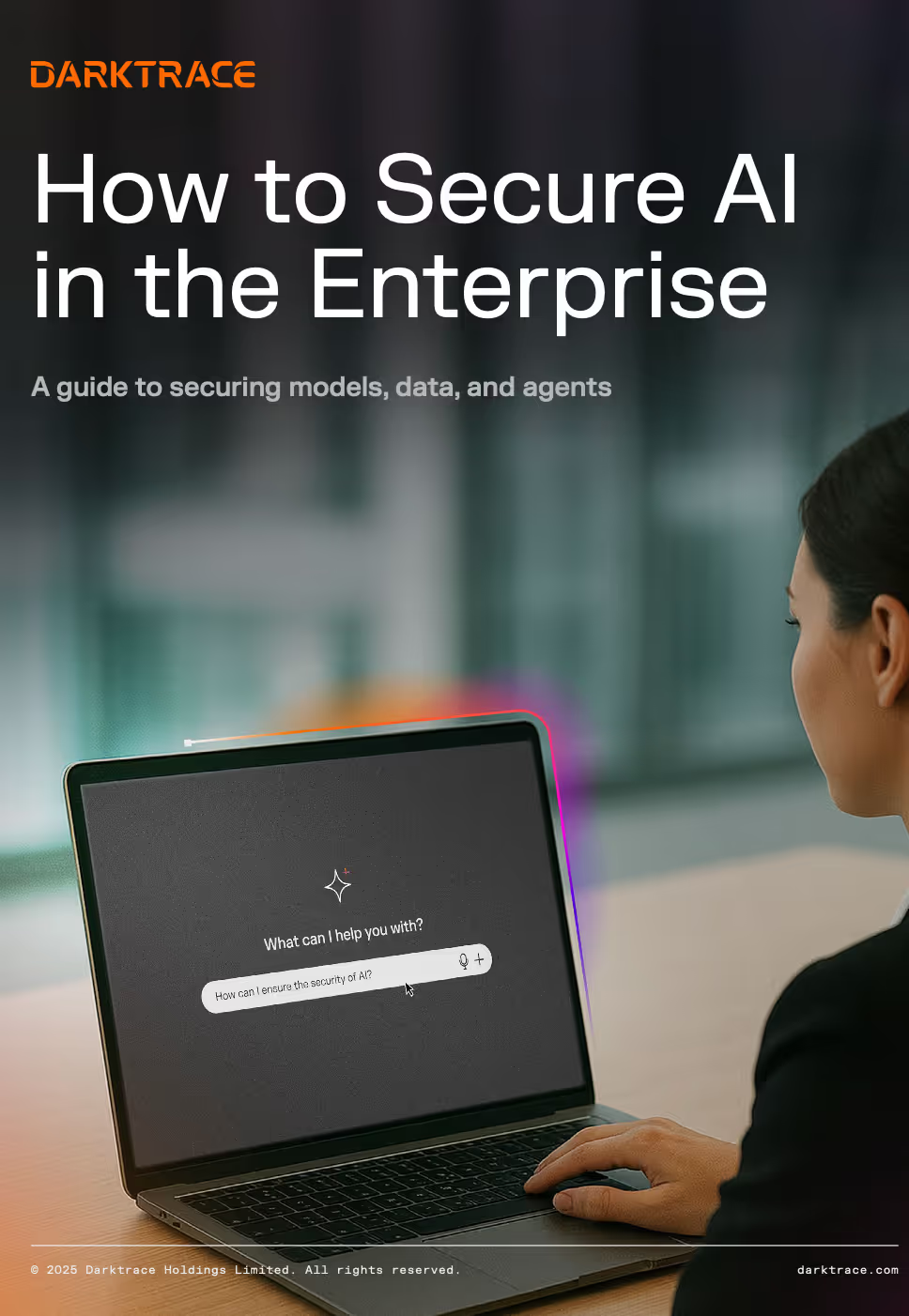
Download this guide to understand how AI is reshaping both cyber attacks and defence, and what that means for your security strategy. It breaks down risks, opportunities, and practical considerations for CISOs adopting cyber AI effectively today.


Learn the differences between supervised machine learning, generative AI, LLMs, and self-learning AI, including where each approach succeeds and where it falls short.
Explore how offensive AI is enabling more targeted phishing, automated reconnaissance, novel malware creation, and “one-of-one” attacks tailored to individual organizations.
Understand how modern organizations can combine AI techniques to improve threat detection, automate investigations, reduce response times, and strengthen cyber resilience against unknown threats.
Artificial intelligence is rapidly reshaping both sides of the cyber battlefield. Attackers are increasingly using generative AI to create more convincing phishing campaigns, automate reconnaissance, generate malware, and accelerate attacks at machine speed. At the same time, security vendors are racing to integrate AI into prevention, detection, investigation, and response technologies. The challenge for security leaders is that not all AI functions the same way — and not every approach is equally effective against modern threats.
This guide helps CISOs and security teams understand the differences between supervised machine learning, generative AI, large language models (LLMs), and self-learning AI within cybersecurity environments. It explores where each technology excels, where limitations exist, and why behavioral and adaptive approaches are becoming increasingly important as organizations face more novel and targeted attacks.
Inside the guide, readers will explore how AI can support proactive security, accurate threat detection, autonomous response, and incident investigation across complex enterprise environments. The resource also examines the operational and security risks introduced by AI adoption itself, including prompt injection, hallucinations, insider threats, and sensitive data exposure.
Rather than presenting AI as a single solution, this paper provides a practical framework for understanding how different AI models should be applied to different cybersecurity challenges. It offers security leaders a clearer perspective on building resilient security operations capable of adapting to increasingly sophisticated AI-driven threats.


Darktrace customers


Your data. Our AI.